 Μake us preferred on Google
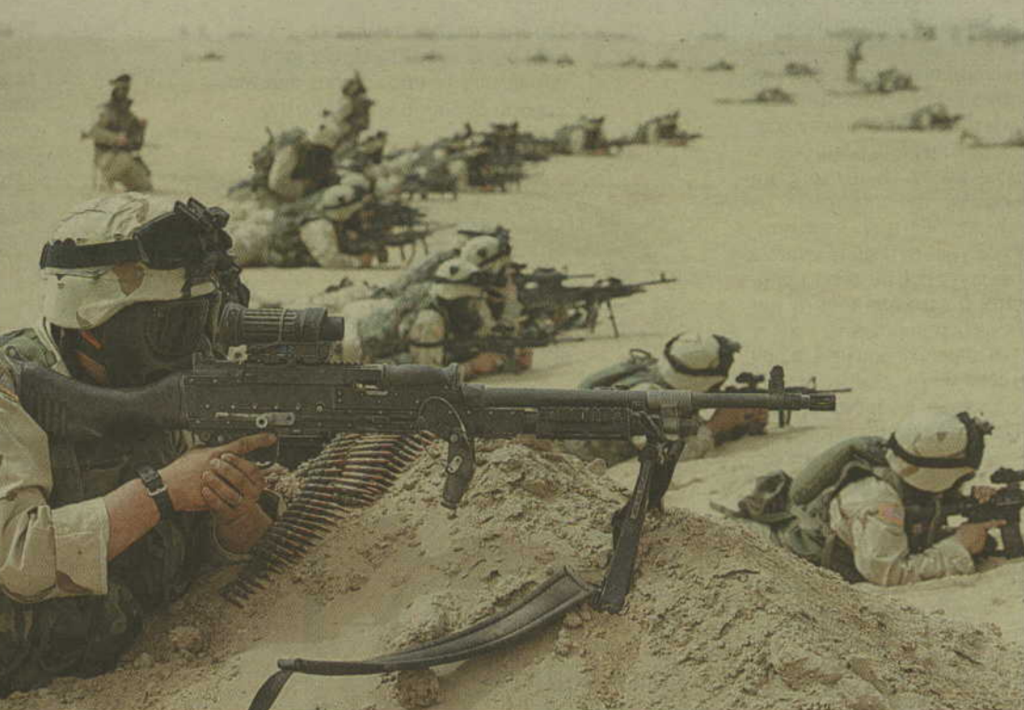
 On this day, March 20, 2003, the United States and the United Kingdom launched a military operation in Iraq, with the immediate goal of overthrowing the regime of Saddam Hussein. The international crisis over Iraq moved definitively from diplomacy to war, opening a new chapter in the modern history of the Middle East.
A few days earlier — after failing to secure a new UN Security Council resolution — US President George Bush had issued a 48-hour ultimatum to the Iraqi leader and his sons to leave the country, warning that a military attack would follow if they did not.
Washington justified the intervention by citing the existence of weapons of mass destruction in Iraq, a claim that was later strongly disputed.
Saddam Hussein rejected the ultimatum, and in the early hours of March 20, the military operation began, with bombings in Baghdad and the first ground movements from Kuwait.
“Exile or War”
TO VIMA of March 18, 2003 reported that the dilemma had been clearly framed: “Bush’s Ultimatum to Saddam: Exile or War.” The article captured the atmosphere in Washington and at the United Nations:
Hours after their efforts to secure a UN agreement collapsed, the US and Britain declared the end of diplomacy, withdrawing their draft of a second war resolution from the Security Council in anticipation of vetoes from France and Russia.
The outbreak of a second Gulf War was expected within the next 24 hours, as President Bush was set to address the American people. According to a White House announcement, Bush would issue an ultimatum to Saddam Hussein giving him 48 hours to leave the country or face attack. Diplomatic missions and UN weapons inspectors had already been ordered to leave Iraq, as all signs pointed to war breaking out imminently.
Saddam Hussein pre-emptively rejected the ultimatum, denied possessing weapons of mass destruction, and threatened that in the event of an attack on his country, “the war would spread across the entire planet.”
“The Window of Diplomacy Is Closing”
The diplomatic window shut when the US withdrew its second draft resolution, as France, Russia, and China held firm on their vetoes against military intervention. US Secretary of State Colin Powell declared that action was still legitimized by Resolution 1441, since Saddam “had many opportunities over the past 12 years to disarm and did not do so.”
Powell declared at a press conference that “the window of diplomacy is closing. The moment of truth is arriving,” announcing the imminent outbreak of war, while accusing the Security Council of “failure” to fulfill its responsibilities.
Saddam Hussein, appearing on television, warned that if the US invaded, the war would spread across the whole planet: “We are prepared to sacrifice our souls, our children, and our families so as not to abandon Iraq. We say this so that no one imagines that America can change the will of the Iraqis with weapons. If evil comes, we will prevail.”
The First Hours of the War
Two days later, on March 21, 2003, TO VIMA recorded the start of hostilities:
“Baghdad was engulfed in the flames of war. American bombers and fighter jets used cruise missiles and “smart” bombs to strike at least one of Saddam Hussein’s palaces and an unknown number of government buildings in a sweeping wave of attacks using cruise missiles and “smart bombs.” […]
“However, American officials noted that this was not the 48-hour “hell” they had previously announced, involving the dropping of 3,000 bombs to paralyze Iraq’s political and military apparatus […]
The Iraqi government announced that more than 72 cruise missiles had struck across Iraq, primarily in Baghdad, and at least four soldiers had been killed […]
The Capture of Basra
The coordinated ground invasion had also begun, a few hours earlier:
“The main objective is the capture of Basra, the country’s second most important city after Baghdad […]. According to reports from Kuweit, American marines sized the strategically significant port city of Umm Qasr, a city used as a re-supply center for Basra, without encountering resistance from Iraqi forces. This claim was denied by the Iraqi regime.
“Battles had begun hours earlier when artillery from the 3rd Infantry Division, along with F-15 and F-16 jets taking off from a military base in Qatar, attacked Iraqi positions. Iraqi missiles aiming to repel the US advance were launched at US logistics centers in the Kuwaiti desert, yet were shot down by patriot missile batteries.”
TO VIMA noted that Pentagon chief Donald Rumsfeld, wanting to signal the nature and scale of the attack, told reporters at the first war briefing: “What will follow has no precedent in any other military conflict. The power, scale, and scope of the attack will be unlike anything you have ever seen.” He concluded: “Saddam Hussein’s days are numbered.”
The “Decapitation” Strategy
The initial, limited bombardment, as reported by TO VIMA on the 21st of March, 2003, was based on the assumption that Saddam Hussein was located in Baghdad.
“The initial “minimalist” bombardment that characterized the preliminary stages of the assault, surprised those who were expecting a hail of bombings of the country. Yet, there was a purpose to it. CIA intelligence possessed informationthat Saddam Hussein and his top aides were meeting in a private building in southern Baghdad. This led the White House to attempt an immediate “decapitation” of the Iraqi leadership.”
The attempt at a swift, decisive strike did not appear to succeed, though American analysts later questioned the authenticity of Saddam Hussein’s subsequent television appearance, suggesting it may have been a body double.
International Reactions
International reactions were intense, as the newspaper notes:
“Germany, France, Russia, China, India, and Iran condemned the US-British attack. Former chief UN weapons inspector Hans Blix was critical, and UN Secretary-General Kofi Annan called for care to be taken for civilians.”
“Hundreds of thousands of people around the world took to the streets in mass protest, condeming the US invasion. In Athens alone, more than 100,000 citizens of all ages, mostly young people, marched toward the American embassy.”