The global system designed to control and limit nuclear weapons is facing a critical test in 2026, with experts warning that further erosion could significantly increase the risk of a nuclear crisis in an already volatile international environment.
Two critical milestones are expected in the first half of the year. The first is the expiration of the New START treaty, the last remaining bilateral nuclear arms control agreement between the United States and Russia, set to lapse on February 5. The second is the Review Conference of the Nuclear Non-Proliferation Treaty (NPT), scheduled for April in New York.
The NPT review conference, held every four to five years, aims to preserve the treaty that forms the cornerstone of global nuclear security. However, the last two such meetings failed to produce a final consensus document among the 191 signatory states. According to analysts, a similar outcome is likely in 2026.
“This review conference will be difficult,” warned Alexandra Bell, president of the Bulletin of the Atomic Scientists, who described the outlook for nuclear arms control as bleak. Similar concerns were voiced by Russian analyst Anton Khlopkov, director of a Moscow-based energy and security research center, who described the situation as nearing a near-total dismantling of the system, urging governments to focus on preserving what still exists.
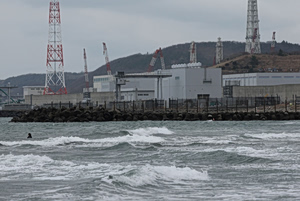
The nuclear landscape darkened further in 2025, with developments ranging from military strikes on nuclear facilities to missile tests and renewed debate over nuclear testing. These included U.S. strikes on Iranian nuclear facilities, Russia’s test launch of a nuclear-powered missile, and public remarks by Donald Trump suggesting the possible resumption of nuclear weapons testing. According to French defense analyst Emmanuelle Maitre, these events unfolded as decades-old arms control mechanisms continued to weaken.
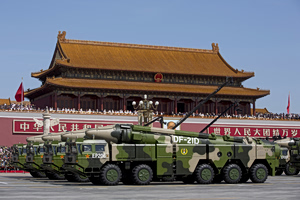
Analysts say the traditional arms control system, built over decades around a U.S.–Russia axis, is being weakened by rising Chinese military power and rapid technological advances. China’s growing arsenal has become a central concern. While Beijing currently maintains a smaller stockpile than Washington or Moscow, it is expanding rapidly and has declined to participate in trilateral arms control talks. Strategic studies organizations warn that existing treaties do not adequately address this shift.
Analysts note that emerging technologies—such as hypersonic weapons and advanced missile defense systems—have transformed traditional nuclear deterrence into a far more complex, multi-domain challenge. The shift from a bipolar to a more fragmented global balance has made arms control negotiations significantly harder, particularly in Europe and the Asia-Pacific region.
As a result, the New START treaty, which limits the number of deployed nuclear weapons and includes verification measures, is widely expected to expire. Many of its transparency tools, such as missile movement notifications, are already no longer functioning, leaving only voluntary commitments to existing limits.
While Washington and Moscow are not expected to rapidly expand their arsenals immediately after the treaty expires, specialists warn that the long-term abandonment of arms control tools increases the risk of miscalculation. Without effective mechanisms for dialogue and crisis management, future disputes could escalate more easily into military confrontation.
Even if the upcoming NPT review conference fails to reach an agreement, experts say the consequences may not be immediate. However, they caution that the continued weakening of the treaty would make it harder for the international community to respond collectively to future nuclear crises.