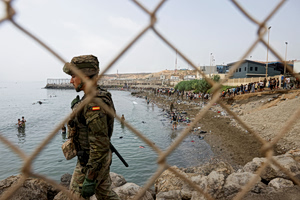
The scenario first moved from social media into political debate when Ceuta’s president, Juan Jesús Vivas, raised fears of a new mass entry of would be migrants from Morocco into the autonomous Spanish enclave over the August 15 holiday. This time, both the Spanish and Moroccan sides have mobilized, stepping up security measures.
If, as seems most likely, the scenes of July 30, when tens of thousands of migrants entered Ceuta, are not repeated, the Italian government has hinted it will ease its border controls, expecting Spain to do the same. Repairing relations between the two countries, however, will be much harder. Just as hard will be undoing the message sent to all of the EU’s rivals and adversaries about how easily it panics and turns on itself the moment migrants appear on its shores.
As Paul Taylor notes in the Guardian, it took only a few hours after the first images from Ceuta went around social media in late July for 22 European leaders, the Trump administration, and the Netanyahu government to turn openly against Madrid, laying blame on it.
The 22 European leaders, including Kyriakos Mitsotakis, did not act together as such, but signed a joint letter to Brussels, an initiative led by Italy’s right wing prime minister Giorgia Meloni and Denmark’s social democratic prime minister Mette Frederiksen, another of the era’s unlikely alliances.
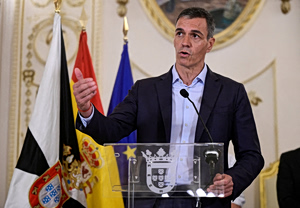
In substance, though, the criticism aimed at Pedro Sánchez‘s socialist government was the same: that it triggered the mass arrival of migrants by allowing more than a million undocumented migrants who were already living and working in Spain to apply to legalize their status.
Several European states even called on the EU to consider suspending Spain’s participation in the Schengen Area.
The Ceuta crisis appears to have grown out of a mix of disinformation on social media, genuine desperation, and the actions of organized smuggling networks. Within a very short time, though, the episode turned into an argument for a tougher European migration policy, more controls, and more returns.
Disinformation, and possibly ulterior motives, also shaped Europe’s political response. As Richard Haass, president emeritus of the Council on Foreign Relations, put it in the New York Times, this lack of unity highlights the fundamental problem Europe faces in trying to shape its own future: “The whole is much smaller than the sum of its parts.” A veneer of European solidarity was restored after an emergency video conference of EU interior ministers, hastily arranged.
But Italy, the only country that had reinstated border checks, insisted on keeping them in place, even though 70,000 of the 72,000 migrants who had entered Ceuta had already returned or been sent back to Morocco, even though no one can move on from Ceuta into mainland Europe without being identified by Spanish authorities, even though secondary movements of migrants from Spain are minimal, under 1 percent, and even though Italy, according to official figures, receives far more irregular arrivals than Spain does.
Angered by Rome’s stance, the Sánchez government responded in kind, reinstating spot checks at its borders even for Italian citizens, not just third country nationals arriving via Italy. Spanish Foreign Minister José Manuel Albares said on Tuesday that Meloni’s moves were driven by domestic electoral calculations, and also called them the product of “carelessness and frivolity.”
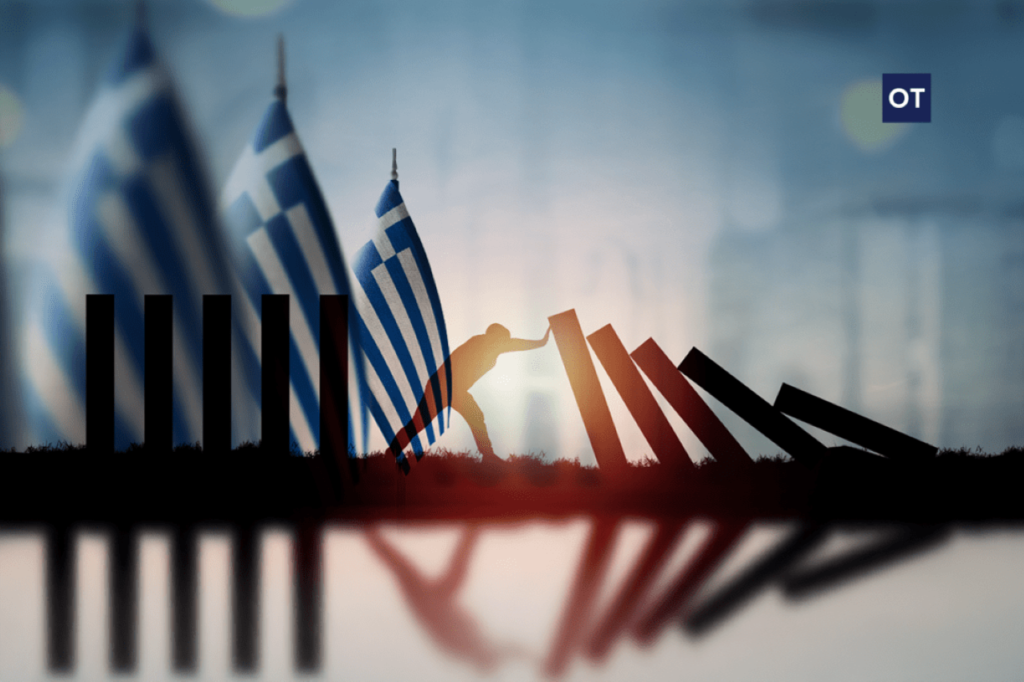
This time, his Italian counterpart Antonio Tajani did not respond. He is busy managing a more pressing problem with Berlin: Friedrich Merz‘s government intends to start sending back to Italy (as well as to Greece) migrants who arrived there first over the past year before moving on to Germany, the so called “Dublin cases,” meaning those covered by the Dublin rules. Meloni does not want a clash with Merz.
Germany is the most important political ally Italy currently has at the European level. Cooperation with Frederiksen is not enough on its own, and is more symbolic: in a new letter the two signed together on Monday, they explicitly linked irregular migration to rising crime and used that argument to call for more deportations and the creation of return hubs in third countries.
Meanwhile, according to an Italian government source quoted by La Repubblica, behind the scenes negotiations are underway to get Berlin to delay upcoming returns, starting with the planned return of a Somali woman on August 19. It isn’t certain, though, that a deal will be reached.
Merz may also need to show he is enforcing a tough migration policy, especially ahead of the Saxony election on September 6 and under pressure from the AfD. Across the European continent, it is the far right, using fear of migrants to rally its voters, that is now setting the terms of the debate, and of the panic.