 Μake us preferred on Google
A growing field of European companies is competing for defense contracts as militaries across the continent try to reduce their reliance on American technology, and on U.S. software giant Palantir Technologies in particular, for critical military functions.
The latest entrant is Germany’s Helsing, which last week unveiled a military intelligence platform called Clarity. The software is designed to sift through information from drones, satellites, military reports and open-source intelligence, helping users identify military assets and determine how they should be engaged. Helsing says its software and AI models are developed in Europe and run on customer-owned infrastructure. Clarity belongs to a wider class of AI tools meant to speed up military decision-making by processing huge amounts of data to spot threats and suggest responses, including targets and strikes.
Even so, some government and military officials say Europe does not yet have a product that matches Palantir’s scale, reach and battlefield track record.
The Central Dilemma
The hard choice for European armed forces is clear: either back domestic systems that offer more independence but may be less developed, or stick with a proven platform despite worries about long-term strategic dependence.
The predicament comes as the Trump administration presses Europe to shoulder more of its own defense, scales back the U.S. military presence on the continent and puts strain on NATO. Similar trade-offs between autonomy and capability arise in other areas, such as satellite communications, a field dominated by Elon Musk’s SpaceX. Last week, Ukraine reported new major disruptions to its SpaceX service across the entire front line and in Russian-occupied areas.
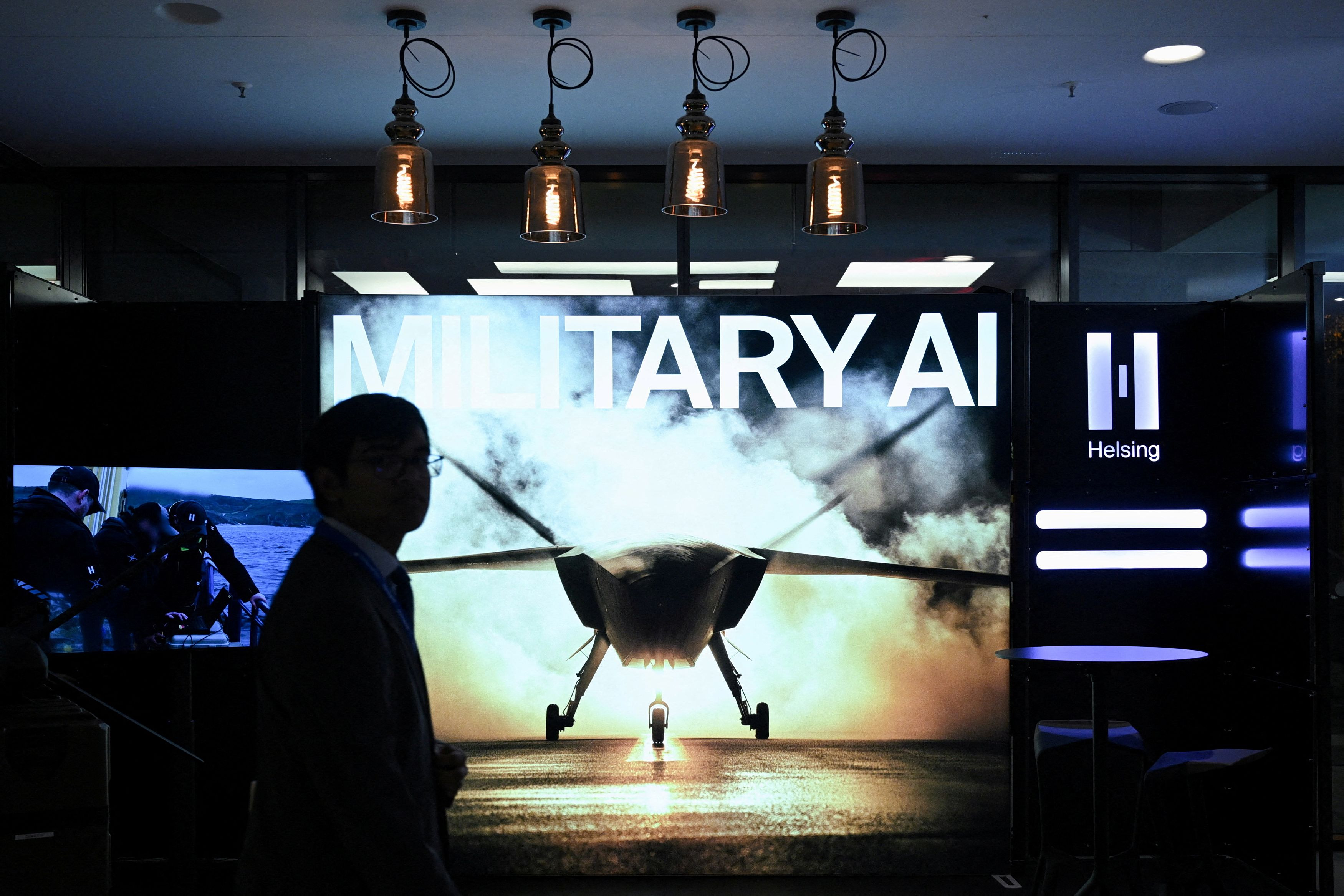
A delegate walks past a display showing an autonomous uncrewed combat aerial vehicle by Helsing at the Berlin Security Conference, a congress on European Security and Defence in Berlin, Germany, November 3, 2026. REUTERS/Annegret Hilse/File Photo
France, Germany And The Netherlands Chart Their Own Course
France, a leading champion of European autonomy, is building its own AI-enabled military platform, Arcadia. Alexandre Lahousse, deputy head of France’s defense procurement agency, told Reuters the system would draw on several suppliers. The agency expects to award at least some contracts by the end of the year and to have a version ready for field deployment by mid-2027.
Germany, which also wants an AI-based military data integration platform in service next year, is considering domestic and other European options. A person familiar with the matter said Berlin has narrowed its choices to a handful of candidates, none of them Palantir. According to the source, these systems would fall short of Palantir’s capabilities but would be adequate, keep national data under German control and could deliver about 80% of what is required within a year.
Berlin’s caution extends to its allies’ products as well. Internal German government notes seen by Politico Europe show Berlin is wary of Arcadia, the French-built Palantir rival. The worry is that adopting it would trade reliance on an American company for reliance on a French one.
The Netherlands, which currently uses some Palantir software, wants a European replacement within two years. Dutch arms procurement minister Derk Boswijk told Reuters the military is meeting potential suppliers and will likely need a mix of Dutch and other European providers. He said Europe has plenty of expertise in AI and decision-making, but that it is spread too thin.
Palantir’s Foothold In NATO
Palantir’s Maven Smart System has been used extensively by Ukraine against Russia. The Pentagon has made it its core military software and has relied on it in this year’s war with Iran.
NATO’s military headquarters adopted Maven last year and declared it ready for routine use across the alliance in June. NATO’s top commander, U.S. Air Force General Alexus Grynkewich, told Reuters this summer that he had not found any other tool able to combine such varied data and make sense of it as flexibly.
Speaking at a conference in Berlin on Friday, Lieutenant General Christian Freuding, head of the German army, said militaries are grappling with questions about data security, who trains AI systems and how to make different platforms work together. Interoperability is essential, he noted, because armies always fight as part of alliances.
NATO officials have warned that Russia could be capable of launching a large-scale attack on allied territory as early as 2029, a claim Moscow rejects.
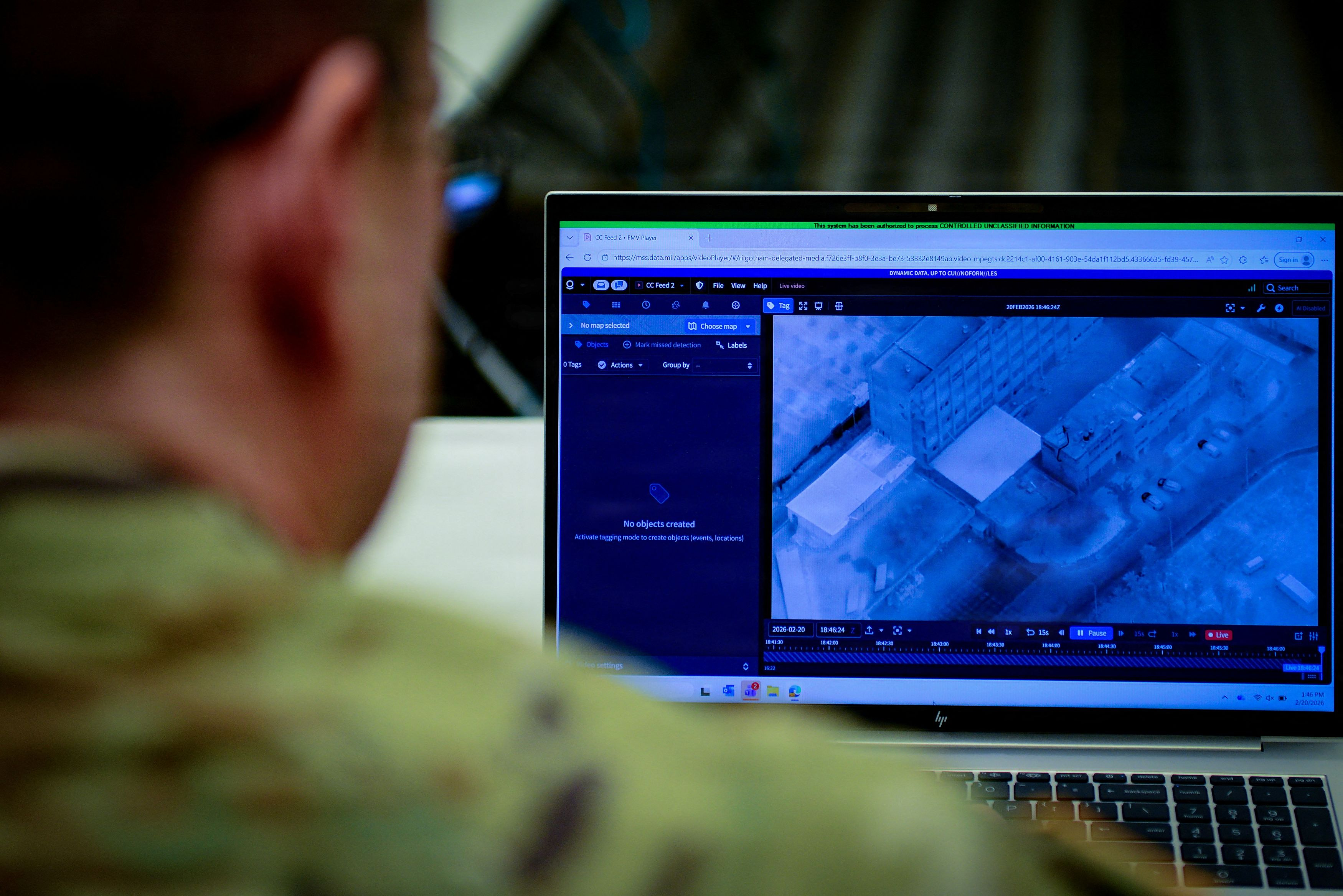
US Army Maj. Steven McPherson, a joint doctrine team chief with the National Guard Bureau, looks at the interface of the Maven Smart System in Arlington, Virginia, US, February 20, 2026. US Army Photo by Master Sgt. Whitney Hughes/Handout via REUTERS
A Crowded European Field
Helsing said it could deliver an early version of Clarity within months to the German army’s brigade in Lithuania, widely seen as the Bundeswehr unit most likely to face frontline combat in any war with Russia. However, Helsing did not disclose whether Clarity was already being used by military customers or when it expected it to enter service.
Other European players include Denmark’s Systematic, whose SitaWare product is used by the Bundeswehr and parts of NATO, established defense groups such as France’s Thales and Safran, and startups like Paris-based Comand AI.
Palantir, for its part, has tried to reassure European customers that the military AI system used by NATO has no “kill switch.” Louis Mosley, the company’s head of international business, told Reuters that European demand for Palantir’s products remains strong, including in Britain, whose defense ministry signed a three-year enterprise agreement with the company last year. He added that he still hopes to win over Germany by arguing that Palantir offers proven, battle-tested capability that is available now.