 Μake us preferred on Google
 Climate change is no longer a distant problem. It has grown into a major economic challenge hitting countries across the globe.
Rising temperatures, more frequent heat waves, and prolonged periods of extreme heat are disrupting productivity, reducing economic output, and placing mounting pressure on workers and businesses alike. From Europe to India, evidence is accumulating that heat-related losses now represent a structural threat to economic growth.
Scientists have repeatedly warned that global temperatures are rising at an unprecedented rate. The last decade was the hottest on record, and 2024 was officially the warmest year ever recorded worldwide. As climate change intensifies, countries are experiencing not only environmental damage but significant economic consequences that could reshape labor markets, industries, and long-term growth prospects.
Europe: The Fastest-Warming Continent
Europe has emerged as the fastest-warming continent on Earth. According to the European State of the Climate report, temperatures across the continent have risen at roughly double the global average rate since the 1980s. This rapid warming has led to more frequent and severe heat waves, which are increasingly affecting economic performance.
Research published in Nature Communications examined the impact of major heat waves during exceptionally hot years, including 2003, 2010, 2015, and 2018. The findings revealed that economic losses during those years ranged between 0.3% and 0.5% of Europe’s GDP, significantly higher than the historical average annual loss of around 0.2% of GDP recorded between 1981 and 2010.
While those figures may seem modest at first glance, they represent billions of euros in lost economic activity. Reduced worker productivity, increased health-related absences, and disruptions in sectors such as agriculture, construction, and manufacturing all contribute to these losses.
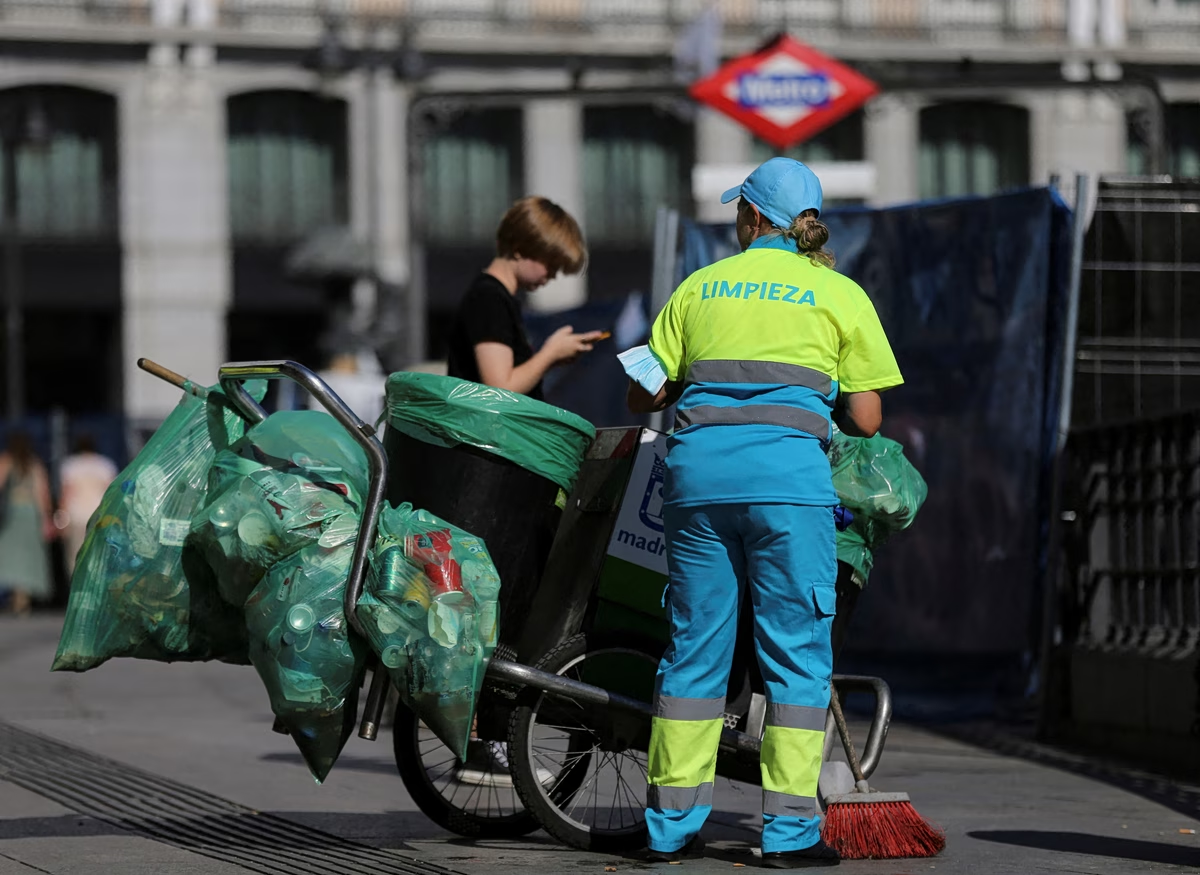
A Street Cleaner working amidst the years second heat wave, in Madrid Spain, on July 20, 2022. REUTERS/Isabel Infantes
The Future Looks More Costly
The economic outlook is growing increasingly concerning. Researchers project that average heat-related economic losses could rise dramatically in the coming decades if no additional adaptation or mitigation measures are implemented. Historical losses averaged around 0.21% of GDP between 1981 and 2010. Projections suggest that figure could climb to 0.77% by 2035 to 2045, approach 1% by the 2050s, and exceed 1.14% by the 2060s. These numbers suggest that climate-related economic damage may become a permanent burden on national economies.
Southern Europe Faces the Greatest Risks
The effects of extreme heat are not distributed evenly across Europe. Southern European countries are expected to suffer the most severe economic consequences, given their already warm climates and greater exposure to heat waves. Countries such as Cyprus, Croatia, Portugal, Malta, Spain, and Romania could face economic losses exceeding 2.5% of GDP by mid-century. Greece and Italy are also projected to sustain significant reductions, while France faces considerable economic risk despite its comparatively milder climate.
These regions rely heavily on sectors that are particularly vulnerable to heat, including tourism, agriculture, and labor-intensive outdoor industries. As temperatures continue to rise, maintaining productivity and protecting workers will become increasingly difficult.
India: A Preview of What’s to Come
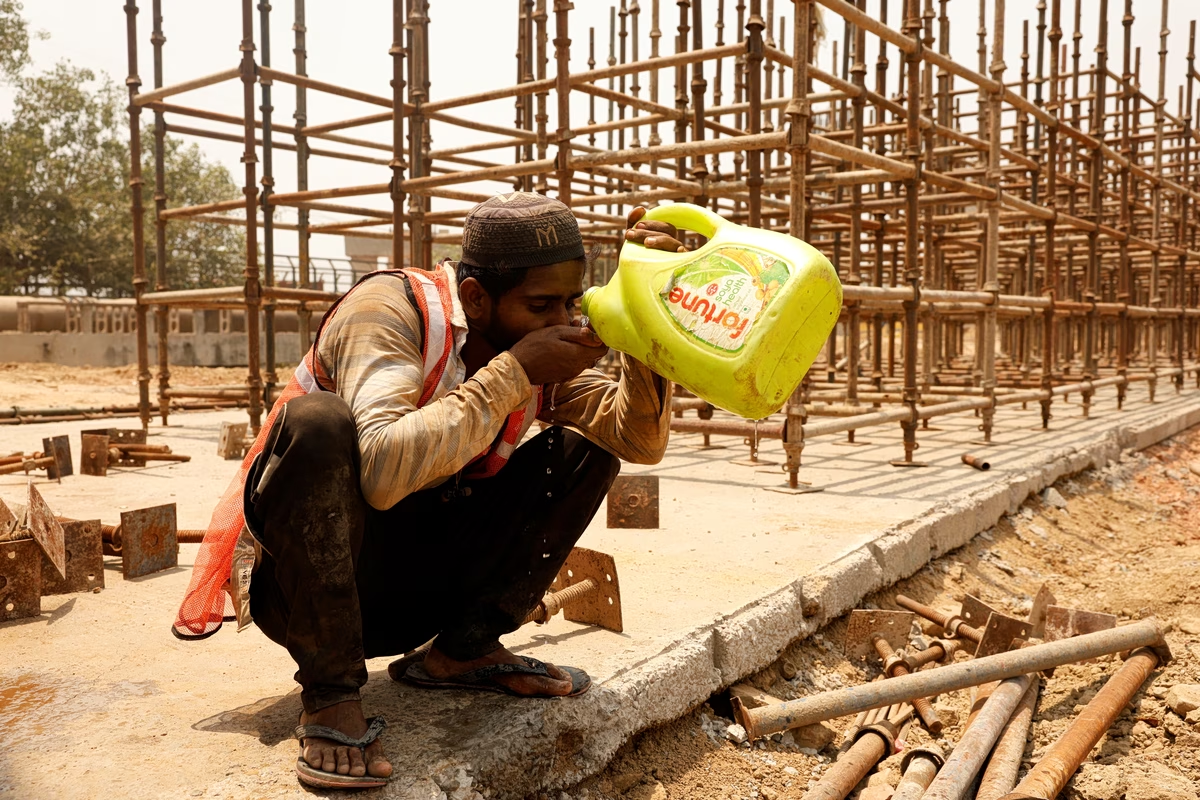
While Europe illustrates the growing economic cost of climate change, India offers a stark example of how extreme heat can directly undermine productivity in developing economies. In cities like Kanpur, temperatures regularly exceed 46 degrees Celsius during summer months. Workers in factories, construction sites, and outdoor industries are being forced to slow their pace, take more breaks, or stop working altogether.
Businesses are already reporting sharp drops in productivity as workers struggle to cope with dangerous heat conditions. At leather goods facilities in Kanpur, managers have introduced hydration programs and cooling measures to protect staff. Despite those efforts, many workers continue to suffer heat-related illnesses, while others abandon their jobs or return to their home villages during the hottest months.
For business owners, the consequences are immediate: lower production, higher operating costs, and increased absenteeism translate directly into reduced output and profits.
Study suggests a single day of extreme heat kills 3,400 people in India
Scientists estimate that a five day heatwave is associated with nearly 30,000 excess deaths nationwide, highlighting the growing public health risks posed by extreme temperatures pic.twitter.com/k7EUvRc7aQ
— non aesthetic things (@PicturesFoIder) June 1, 2026
Research indicates that labor force losses stemming from rising temperatures and humidity could threaten between 2.5% and 4.5% of India’s GDP by 2030. Other studies have found that factory output drops significantly as temperatures rise, and absenteeism increases due to health problems.
The Lancet Countdown on Health and Climate Change estimated that India lost 247 billion potential working hours due to heat exposure in 2024 alone, a dramatic increase compared to previous decades.
Businesses Adapt to a Hotter Reality
Across India, construction companies have shifted outdoor work to early morning and late evening hours to avoid the hottest parts of the day. Manufacturers are extending breaks, investing in cooling systems, and adjusting production schedules. Some companies have installed air conditioning in production facilities, created shaded walkways, and implemented structured work-rest cycles. Others provide cooling vests, hydration solutions, and designated rest areas for workers exposed to high temperatures.
However, these solutions often remain out of reach for workers in the informal sector, who make up a significant share of India’s workforce. Millions continue to work in extreme conditions because they simply cannot afford to stop.
Building Climate-Resilient Economies
Experts increasingly argue that adapting to extreme heat requires far more than short-term workplace adjustments. Long-term solutions must include better urban planning, expanded green spaces, improved building design, and stronger worker protections. Cities need to prioritize cooling infrastructure, shaded public spaces, and reliable access to water. Governments must enact regulations that protect workers from dangerous heat exposure, while encouraging businesses to adopt climate-resilient practices.
Without these measures, the economic cost of climate change will continue to mount, threatening productivity, public health, and economic growth across the globe.