Socks in the colors of the United Kingdom, turquoise ties of dubious quality, cigarette butts scattered around, empty plastic beer cups, and a man dressed as a medieval knight.
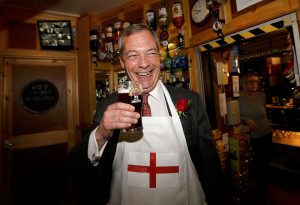
At the entrance of the conference center in Birmingham, the line of delegates had formed early on Friday morning. Tickets had sold out, and thousands had shown up. The average age was high, and the enthusiasm was even higher. Every time the name “Nigel” came over the loudspeakers, the crowd responded like a congregation. That is the kind of relationship Reform UK’s leader has with his audience.
Nigel Farage’s party held its established annual conference last weekend, kicking off Britain’s political season. Every year, in September and October, all political parties flood cities in southern and northern England in an effort to push their message beyond London. For the professionals, journalists, activists, and political advisers who follow this traveling political circus from city to city, often reluctantly and always exhausted, it is a less than pleasant period.
Friday’s headline act in Birmingham spoke French. Jordan Bardella, the thirty-year-old president of Marine Le Pen’s National Rally, was the main foreign speaker. In broken English, he referenced the “centuries-old rivalry” between the two peoples that gave way, in the 20th century, to a “genuine friendship.” What followed was the familiar litany: closed borders, strong nation-states deciding their own fate, hard work, and self-sufficiency. A lot has changed since 2014, it seems, when Farage refused an alliance with Le Pen’s party, citing its antisemitism and prejudices. Back then, the French leader had accused him of “aggressiveness.”
Now things look very different for the two parties, both seen as being on the threshold of power in their respective countries. Farage and Bardella signed a memorandum of cooperation, with Reform pledging to end the Channel migrant crisis within its first hundred days in government by sending back anyone who crosses illegally. France, for its part, under a National Rally government, would crack down on smugglers operating in Calais and elsewhere.
The icing on the cake, though, was Farage’s somewhat surreal promise that as prime minister he would return to France the remains of the former emperor Napoleon III, who after his fall spent years in comfortable exile in the English countryside. Whether the French are actually eager to get Bonaparte’s less successful nephew back is another matter.
Not everything is going smoothly for Reform. For a few weeks now, the party has slipped slightly behind in the polls. As if that weren’t enough, just hours before the conference began, Channel 4 aired an explosive documentary in which close aides to Farage appeared to discuss paid polling funded by American donors.
Farage himself was fooled by actors working for the documentary’s journalists and was reportedly caught on camera seriously discussing party funding from an American company, something prohibited under British law. The party denies the allegations. Whatever the truth turns out to be, two senior Farage advisers had already resigned before the conference doors even opened.
On Saturday night, heading back to London with “Nigel, Nigel” still ringing in my ears, I found myself thinking back to the last time I wrote about this party, when Farage was fighting for reelection against “Count Binface.” Now the conference has been overshadowed by the Channel 4 documentary. Is Reform’s leader starting to lose his magic?