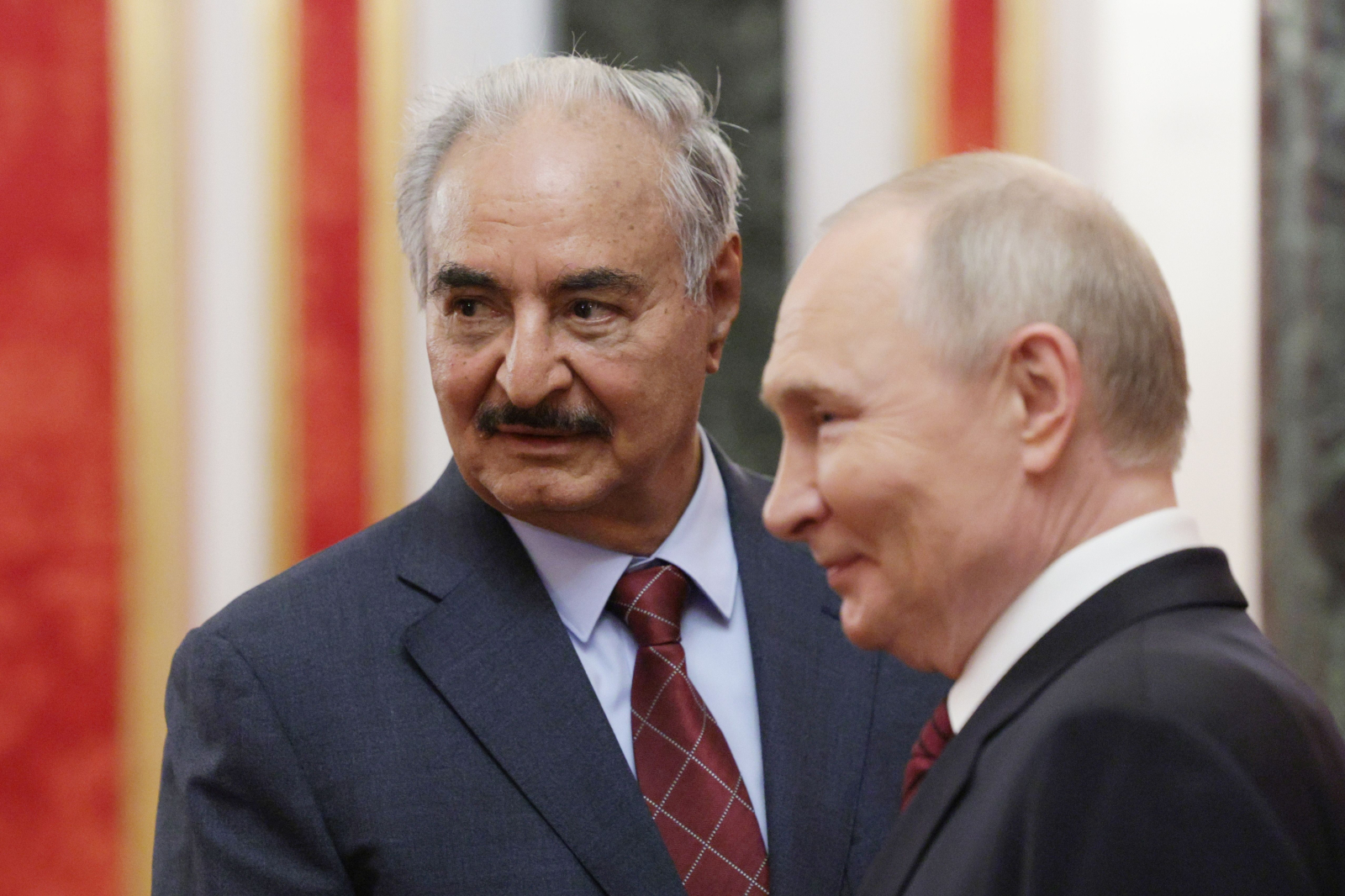
As migration from North Africa into southern Europe surge, Greece and the European Union are actively seeking diplomatic channels to strike a migration agreement with Eastern Libya, led by military commander Khalifa Haftar.
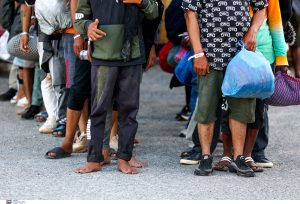
According to Greek Migration and Asylum Minister Thanos Plevris, around 4,000 migrants entered Greece from North Africa in 2024. That number has doubled in the first seven months of 2025, reaching approximately 8,000—a 350% increase, with most arrivals originating from the region of Tobruk.
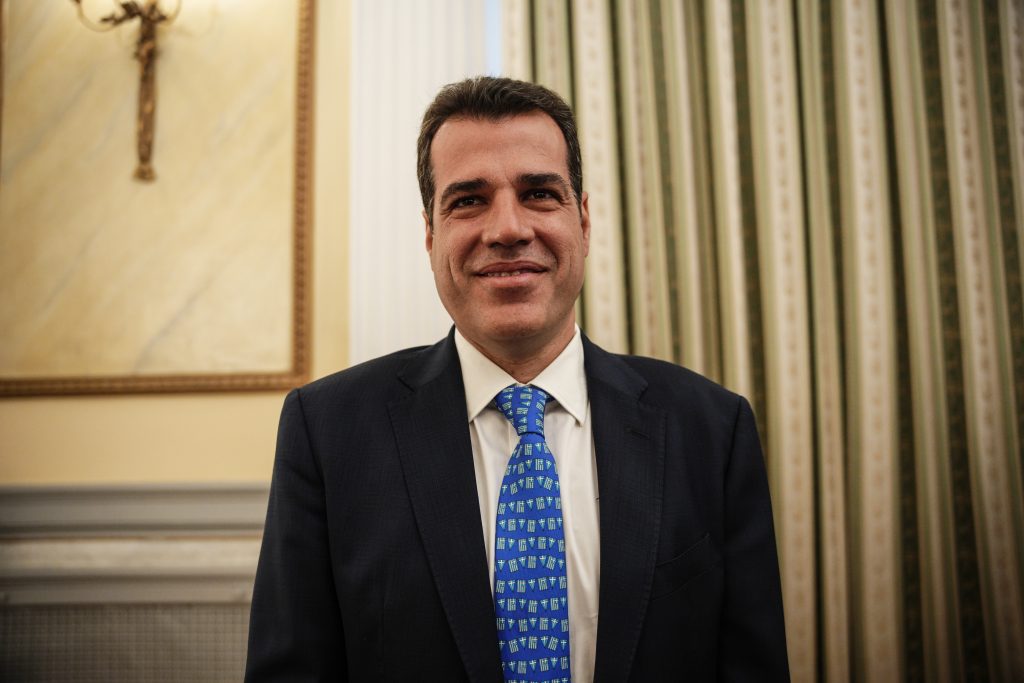
Swearing-in of a new Minister and new Deputy Ministers of the Government, at the Presidential Palace, Athens, on June 30, 2025 / Ορκωμοσία νέου Υπουργού και νέων Υφυπουργών της Κυβέρνησης, στο Προεδρικό Μέγαρο, Αθήνα, στις 30 Ιουνίου, 2025
Unlike in the past, when migrants often used small boats, authorities now report the use of large 30-meter fishing vessels dangerously overloaded with 300 to 500 people, though designed for only about 30. This dramatic shift has reignited debates in Greece, with the government calling it a form of “invasion” and the opposition accusing it of using the crisis to justify a far-right policy turn.
Divided Libya, Strategic Challenges
Efforts to manage migration without a Libyan agreement are seen as unsustainable, especially with approximately two million Sudanese displaced by civil war currently along the Libya-Egypt border.
However, reaching a deal is far from straightforward. Libya remains politically fragmented, with two rival governments. The Tripoli-based administration, recognized internationally, faces an ongoing insurgency, while the Benghazi-based government under Haftar seeks equal legitimacy and has strong ties with Russia and Turkey.

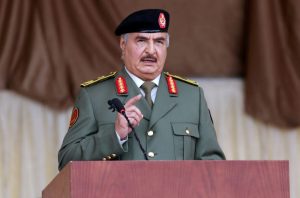
FILE PHOTO: Libyan military commander Khalifa Haftar gestures as he speaks in Benghazi, Libya December 24, 2020. REUTERS/Esam Omran Al-Fetori/File Photo
Despite these complications, Greece and the EU are pushing ahead. A recent visit by Greek Foreign Minister Giorgos Gerapetritis to Benghazi was reportedly well-received by Haftar and his inner circle. Though the talks were informal, Greek diplomats interpreted the visit as a goodwill gesture, signaling Eastern Libya’s interest in closer ties with Athens—even in the face of stronger economic offers from Ankara.
Diplomatic Tensions and Recalibration
Tensions flared recently when representatives from the EU, Greece, Italy, and Malta were declared “persona non grata” by the Benghazi government for refusing to meet with its leadership. In an apparent attempt to ease the strain, Haftar’s son, Al Sadiq Haftar, visited the head of the Greek community in Benghazi the next day, delivering a commemorative plaque in memory of his children. The visit was widely interpreted as a symbolic message that Eastern Libya values its relationship with Greece.
Subsequently, another of Haftar’s sons, Belkacem Haftar—head of the Organization for Reconstruction and Development—invited the Greek consul for talks, downplaying the incident as a mere “protocol issue.”
Toward an Agreement
Further engagement is already underway. A second EU delegation—including the migration ministers of Greece, Italy, and Malta—is preparing to visit Benghazi following the failed attempt last week. In September, a Greek business delegation is also scheduled to travel to the city.
On Tuesday, Foreign Minister Gerapetritis is expected to continue discussions in Tripoli, aiming for an agreement similar to the existing EU-Turkey migration pact.
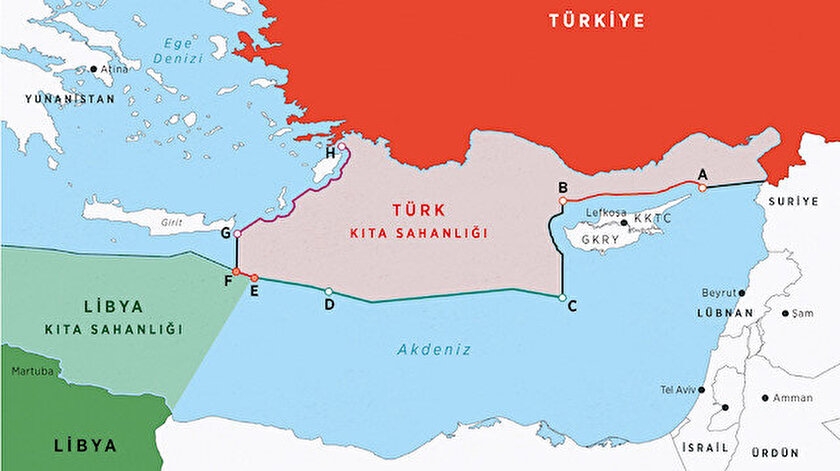
Brussels, meanwhile, maintains that a recent diplomatic mishap in Benghazi was not linked to migration policy or EU funding, but likely driven by political motives and possibly the contentious Turkey-Libya maritime memorandum. EU officials emphasize that the MoU on maritime boundaries between Turkey and Libya violates the sovereign rights of third states, does not align with international maritime law, and carries no legal weight for countries not party to the agreement.
Domestic Political Fallout
Back in Greece, the government’s tougher stance on migration has provoked strong domestic and international criticism. The new policy of “detention or deportation” is rejected by opposition parties, who call for adherence to international and EU law.
A new regulation passed in Parliament suspending asylum applications for three months has drawn condemnation from multiple bodies, including the UN High Commissioner for Refugees, the Council of Europe’s Human Rights Commissioner, Greece’s Ombudsman, and the Association of Administrative Judges.
Plevris defends the measures, claiming they are constitutional and modeled after the government’s 2020 actions in the Evros region. He has also announced a new migration bill that would criminalize unauthorized residence in Greece, punishable by up to five years in prison unless the individual agrees to voluntary return. Other planned measures include reduced benefits, changes to food provision, and the establishment of two new closed detention centers on the island of Crete.
Eyes on Gaza
Greece is also keeping a close watch on developments in Gaza. Though EU officials hope displaced Palestinians will remain in the region, aided by funding to Jordan and Egypt, the possibility of secondary movements toward Europe remains.
Some individuals in Gaza with EU passports may seek family reunification in Central Europe, particularly in Germany. The broader concern remains: once peace returns, it is unclear where those displaced by conflict will attempt to rebuild their lives.