Kosovo Prime Minister Albin Kurti has promised to move quickly to form a new government after his party emerged as the clear winner in Sunday’s parliamentary election, potentially bringing an end to a year-long political deadlock that has paralyzed the country’s institutions.
Kurti’s Vetevendosje (Self-Determination) Party was leading with 49.3% of the vote, with 99% of ballots counted after polls closed on Sunday evening. The election was Kosovo’s second in 2025, following months of failed coalition talks after Kurti’s party fell short of a majority in February.
“Once the results are certified we should swiftly constitute the parliament and then form immediately a new government,” Kurti told reporters at his party’s headquarters in Pristin, as reported in Reuters. “We don’t have time to lose and we should move forward as fast as we can together.”
The prolonged political crisis prompted President Vjosa Osmani to dissolve parliament in November and call an early vote. The impasse has delayed key decisions and threatened vital international funding, including loan agreements with the European Union and the World Bank.
Kurti called on opposition lawmakers to back international loan deals, which require a two-thirds majority in the 120-seat assembly. Kosovo’s parliament must also elect a new president in April, adding urgency to efforts to restore full legislative activity.
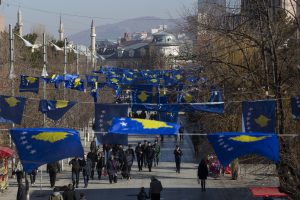
Celebrations broke out in Pristina as Kurti’s supporters waved party flags and set off fireworks despite freezing temperatures. However, analysts caution that forming a government may still require coalition partners.
Doubts and Opposition
“The results are not final and I don’t see how Kurti will form the government alone, but it will be very easy for him to govern with a small coalition,” said Ismet Kryeziu of the Kosovo Democratic Institute. He noted that Kurti would need only a handful of additional votes from Albanian or minority parties to secure a governing majority, with some conditional ballots and diaspora votes from Western Europe still to be counted.
The main opposition Democratic Party and Democratic League trailed with 21% and 13.6% of the vote respectively. Both have previously refused to govern with Kurti, criticising his handling of relations with Western allies and his approach to Kosovo’s ethnically divided north, where a Serb minority lives. Kurti has blamed the opposition for blocking the formation of a stable government.
During the campaign, Kurti pledged an extra month’s salary each year for public sector workers, 1 billion euros annually in capital investment and the creation of a new prosecution unit to fight organised crime. Opposition parties also focused on living standards, a top concern for voters. Voter turnout stood at 45%.
Kosovo declared independence from Serbia in 2008 with U.S. backing. Despite international support, the country of around 1.6 million people has faced persistent challenges including poverty, political instability and organised crime. Kurti’s current term, which began in 2021, marked the first time a government in Pristina completed a full mandate.
Tensions with Serbia escalated in 2023, leading the European Union to impose sanctions on Kosovo. Although the bloc said this month it would lift the measures after ethnic Serb mayors were elected in northern municipalities, the sanctions are believed to have cost Kosovo hundreds of millions of euros.