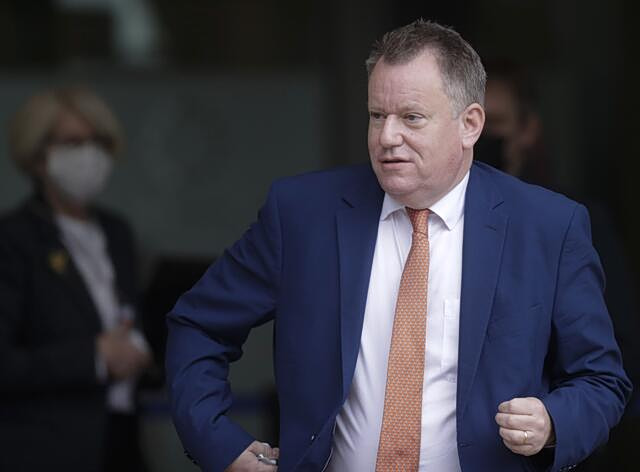
Few figures have played a more direct role in shaping Britain’s post-Brexit relationship with Europe than Lord David Frost. A former diplomat and close adviser to Boris Johnson, Frost was appointed the UK’s chief Brexit negotiator in 2019, leading the negotiations that resulted in the revised Withdrawal Agreement, including the contentious Northern Ireland Protocol.
He subsequently spearheaded negotiations with Brussels over the future UK–EU relationship, culminating in the Trade and Cooperation Agreement signed in December 2020.
As Brexit Minister, he later oversaw the implementation of the agreement and sought to renegotiate aspects of the Northern Ireland Protocol, becoming one of the most prominent defenders of British sovereignty and regulatory independence.
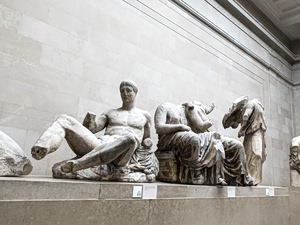
When we last spoke in December 2024, Lord Frost supported a negotiated agreement on the Parthenon Sculptures, provided it was presented as a partnership rather than an act of cultural restitution.
Since then, discussions between Athens and London have faced fresh obstacles, while proposals involving long-term loans have encountered resistance from Greece, which continues to demand permanent reunification.
Meanwhile, Britain is confronting renewed questions about Brexit’s economic consequences and its future relationship with the European Union, amid growing calls for closer cooperation with Brussels.
In this exclusive interview with TO VIMA International Edition, Lord Frost revisits the Parthenon Sculptures dispute, examines Brexit’s legacy and considers Britain’s place in a changing Europe. Does the man who negotiated Brexit still believe its promises can be fulfilled?
The Parthenon Sculptures: Political Will or Legal Obstacles?
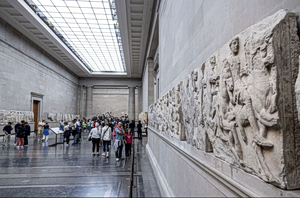
As the architect of Britain’s post-Brexit trading relationship with the European Union, Lord Frost is no stranger to complex negotiations involving sovereignty, legal constraints and competing political interests. His experience negotiating with Brussels provides an interesting perspective on the long-running dispute over the Parthenon Sculptures. While he supports their return to Athens through a mutually beneficial agreement, he insists that the British Government cannot avoid political responsibility by leaving the matter entirely to the British Museum.
Before becoming Prime Minister, Andy Burnham called for the Parthenon Sculptures to be returned to Greece with “no strings attached”. In office, he has said that the decision rests with the British Museum. Does this suggest that the principal obstacle is really the Museum and the law, or a lack of political will in Downing Street?
It suggests that on this subject Andy Burnham speaks without knowing the detail, just as he does on many other subjects. Of course, the British Museum and the Greek authorities could come to a deal, but if it was a loan it would not do the job, and if it was anything else a change in the law would be required.
Burnham cannot sidestep his responsibility if he genuinely wants something to change.
You have previously argued that the time has come for Britain to make a “grand gesture” by returning the Parthenon Sculptures to Athens as part of a wider Anglo-Greek cultural partnership. Do you still believe this is the right approach, and has anything in the recent developments, public positions and statements changed your view?
I do indeed still think this.
Prime Minister Kyriakos Mitsotakis has rejected the idea that the loan of the Bayeux Tapestry to Britain could serve as a model for an agreement, arguing that Greece cannot “borrow” something it considers to be an integral part of its own cultural heritage. Do you believe a settlement is possible without requiring Greece to recognise the British Museum’s ownership of the Sculptures?
I doubt that a settlement would be possible without Greece recognising that the British Museum legally owns the sculptures now. It’s what I believe is a correct description of the current situation, it seems a necessary part of reaching an accommodation, and I don’t see why Greece should object to it in the context of a deal that gives Greece what it wants.
Talks between Greece and the British Museum appear to have reached an impasse. In your view, what is preventing the two sides from reaching an agreement, and what would be required to break the deadlock?
The government itself has to be committed to a new deal if one is to be reached. It can’t be done without that. But the history suggests that British politicians on the left say they are open to a deal in opposition or out of power, and then in government hope the whole thing will go away.
You have suggested that the return of the Sculptures should form part of a much broader cultural partnership between Britain and Greece. What would such a partnership look like in practical terms, and what could Britain reasonably expect in return?
Student exchanges, scholarships, new academic posts. A new Museum of Greek culture in London, or a properly dedicated part of the British Museum, funded by wealthy Greeks. And an accurate fully detailed copy of the Marbles in the British Museum.
Some critics argue that returning the Parthenon Sculptures would create a precedent for museums facing restitution claims from around the world. Do you regard that concern as justified, or is the case of the Parthenon Sculptures sufficiently distinctive to be treated separately?
I do regard the concern as justified. But I think the sculptures are a special case, resting on the fact that they were designed for a specific place in Greece, and that returning them allows them to be seen, as far as possible, as they were originally intended.
Breaking the Deadlock: Downing Street Must Act
Having negotiated directly with the European Commission on behalf of Boris Johnson’s Government, Lord Frost understands the importance of political leadership in overcoming seemingly intractable disagreements. The Brexit negotiations demonstrated how legal frameworks and institutional obstacles could become central to diplomatic disputes. In the case of the Parthenon Sculptures, he argues that a lasting agreement would require direct government involvement and, potentially, changes to British legislation. For Frost, the question is whether the political determination exists to make such a settlement possible.
The British Government has traditionally maintained that the question is primarily a matter for the British Museum. Do you believe ministers should now become more directly involved in seeking a lasting settlement?
If they want to settle this problem then they need to get involved. If they don’t, and I’m not sure they really do, then the best thing for them is to do what they are doing now and hope the whole thing goes away.
There is also the question of legislation, particularly the British Museum Act 1963 and the restrictions it places on the Museum’s ability to dispose of objects in its collection. If a permanent settlement required legislative change, should the Government be prepared to amend the law?
Yes, in the context of the right deal.
The argument for keeping the Sculptures in London has often rested on the idea of the British Museum as a “universal museum”, where objects can be understood within the context of different civilisations. How persuasive do you find that argument today, particularly now that Athens has the Acropolis Museum?
I believe the case for the British Museum as a universal museum is a strong one. I do not believe it is significantly affected by handing over one artifact, even if it is an important one, provided a full copy can be kept.
More broadly, do you think Britain’s approach to the Sculptures affects its relationship with Greece and the way Britain is perceived internationally? Could resolving this dispute strengthen Britain’s cultural diplomacy and its relationship with Greece?
Not particularly. I think it would help at the margins and be seen as a good gesture, but it is not central to how Britain is perceived anywhere other than in Greece, and perhaps not even there!
If you were advising the Prime Minister and the British Museum today, what practical route would you suggest for reaching an agreement with Athens that both sides could regard as durable?
We should aim at the deal I have sent out before, that is, full return of the marbles in return for a full cultural partnership. That can only be unlocked at the political level.
Brexit: No Turning Back
Lord Frost was one of the central figures in Britain’s departure from the European Union. Appointed chief Brexit negotiator under Boris Johnson, he helped secure the revised Withdrawal Agreement in 2019 before leading negotiations that produced the EU–UK Trade and Cooperation Agreement in December 2020.
He subsequently became Brexit Minister, overseeing relations with Brussels and challenging the arrangements governing Northern Ireland. A committed advocate of British sovereignty, Frost remains firmly opposed to renewed European integration, arguing that Brexit represented a fundamental democratic decision to restore national independence.
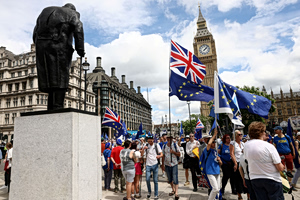
You have been the UK’s Chief Brexit Negotiator under Prime Minister Boris Johnson. Ten years after the Brexit referendum, Prime Minister Andy Burnham has said Britain should consider the full range of options for its future relationship with Europe, including closer integration and potentially, in the longer term, rejoining the EU. As one of the principal architects of the post-Brexit settlement, how do you view this change in the political debate? Do you feel that another referendum would be useful right now?
I profoundly disagree with the Prime Minister on this. Brexit was a vote for full national independence, not for control by other people’s laws without getting a say in them, which is what rejoining the Customs Union or the single Market would offer.
Still less do I think we should reopen the whole question of whether to rejoin, and the polls suggest that, whatever their original opinions on Brexit, most Brits do not want to either.
The Prime Minister should concentrate on governing the country of which he is in charge, not constantly fantasising about a different relationship with the EU as a way out of his problems.
You recently argued that it is time for Britain to “see Brexit through”. What does that mean in practical terms? What, in your view, remains unfinished about Brexit?
The Northern Ireland arrangements, which leave that part of the UK as part of the single market and Customs union, cannot remain for long.
There needs to be a new settlement there too which allows the people of Northern Ireland to vote on all the laws to which they are subject.
That is a basic requirement of democracy. Any future government of the right needs to take this task on and see it through.