It began as a grandiose energy project with significant geopolitical implications, as it would serve to promote Greece’s presence and influence in the eastern Mediterranean. However, it is turning into a dangerous “shipwreck”, dragging Greece-Cyprus relations into a quagmire.
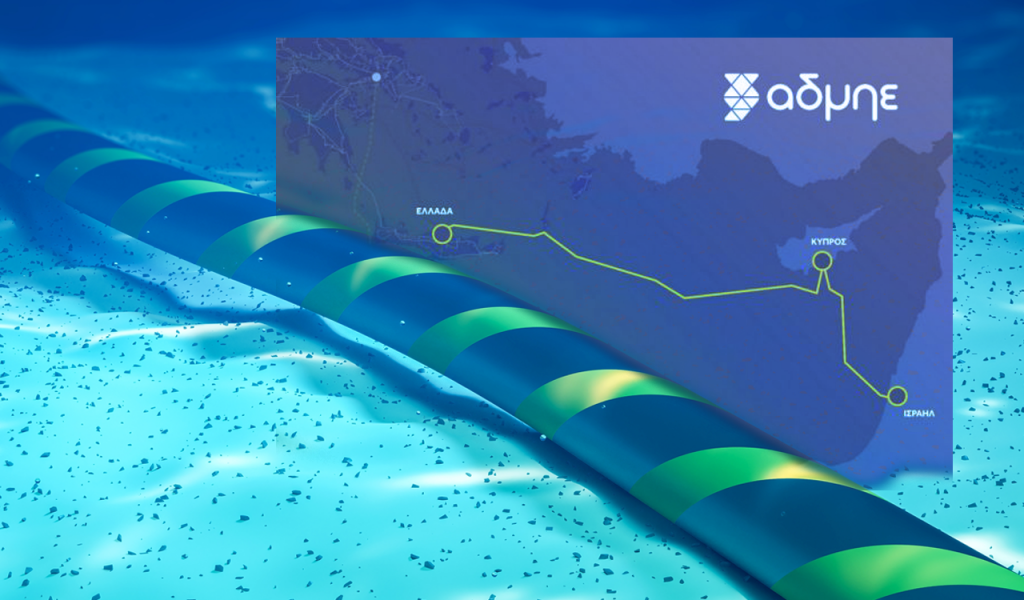
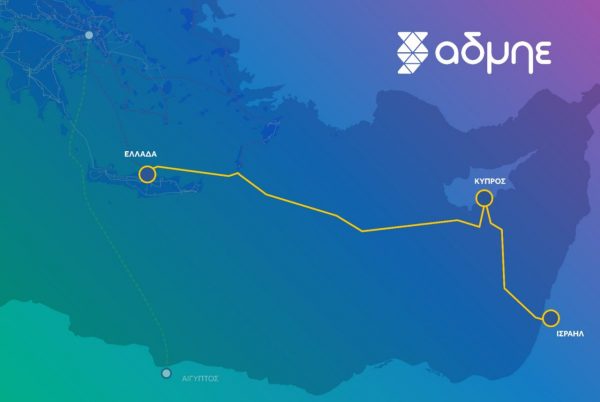
The reason is none other than a planned power interconnection between Greece and Cyprus, the infamous “cable,” which last week led to the culmination of an unprecedented — at least in the post restoration of democracy era – clash between Athens and Nicosia, raising further doubts about the credibility of both sides and their diplomatic reach in the eastern Mediterranean.
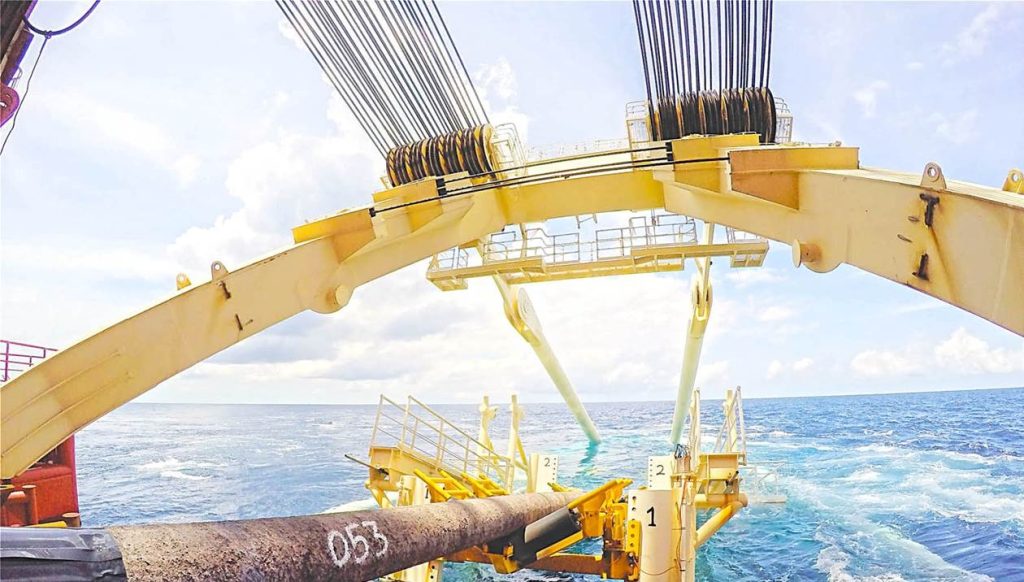
The latest episode in the long-running saga of the Great Sea Interconnector (GSI) unfolded following a report in the Cypriot newspaper “Fileleftheros”, which outlined the financial demands made by Greece’s Independent Power Transmission Operator (IPTO or ADMIE) vis-a-vis the Republic of Cyprus. Despite temporary clarifications from both sides, the essence remains the same: ADMIE is demanding payment of the first installment of €25 million, as well as recognition of the expenses that, according to ADMIE, have been incurred to date for the execution of the project and which have exceeded €250 million. The Republic of Cyprus refuses to approve this cost and will not disburse the €25 million. It even demands that Athens honor its commitments by ordering the resumption of undersea research, regardless of the so-called “geopolitical risk.”
The latter, of course, refers to Turkish meddling, which led to the suspension of related research off the island of Kasos in July 2024.
The distance between Athens and Nicosia on this issue is vast, with leaders of both sides seeking ways to manage the crisis, which for several months now has seemed inevitable and is now proving unavoidable. “If we put aside the formalities, we could talk about a ‘national defeat’,” a veteran diplomat with experience in bilateral relations told To Vima.
No pretense
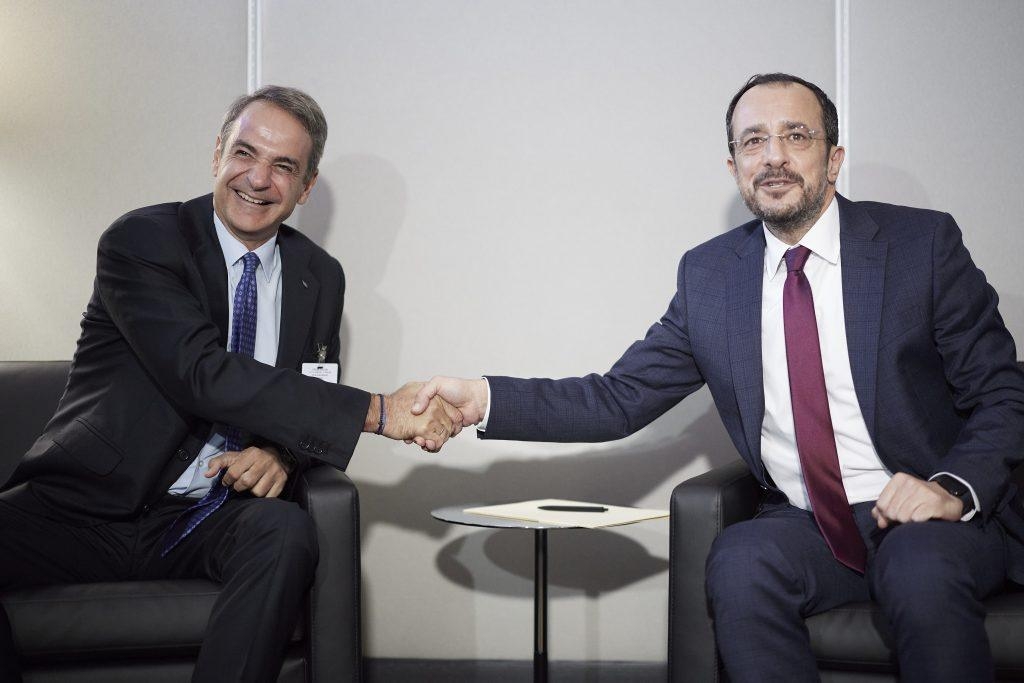
The widely acknowledged and excessive statements by Cyprus President Nikos Christodoulides, who, in response to ADMIE’s demands, spoke of “blackmail” against the Republic of Cyprus, provoked the wrath of Athens, with the Minister of Energy and Environment, Stavros Papastavrou, directly criticizing Nicosia, apparently after his consultation with the Maximos Mansion, the prime minister’s office.
“The Greek government does not blackmail,” Papastavrou said, fully backing ADMIE, whose major shareholder is the Greek state. Even on Cyprus, where most people believe that ADMIE’s management systematically presents Nicosia with faits accomplis, Christodoulides’ words came as a surprise. “I don’t remember any other president speaking so harshly,” an executive in the Cypriot capital told To Vima, expressing his deep concern that the public confrontation between Athens and Nicosia is going way beyond what’s acceptable, especially during such an unstable geopolitical situation.

Greece’s Minister of Energy and Environment, Stavros Papastavrou
However, Papastavrou, as well as the Cypriot president, the government spokesman in Athens, Pavlos Marinakis, and even Greece’s foreign minister, George Gerapetritis, rushed to dispel these impressions with an almost identical statement, but without much success:
“Relations between Greece and Cyprus remain unshaken regardless of the future of any project.”
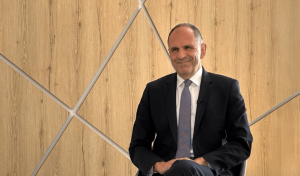
Gerapetritis was the first top official in Athens to publicly refer to a “freezing” of the project. “Until the outstanding issues are actually resolved and there is a unified position on commitment, we will remain in the current situation,” the foreign minister was quoted as saying on Skai radio.
Diametrically opposed demands
As far as requirements are concerned, the Greek government is fully aligned with ADMIE. Athens’ position was once again expressed by Papastavrou, who met with his Cypriot counterpart, George Papanastasiou. Moreover, the difficulty of the situation is illustrated by the fact that the transfer of the project license from the previous to the current owner, i.e. from EuroAsia Interconnector to ADMIE, was only completed on Friday. A senior diplomatic source pointed out to To Vima that, in addition to the payment of €25 million (note: considered essential for the project to continue), Nicosia must recognize the total cost, and the political leadership in the free area of the Republic of Cyprus must explicitly commit to the project, speaking with a “united voice.”
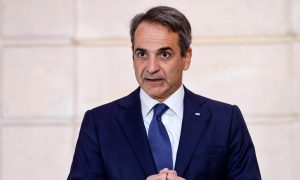
In Athens, it is now believed that questions over the project’s economic viability emanate from vested interests active in the energy sector, as well as political expediency. To corroborate this, sources close to the ministry of energy point out that the escalation of reactions against the implementation of the cable was recorded in Cyprus in parallel with Greek Prime Minister Kyriakos Mitsotakis’ repeated commitments that research and groundwork for the GSI will be completed despite Turkish objections.
For Nicosia, however, the turning point in developments was harassment off Kasos, almost a year and a half ago. A source from the Council of Ministers of the Republic of Cyprus, which in fact supports the project conditionally, told To Vima that “the fear is not related to finances or the payment of €25 million. The problem is that the undersea research will most likely be obstructed by Ankara.
However, neither the government nor taxpayers are willing to take on yet another project that will remain on paper. Furthermore, more and more people in Cyprus are realizing that Athens is not genuinely willing to lay the cable because of the Turkish threat.” Therefore, the Republic of Cyprus will not pay, let alone recognize the total cost of the project, unless it sees the research being carried out in the eastern Mediterranean.
Conversely, Athens will not proceed with chartering ships and issuing NAVTEX notifications unless the consideration is credited to ADMIE and Nicosia stops sending mixed messages.
Neither of these two scenarios seems likely, with the risk of prolonged Greece-Cyprus tension, on the specific issue at least, looming. Sources close to the political leadership at the foreign ministry in Athens stressed, however, that “the case will not drag on for long,” without specifying whether the issue will be referred to the Greek calendar so that it can be forgotten within a reasonable period of time, or whether specific initiatives are expected, but exclusively from Nicosia.
The difficult continuation
However, a series of intertwined questions that must be answered over the coming period will keep bringing the issue to the surface. When will the cost of the project’s non-completion clause be shared between Cypriot and Greek consumers, and how much will it be? Who will bear the costs already paid by ADMIE, given that the Greek government will not allow the company to collapse? What will happen to the €657 million committed by the Commission, which last Wednesday described the project as “strategically important,” and what will be the impact of this impasse on Europe? Who will French company Nexans, which is already manufacturing the cable, turn to?
The most important thing, especially for Athens, is that the circles who maintain that Ankara is in a position to impose its illegal positions in the eastern Mediterranean, as reflected in its “Blue Homeland” doctrine, are proven right. using the Turkey-Libya maritime agreement as a vehicle. This would also confirm Recep Tayyip Erdogan’s statement:
No energy project will be carried out in the region without Turkey’s permission or participation.”
Greece-Cyprus relations are reminiscent of the situation that prevailed during the difficult years of the 1950s and 1960s: publicly, assurances and compliments are exchanged, while behind the scenes, a confrontation flares up.