 Μake us preferred on Google
 Prime Minister Kyriakos Mitsotakis’ half-hour meeting with Israeli Prime Minister Benjamin Netanyahu at the United Nations headquarters and his address to the UN General Assembly brought his latest US visit to a close on Thursday, against a backdrop of heightened regional uncertainty and renewed but carefully measured signals on Greece-Turkey relations.
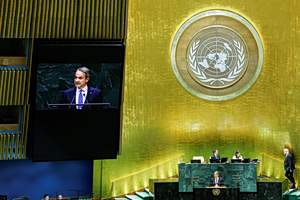
Greek Prime Minister Kyriakos Mitsotakis addresses the 81st United Nations General Assembly at UN headquarters in New York City, US, September 24, 2026. REUTERS/Eduardo Munoz
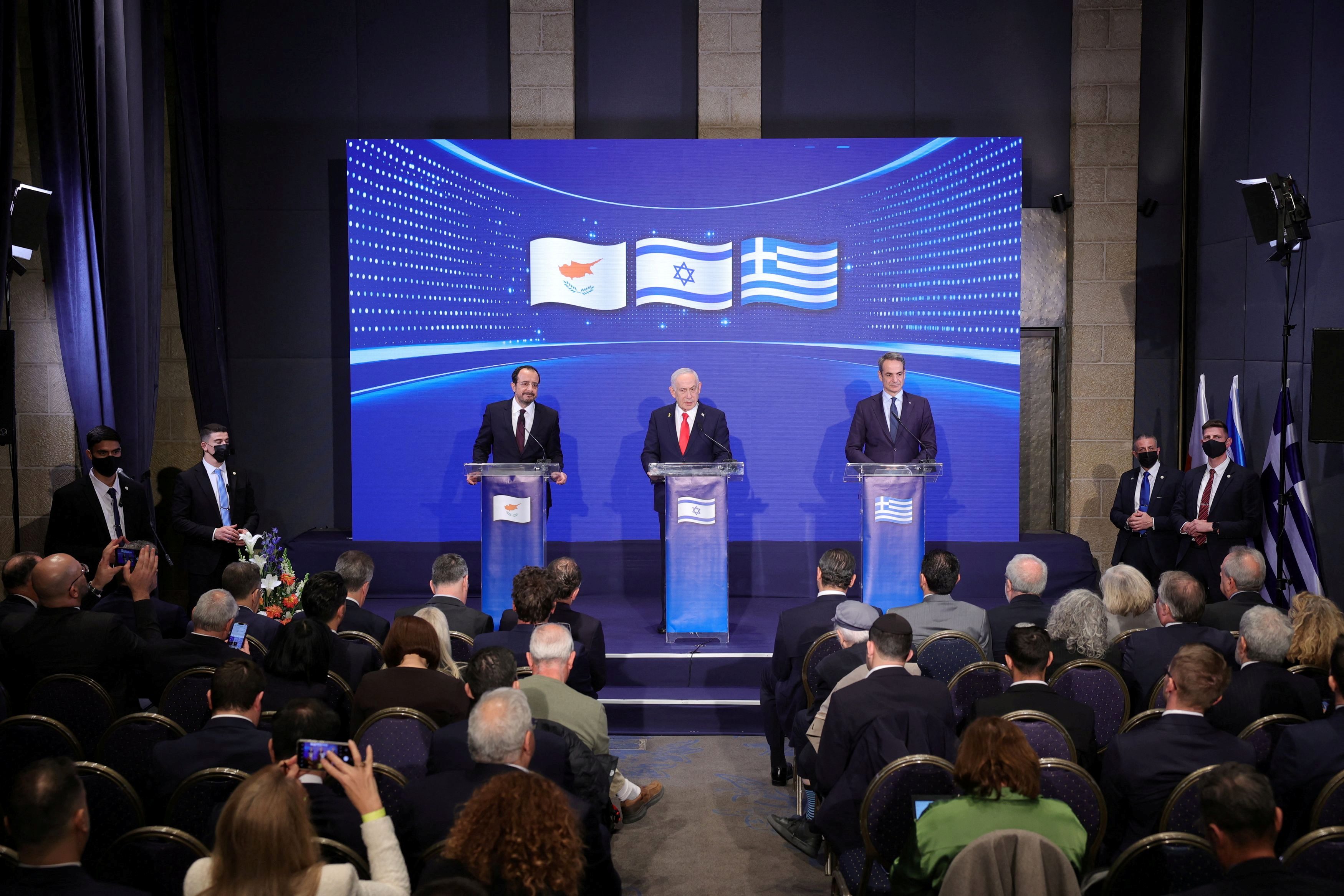
The meeting with Netanyahu, which was confirmed only hours beforehand, focused on regional developments, energy and defense cooperation and the strategic relationship between Greece and Israel. The two leaders also agreed to advance a new Greece-Cyprus-Israel trilateral summit, potentially before the end of 2026. Their previous trilateral meeting was held in Jerusalem in December 2025.
The timing and substance of the meeting underline the strategic dimension Athens attaches to its relationship with Israel. Netanyahu described the partnership as important for regional stability and welcomed Greece’s selection of Israeli defense systems, while the two sides also discussed energy cooperation.
Energy connectivity remains an important element of the broader relationship. The Greece-Cyprus-Israel electricity interconnection project, known as the Great Sea Interconnector (GSI), has a wider geopolitical dimension, while Greece’s emerging defense cooperation with Israel includes the “Shield of Achilles” air defense initiative. The combination of energy infrastructure and defense cooperation has increasingly placed the bilateral relationship within Greece’s broader strategy for security and connectivity in the eastern Mediterranean.
Mitsotakis’ meetings in New York also extended beyond foreign policy. During his US visit, he held discussions with major financial institutions, including Citi and Bank of America, focusing on the Greek economy, investment and energy-market challenges. He also participated in the third Europe Gulf Forum in Manhattan, bringing together European and Arab officials as well as representatives of the business and investment communities.
At the same time, Athens was closely monitoring at least one notable change, possibly only temporary, in the tone of Turkish President Recep Tayyip Erdogan’s remarks regarding Greece. Erdogan said Turkey was not Greece’s enemy but its neighbor and NATO ally, while he argued that bilateral relations were too sensitive and important to become material for electoral campaigns.
The Greek government interpreted the remarks as pointing in a different direction from some of the belligerent rhetoric heard in the recent past, while stressing that the underlying disputes between the two countries remained unresolved. A government source on Thursday evening said the objective should now be to reduce tensions that Athens maintained it had not created.
Mitsotakis subsequently addressed the issue from the UN General Assembly, keeping the door open to dialogue while reiterating Greece’s established positions on international law. He said the UN Convention on the Law of the Sea provides the institutional framework for resolving what Athens recognizes as the countries’ sole longstanding dispute — the delimitation of the continental shelf and exclusive economic zones — while rejecting threats of war or unilateral actions challenging international law.
The juxtaposition of the Netanyahu meeting, the renewed push for the trilateral format and the parallel signals from Ankara highlights the increasingly interconnected nature of Greece’s regional strategy: energy, defense, maritime security and infrastructure are being pursued within a broader network of partnerships, while Athens seeks to keep communication channels with Turkey open without altering its stated positions on the outstanding disputes.