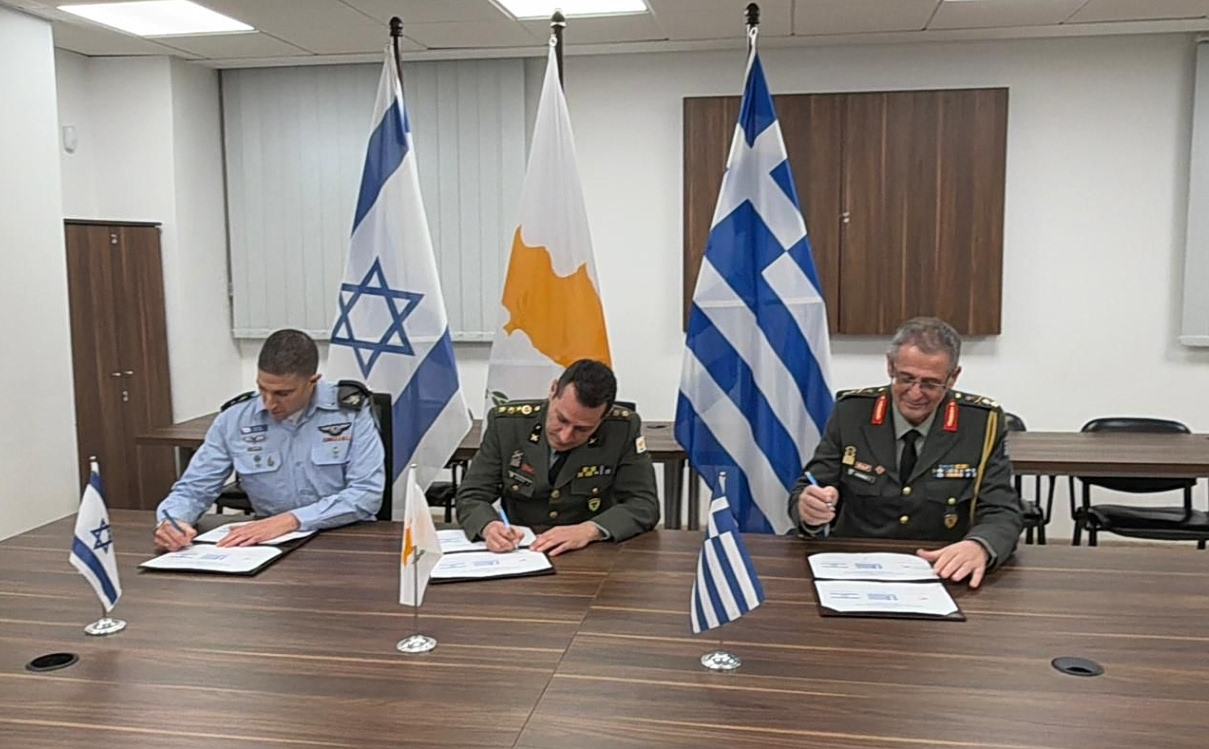
A trilateral agreement between Israel, Greece and Cyprus directly focusing on military cooperation in 2026 continued to cause reverberations throughout the wider region on Monday, after first being revealed a day earlier by Israeli media.
🔷️ Yunanistan, Kıbrıs Cumhuriyeti ve İsrail’in Üçlü Askeri İş Birliği Çalışma Programı İmzalandı
Yunanistan, Kıbrıs Cumhuriyeti ve İsrail arasındaki üçlü askerî iş birliği çalışma programı ile İsrail Savunma Kuvvetleri (İSK) ile Yunanistan Ordusu ve İSK ile Kıbrıs Ordusu… pic.twitter.com/w6ec4GZfnN
— IDF Türkçe (@TurkishIDF) December 28, 2025
The agreement, which was reported on Sunday, came directly on the heels of this month’s meeting in Jerusalem between the leaders of the three countries, Greek and Israeli prime ministers Kyriakos Mitsotakis and Benjamin Netanyahu, respectively, and Cyprus President Nikos Christodoulides.
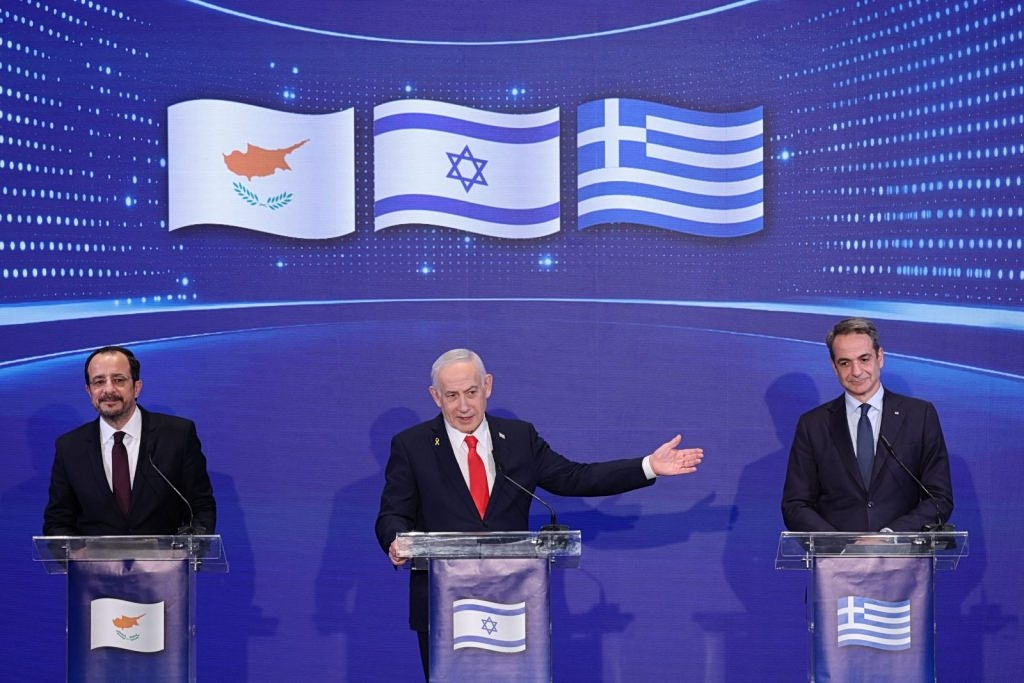
Cyprus President Nikos Christodoulides, left, Israeli Prime Minister Benjamin Netanyahu, center, and Greek Prime Minister Kyriakos Mitsotakis in Jerusalem, in December 2025.
The development generated increased attention by regional media and on social media, especially by Turkish-language outlets and users.
A handful of general details of the agreements were posted by the Israeli Defense Forces’ Turkish-language page on X.
According to an exclusive report by The Jerusalem Post on Sunday, although the signing took place last week in Nicosia, the military only revealed the development on Sunday.
The JP reported that the Israeli delegation was led by the IDF’s international cooperation division chief Brig. Gen. Amit Adler.
The first report of joint cooperation by the trio of countries came on Dec. 18, with top officials cited as “discussing the possibility of establishing a rapid-response force” composed of military units of all three.
The envisioned cooperation includes include joint military exercises and training, establishing work groups in various fields as well as “strategic military dialogue”.
The Athens daily “Ta Nea” has previously reported that the three countries have discussed the creation of a mixed brigade of 2,500 personnel, with some 1,000 service members, each, from Greece and Israel, and 500 from Cyprus.
On Sunday, the Jerusalem Post said the “initiative is part of a broader effort to deter Turkey’s military and strategic activities in the eastern Mediterranean,” citing three sources to base the statement.
The force would not be a permanent standing unit but one that could be deployed quickly in times of crisis on land, at sea, or in the air.