Saudi Arabia’s decision to stop warning the public about incoming attacks has come under scrutiny following a series of strikes on Riyadh airport that left at least 18 people dead and more than 300 injured.
The attacks occurred after the kingdom’s civil defense authority had gone days without issuing public threat alerts, despite an escalation in attacks by Yemen’s Houthi movement, which is aligned with Iran. Saudi authorities have not explained why the warnings stopped or why residents received no advance notice before the airport was hit.
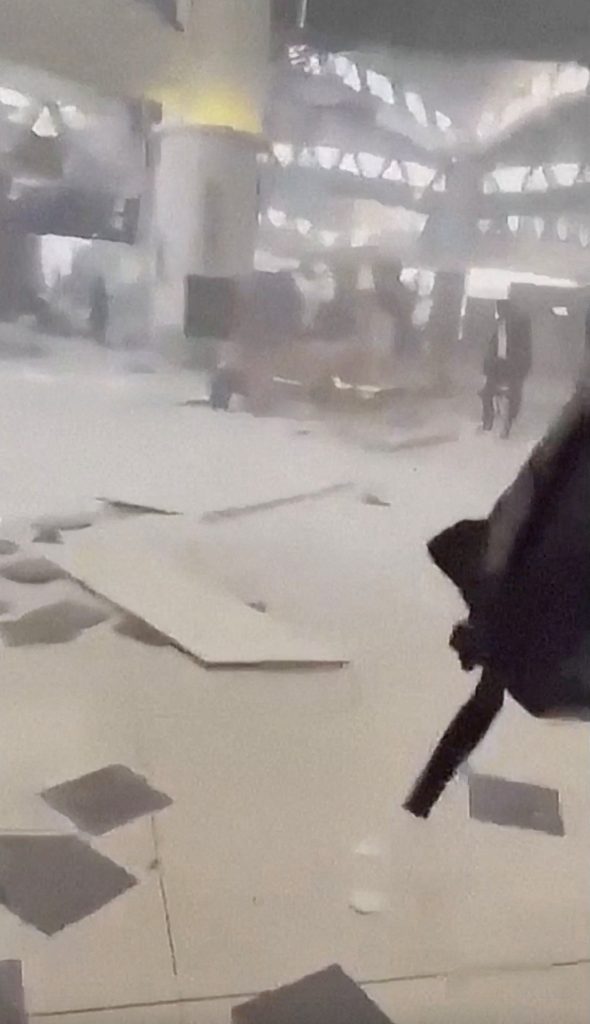
FILE PHOTO: Debris inside the King Khalid Airport, after Yemen’s Iran-backed Houthis said they attacked the airport, in Riyadh, Saudi Arabia, October 10, 2026, in this screengrab obtained from a social media video. Social Media/via REUTERS THIS IMAGE HAS BEEN SUPPLIED BY A THIRD PARTY. NO RESALES. NO ARCHIVES. NEWS USE ONLY. BEST QUALITY AVAILABLE. Verification lines: -Ceiling, columns, signs and interior design of the building that matched the archive imagery from the interior of the terminal 3 of King Khalid Airport -Date verified by corroborating reports of a regional official that confirmed to the media that terminal 3 and 4 were struck -Saudi Civil Aviation Authority said the airport operations were suspended after an attack that left many injured on October 10. -No old results were found posted online before October 10/File Photo
The silence has raised questions about the country’s ability to protect its population and critical infrastructure while maintaining an appearance of stability during its conflict with the Houthis, according to officials and analysts who spoke to Reuters.
Sultan Alamer, a Saudi academic based in the United States and a senior resident fellow at the Middle East Policy Council, said the government appeared to be trying to pursue military action without undermining public confidence or alarming international partners.
Saudi Arabia’s civil defense authority, which operates under the Interior Ministry and is responsible for emergency response and early-warning notifications, did not answer questions about the absence of alerts. The government’s media office also did not respond to requests for comment.
Public warnings halted as attacks continued
Saudi Arabia introduced a system for sending security alerts to mobile phones and social media accounts in May. Its last publicly documented warning before the recent airport attacks was issued on September 29, when residents of the southern province of Najran were alerted to a potential threat.
The authority continued to issue notices about dangerous weather, including rain and flooding, but did not publicly warn of military threats during the period in question. It also reminded residents that sharing images, rumors or information about missile interceptions and impact sites was prohibited under regulations introduced in March.
Reuters could not establish whether anyone had been prosecuted for sharing such material.
Two officials familiar with the matter said a government allied with Saudi Arabia had questioned Riyadh about the suspension of alerts before the airport attacks. Saudi officials reportedly responded that the notifications were disruptive and that some citizens had complained about being woken during the night.
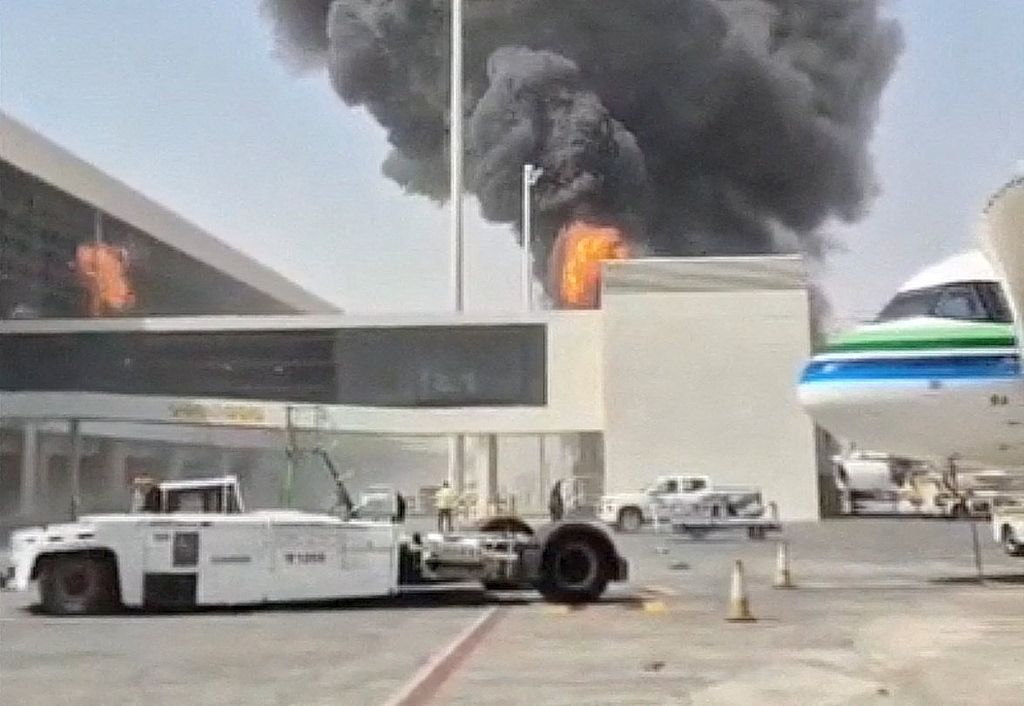
FILE PHOTO: Smoke and flames rise from King Khalid Airport, after Yemen’s Iran-backed Houthis said they attacked the airport, in Riyadh, Saudi Arabia, October 8, 2026, in this screengrab obtained from a social media video. Social Media/via REUTERS THIS IMAGE HAS BEEN SUPPLIED BY A THIRD PARTY. NO RESALES. NO ARCHIVES. NEWS USE ONLY. BEST QUALITY AVAILABLE. Verification lines: The location was verified as Riyadh, Saudi Arabia, from the airport buildings, light poles, and painted tarmac markings which matched satellite imagery. Coordinates: 24.952651844496998, 46.70783371105999 Smoke was seen rising from a stationary aircraft at Riyadh airport on Thursday, according to a witness and three people briefed on the matter. There was no immediate official confirmation from Saudi authorities on the reported incident. No versions of the video were found posted online before October 8./File Photo
Neither the Saudi government nor its officials responded to requests for comment on that account.
The civil defense authority resumed issuing security warnings on Monday, alerting residents in Riyadh and southern cities to potential threats. Reuters could not determine whether the decision was directly linked to the airport strikes.
The pause in public notifications contrasts with approaches elsewhere in the Gulf. Since the war between the United States and Iran began in February, countries across the region have faced Iranian missile and drone attacks but have adopted different warning procedures. Qatar has frequently sent mobile alerts instructing residents to remain indoors and away from windows, while Bahrain and Kuwait have repeatedly sounded sirens telling people to seek shelter.
Former U.S. Ambassador to Saudi Arabia Michael Ratney said Riyadh appeared caught between the need to respond to Houthi attacks and its desire to avoid disrupting everyday life.
He argued that withholding warnings could produce the very anxiety the government hoped to prevent, leaving people uncertain about when another strike might occur.
Defending a vast country presents challenges
Saudi Arabia also faces the challenge of protecting an extensive network of strategic sites across a large territory, including airports, oil facilities and pipelines.
Ali Shihabi, a Saudi analyst close to the government, said the country did not have sufficient air-defense resources to protect every potential target simultaneously.
He pointed to shortages in the coverage provided by Patriot missile-defense systems, interceptors and missile batteries, arguing that the kingdom would struggle to defend all its assets regardless of whether advance warnings were issued.
The attacks have also complicated efforts to project business as usual. Saudi Arabia proceeded with an international energy conference in Riyadh on Monday, although several senior oil executives withdrew from the event following the strikes.
Prince Abdulaziz bin Salman, the kingdom’s energy minister and a brother of the crown prince, defended Saudi Arabia’s decision to continue hosting the gathering. He thanked attendees for traveling to the country and expressed confidence in its safety, while acknowledging that the threat had not disappeared.
He also reaffirmed the kingdom’s commitment to its long-term economic plans.
Embassies issued separate warnings to staff
Although Saudi authorities did not issue public military alerts during much of the period, Western embassies in the kingdom continued sending internal warnings about possible missile and drone attacks to their personnel, according to three people familiar with the arrangements and notifications reviewed by Reuters.
Those messages drew on intelligence from the United States and other Western governments, alongside information provided by Saudi authorities, one source said. Embassy staff received internal alerts around the time of two of the initial airport strikes.
However, the people familiar with the matter said no internal warning reached embassy staff before Saturday’s airport attack, the deadliest of the recent strikes. The reason for the absence of that warning remains unclear.
Saudi state television subsequently broadcast footage of the attack, showing passengers inside the airport terminal waiting for flights. Travelers sat in waiting areas or queued to board, many looking at their phones, before an explosion produced a sudden flash of orange light.
The episode has intensified scrutiny of how Saudi Arabia communicates the threat of attacks to its residents and visitors, as the government seeks to maintain confidence while confronting continuing security risks.