 Μake us preferred on Google
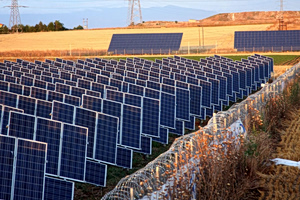
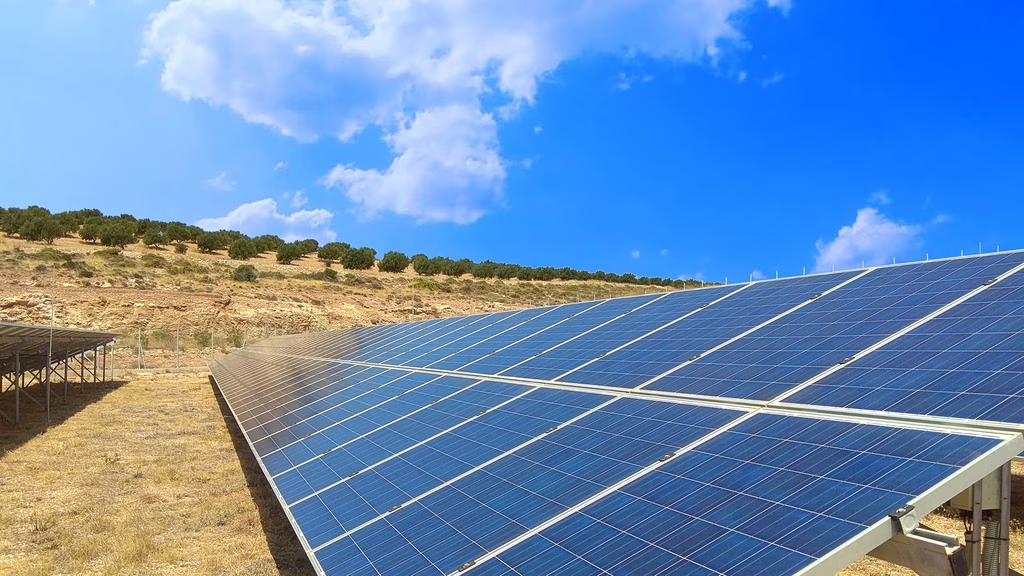
 Nearly 1,000 households and businesses in Greece’s Western Macedonia region are waiting for approval to proceed with solar power projects, with applications from around 20 energy communities in Kozani and Florina remaining unresolved for as long as six years.
The delays are preventing local residents and businesses from pursuing investments that could lower their energy costs and support economic activity in a region undergoing the transition away from lignite, a coal used for electricity generation.
Marios Dramalis, president of the Panhellenic Association of Energy Communities of Greece, discussed the issue in an interview with Greek television channel MEGA, calling for the government to resolve the outstanding applications.
Six years waiting for grid connections
The energy communities were established under a 2018 law introduced by Greece’s Ministry of Environment and Energy. Residents of Kozani and Florina invested in renewable energy projects, primarily solar farms, while some also invested in wind power.
However, they have yet to receive the grid connection terms required to move their projects forward.
Dramalis said the final applications were submitted in 2021 and that requests filed in 2020 and 2021 remain neither approved nor rejected by the Independent Power Transmission Operator, known by its Greek acronym ADMIE.
Under the original framework, applicants were supposed to receive connection terms within six months. Instead, they have been waiting for six years.
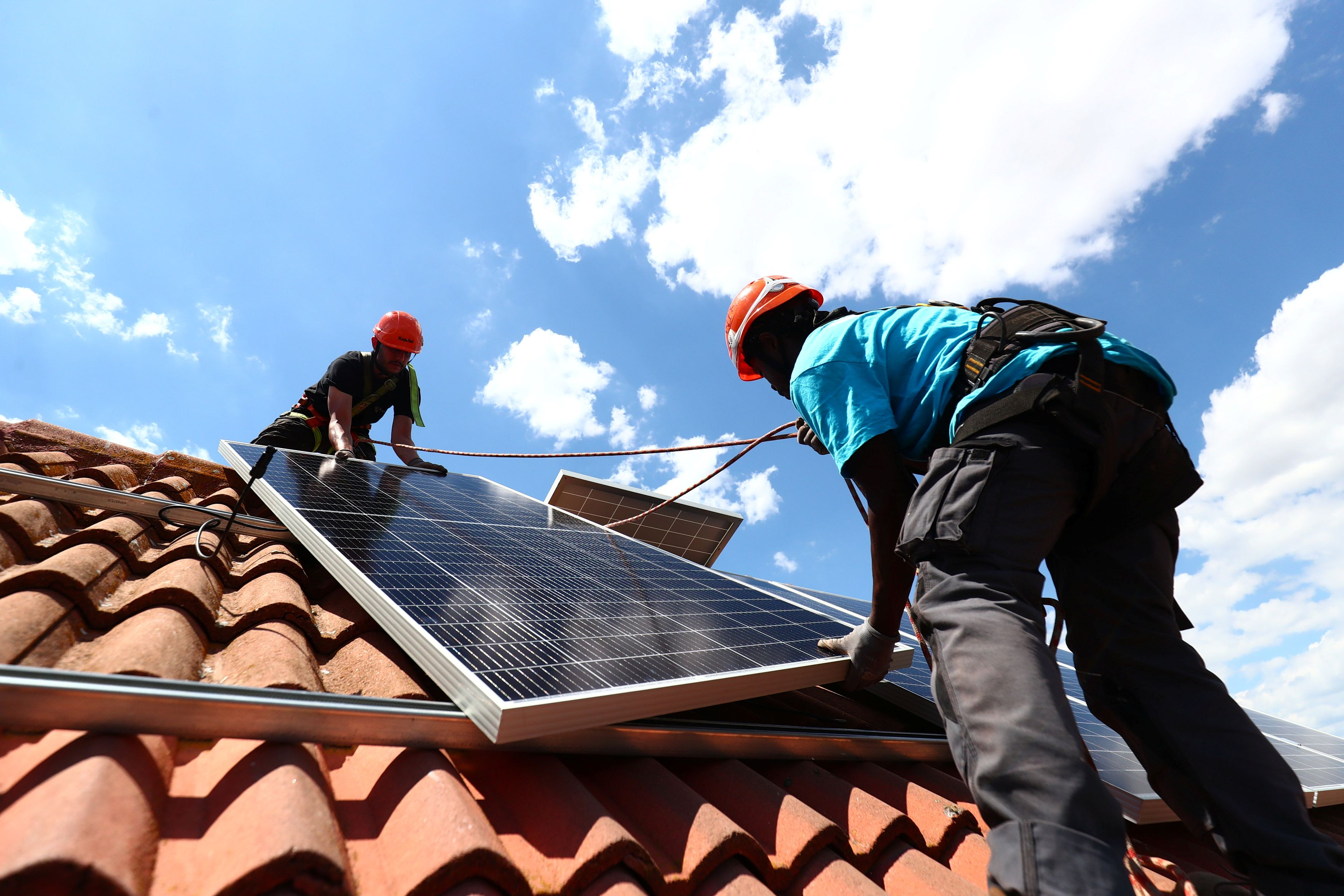
The delays have also affected landowners who made their fields available to the energy communities. Many are now tied to an unresolved process, while participating residents have already paid for engineers, surveying, technical studies and permit applications submitted to the relevant authorities.
Priority given to larger energy projects
According to Dramalis, energy communities initially received priority for grid connections. That changed in August 2022, when legislation introduced under then-Energy Minister Kostas Skrekas gave priority to larger projects.
Energy communities were moved to category G2, while larger projects were placed in category A. They were also expected to consolidate their projects into groups of at least 100 megawatts.
Dramalis argued that the change disadvantaged local residents who had joined the communities under the framework intended to support a fair development transition away from lignite.
Under that model, landowners could lease their fields to energy communities in exchange for rental income, while other residents could participate directly in renewable energy investments.
The unresolved applications concern projects that could bring investment and income to local communities, he said.
Government response and proposed solutions
Dramalis said he had submitted a memorandum to both the government’s vice president and Prime Minister Kyriakos Mitsotakis, outlining the problem. He said he had received a response indicating that the issue would be examined and that a positive answer was expected within two months.
He also recalled a commitment made during the prime minister’s most recent visit to the region to find a solution.
The association is calling for the restoration of priority for applications submitted in 2021, the use of available grid capacity created through the transition away from lignite, and renewed support for solar projects.
It is also proposing a new program for Western Macedonia that would combine solar installations with battery storage, allowing electricity to be stored and supplied to households and businesses when needed.
Dramalis said the transmission grid operated by IPTO is already in place and that the operator has indicated that it is technically ready to connect the projects. The applications are now being examined under category G2.
Smaller projects fall under the responsibility of the Hellenic Electricity Distribution Network Operator (HEDNO), while IPTO handles larger projects.
Battery storage and financial support
The association argues that energy storage is essential to making better use of renewable electricity. Without sufficient storage systems, solar power generation must be curtailed, meaning some of the electricity produced cannot be used or supplied to the grid.
Its proposals include a unified solar-and-battery project supported by an operating subsidy of 80 euros per megawatt-hour (MWh).
The aim is to retain more of the energy produced in the region and distribute it to local households and businesses, while supporting incomes and encouraging new investment.
Dramalis said he hoped the government would finally address the issue despite the six-year delay, emphasizing that the affected communities are close to Greece’s borders and that the investments would benefit the local economy.
He added that he had supported the development of renewable energy and believed the residents affected by the delays had legitimate grounds for seeking a resolution.