The postponement of an Egyptian Supreme Court ruling on the ownership status of the renowned St. Catherine’s Monastery on the Sinai is being viewed by ecclesiastical and diplomatic sources in Greece as a possible “new window in the negotiations” over the future of the ancient
According to the Mikropolitikos column in the Athens daily Ta Nea, an appellate verdict, which follows appeals against an earlier decision by the court of appeal in the Egyptian port city of Ismailia, has now been postponed for a third time. Greek officials and church sources expect the delay to last no more than a month, viewing the development as potentially opening the way for an agreement between the monastery and the Egyptian state in the coming weeks.
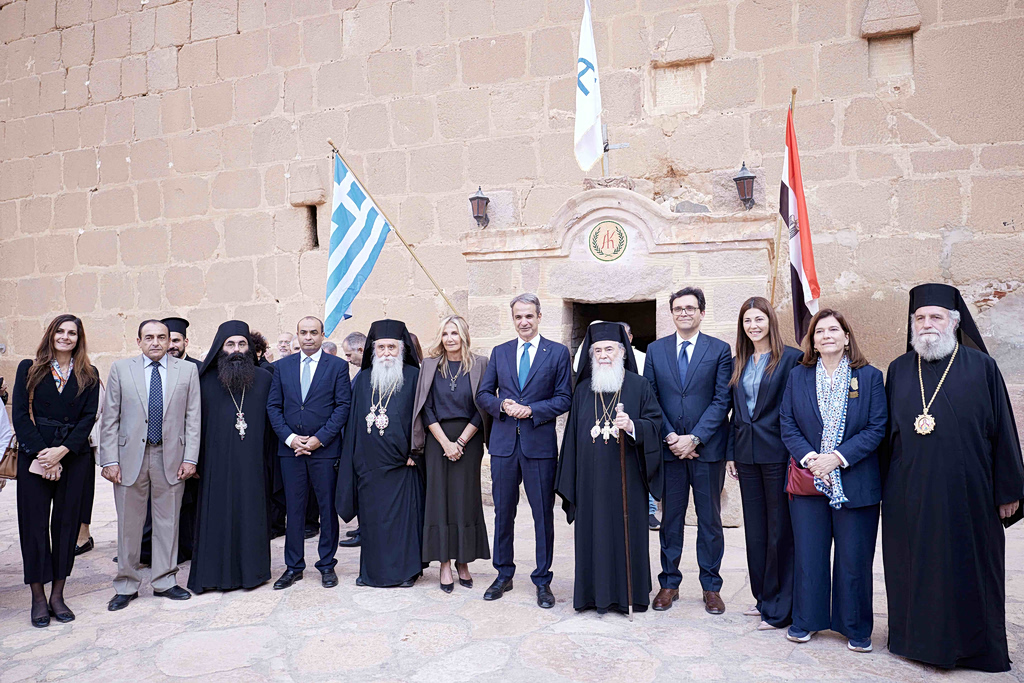
The negotiations have been proceeding quietly for about a year under Archbishop Symeon, who was elected abbot of the monastery and Archbishop of Sinai, Pharan and Raitho last year.
Four Outstanding Issues
The proposed arrangement would reportedly leave the Sinai archaeological site under Egyptian state supervision while guaranteeing the Sinai Orthodox Brotherhood perpetual rights to religious use of the monastery and its estates.
The immediate discussions concern the monastery’s properties (glebes) outside the main monastic compound, many of which are considered essential to its continued operation. Four major issues remain, however.
First, Egypt would need to formally recognize Symeon as the monastery’s legitimate abbot through a presidential decree, allowing him to sign any eventual agreement. Secondly, the monastery’s fundamental regulations would have to be recognized as an official legal document. Thirdly, the residency status of the monks living at the monastery would have to be permanently resolved. Finally, the Brotherhood would have to convene and approve the agreement negotiated by the archbishop.
St. Catherine’s, located at the foot of Mount Sinai in Egypt’s southern Sinai Peninsula, is Christianity’s oldest continuously functioning monastery.
The monastery’s future has also acquired broader diplomatic significance for Greece, as Athens regards Egypt as a key partner in its eastern Mediterranean security architecture, with cooperation extending to energy, migration and regional security.
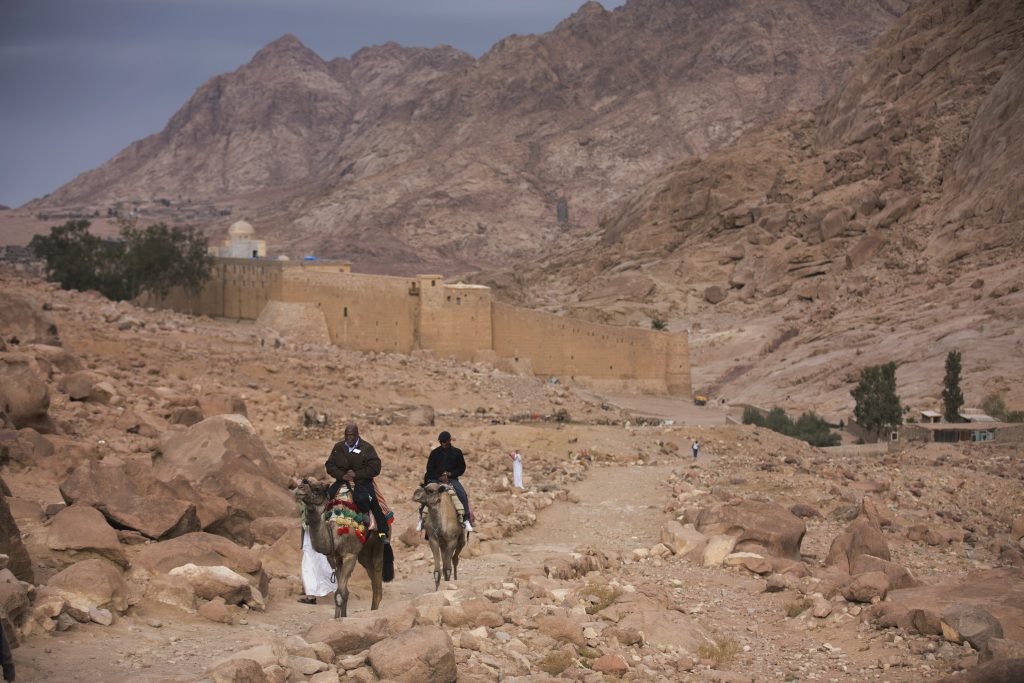
In this photo taken Sunday, Dec. 9, 2013, visitors leaving Saint Catherine’s Monastery, background, ride on camels on their way to the peak of Mount Sinai in Saint Catherine in the Sinai peninsula, Egypt. (AP Photo/Hiro Komae)
Athens Keeps Cairo, New Delhi Channels Open
Meanwhile, on the broader foreign policy front, Greek Foreign Minister George Gerapetritis held successive telephone conversations with his Egyptian counterpart, Badr Abdelatty, and Indian counterpart Subrahmanyam Jaishankar, as Athens continues to strengthen ties with both countries.
The discussions with Cairo focused on regional security and closer strategic cooperation.
Greece and Egypt have increasingly developed overlapping interests in the eastern Mediterranean, including energy and infrastructure projects.
That relationship has taken on a particularly practical dimension this year, with press reports in Athens stating that the Greece-Egypt electricity interconnection, known as GREGY, has moved into a new tender phase for seabed and onshore studies, involving a planned 3,000-megawatt link that would bring Egyptian clean energy to Greece.
The conversation with Jaishankar, meanwhile, aims to prepare the ground for the next bilateral meeting in New York. Greece is seeking to position itself as India’s principal gateway to the European Union, particularly through the India-Middle East-Europe Economic Corridor (IMEC).