For several years, the relative calm in the Aegean Sea offered the clearest evidence that the diplomatic thaw between Greece and Turkey was holding. The two countries had resolved none of their major disputes, but fewer tense encounters between their armed forces gave both governments a tangible achievement to preserve.
Turkish fighter jets and drones have again violated Greek airspace, including through unauthorized overflights of Greek islands, according to Greek defense authorities.
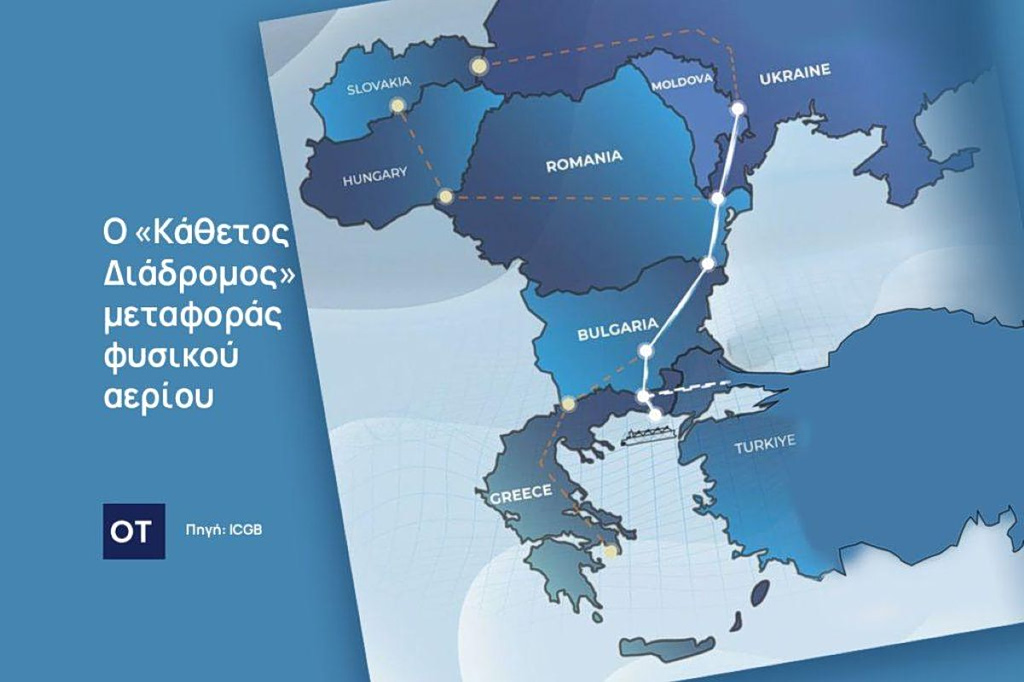
The renewed friction coincides with a more consequential maritime test. The Great Sea Interconnector is a planned undersea electricity cable that would link the power grids of Greece and Cyprus, ending Cyprus’s isolation from the European Union’s electricity network, and later extend to Israel.
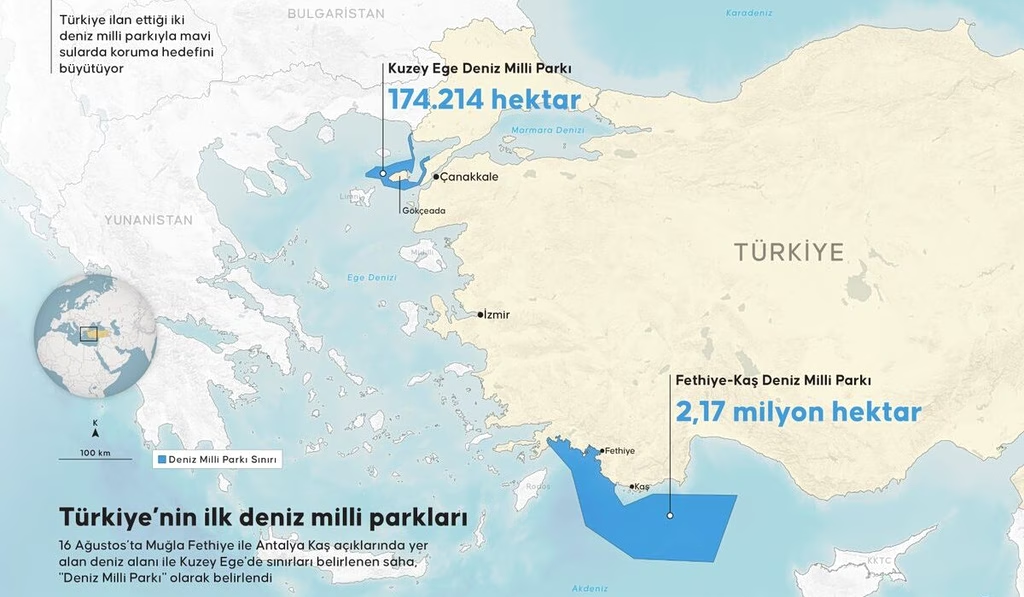
Turkey’s establishment of two national marine parks, together with the expected resumption of route surveys for the cable, has sharpened a dispute over Ankara’s claim that work in waters it contests requires its consent.
Under the United Nations Convention on the Law of the Sea, however, states have the right to lay submarine cables in exclusive economic zones and on continental shelves, and a prior maritime delimitation agreement is not generally required.
For Athens and Nicosia, the issue is no longer simply whether the period known as “calm waters” can survive. It is whether Turkey is using that period to translate its wider regional ambitions into practical claims.
Sinan Ciddi, director of the Turkey Program at the Foundation for Defense of Democracies and an associate professor of national security studies at Marine Corps University, has spent more than two decades studying Turkish politics and foreign policy. He believes the answer extends far beyond the Aegean.
“Turkey’s behavior towards Greece or Cyprus is not in isolation,” he said. “It is part of a wider trend of emboldened Turkish action.”
He cited Turkey’s marine parks, its deployment of armed drones and F-16 aircraft to the Turkish occupied north of Cyprus, and its diplomatic outreach to eastern Libya as parts of the same effort. Libya is central to the doctrine known as “Mavi Vatan,” or Blue Homeland, which asserts an expansive vision of Turkey’s maritime jurisdiction.
“Turkey just feels very, very emboldened right now, and it wants to simply push a message,” Mr. Ciddi said.
Turkey presents the new marine parks as environmental measures. In Athens, however, they are being examined alongside Ankara’s maritime planning, its use of navigational warnings and the Blue Homeland doctrine. The concern is that Turkey is gradually turning contested positions into administrative practice without first resolving the underlying disputes.
Mr. Ciddi said the parks suggested that Ankara might prefer unilateral measures to adjudication or negotiation.
“It just escalates the level of tension and narrows the available space for negotiation and diplomacy because it presents it as a fait accompli,” he said.
He compared that approach with what he described as Turkey’s longstanding strategy in Cyprus: presenting a fait accompli and seeking its eventual acceptance.
The same calculation surrounds the Great Sea Interconnector. The French infrastructure investment firm Meridiam has agreed to become the project’s majority shareholder, giving France a substantial commercial interest in its completion.
For Greece, Meridiam’s arrival strengthens the project financially and adds a European political dimension. It does not, by itself, answer whether the involvement of a major French investor will deter Turkish obstruction or provide protection for survey vessels conducting work.
Asked whether the French stake amounted to a security guarantee, Mr. Ciddi responded cautiously. He placed it within France’s broader willingness to support Greece and Cyprus, pointing to the recent Status of Forces Agreement between France and Cyprus, which creates a legal framework for French military personnel on the island and has drawn strong objections from Ankara.
“European powers actually have to stand up and come to the support of their European allies,” he said.
Mr. Ciddi assessed that Greece has invested heavily in keeping diplomatic channels with Turkey open and would probably seek to avoid presenting Ankara with a surprise.
“I would be surprised if the Greek government acted without consultation or at least informing the Turks of what their intentions are,” he said.
That assessment captures the dilemma facing Athens. Prior consultation could reduce the risk of escalation, but it could also allow Ankara to argue that projects involving what Greece regards as sovereign rights require Turkish consent.
Mr. Ciddi said Turkey’s growing confidence might be partly explained by Washington. He said Mr. Erdogan emerged from this year’s NATO summit in Ankara encouraged by the public praise he received from President Trump.
“Erdogan came away from the NATO Summit that took place in Ankara this year very emboldened because Trump gave him all the praise and platitudes that Erdogan wanted to hear,” he said.
He also pointed to the American response after Israel struck the Abu al Duhur air base in northwestern Syria. Tom Barrack, the American ambassador to Turkey and special envoy for Syria, quickly called the attack an unnecessary escalation. Israel later said it had acted to prevent a Turkish military deployment that it believed would threaten its security.
Mr. Ciddi interpreted Mr. Barrack’s response as evidence that Washington was prepared to give Ankara considerable latitude. He said Mr. Erdogan appeared to believe that he “has the backing of Trump no matter what he does” across the Mediterranean and the Middle East.
That remains Mr. Ciddi’s assessment rather than an established feature of American policy. But for Athens and Nicosia, the question is immediate: whether the warmer relationship between Mr. Trump and Mr. Erdogan will make Washington less willing to challenge Turkish actions that affect Greek or Cypriot interests.
The struggle for influence in Syria provides the most dangerous test. Israel bombed the Abu al Duhur air base after saying that Damascus was preparing to allow Turkish troops to deploy there. Turkey and Syria denied that a Turkish base was planned. Syrian officials said Turkish officers had visited the site as part of military training and cooperation.
Mr. Erdogan has developed a close relationship with the government of President Ahmed al Sharaa, whose former movement led the offensive that overthrew Bashar al Assad. Turkey had long backed Syrian opposition forces and now occupies a central position in the country’s reconstruction and security planning.
Mr. Ciddi said Ankara was seeking to help the new authorities develop military and law enforcement capabilities, including through training and weapons sales. In his assessment, Turkey views Syria as a means to extend its influence and limit Israel’s freedom of action.
“In Syria, they see a client state who will essentially increase Turkey’s ability to undermine Israel, but also establish Turkey as the major and dominant power in the region,” he said.
There is evidence that Ankara has examined military access to Syrian bases. In April 2025, Turkish military teams assessed the Palmyra and T 4 air bases for possible use under a planned defense agreement before Israel struck them, according to Reuters. A Turkish defense official at the time dismissed unofficial reports as potentially misleading, while Turkey’s foreign minister said Ankara did not want a confrontation with Israel.
At Abu al Duhur, the intended scope of Turkish involvement remains disputed. Axios reported that Israel was concerned about sophisticated military equipment, but no public evidence has established what systems, if any, Turkey intended to deploy.
“We actually don’t know what the Turks intended to put in place,” Mr. Ciddi said.
Israel has made clear that it will strike military deployments in Syria that it considers a threat. Turkey, in turn, accuses Israel of violating Syrian sovereignty. Mr. Ciddi described that position as a double standard, noting that Turkey conducted three major military operations in Syria during the civil war and continues to control territory there.
“Turkey can act when it deems its national security is jeopardized, but Israel may not,” he said, characterizing Ankara’s position.
The United States is now trying to establish a mechanism to prevent an accidental clash among Turkey, Israel and Syria. For Athens and Nicosia, the confrontation offers a measure of how far Ankara believes its regional reach can extend and whether Washington intends to impose limits.
“But this kind of behavior, it just raises tensions,” Mr. Ciddi said.