A wave of reactions and serious concern has been sparked by statements from British Museum Director Nicholas Cullinan, who said that the Parthenon Sculptures will continue to be displayed in London even during the institution’s multi-year renovation, and that even if an agreement with Greece is reached, the best that can be expected is for “only some of the Sculptures” to come to Athens—a prospect that derails the possibility of the permanent reunification of these treasures of classical antiquity in their place of origin. Speaking to Ta Nea, leading figures of the international campaign for the return of the Sculptures accuse the Museum—and the British government—of “irresponsibility,” “outdated thinking,” and an “undignified stance,” urging them not to squander the “historic opportunity” now before them.
Kris Tytgat
“Although George Osborne, the chair of the British Museum, has said that he hopes a way out of this 200-year-old dispute will be found, Cullinan’s plans leave no room for doubt: he is seeking cooperation with Greece in order to loan Parthenon sculptures to Athens on a rotating basis, in exchange for other masterpieces from Greek museums being displayed in London,” said Dr. Kris Tytgat, President of the International Association for the Reunification of the Parthenon Sculptures (IARPS). “This is an entirely irresponsible idea. You cannot move back and forth priceless and fragile masterpieces by Phidias. The British Museum is missing a unique opportunity to develop a new museum policy based on sincere cooperation, as one would expect in the 21st century,” stressed the distinguished archaeologist and former director of the Belgian School at Athens, recalling that “the British government has made it clear that it will not amend the 1963 British Museum Act to allow the return of the Sculptures.”
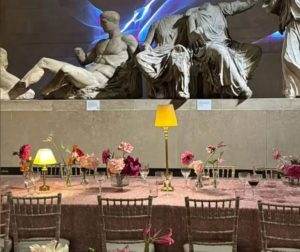
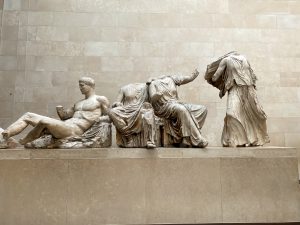
Cullinan told The Telegraph on Saturday that a plan has been drawn up to ensure the Parthenon Sculptures remain on public display despite the Museum’s redevelopment works, which are expected to cost more than £1 billion. “Some objects absolutely must continue to be displayed elsewhere within the Museum. People come to see them and expect to see them. We have already planned how this will be achieved. To be honest, we consider the Marbles to fall into the category of objects that visitors come to the Museum to see,” the director of the London institution noted. The British newspaper clarified that the works created by Phidias will be moved from gallery to gallery within the Museum so that they remain accessible to the public while renovation works proceed in different spaces.
This prospect dashes the hopes of the Greek government that the decade-long redesign of the Museum’s so-called Western Range—and the resulting closure of galleries—could serve as an opportunity for the return of the Sculptures. Just a month ago, after four years of negotiations with Osborne, Greek Prime Minister Kyriakos Mitsotakis stated that the British Museum’s renovation “might offer new opportunities.”
John Lefas
“The Parthenon Project is among those that have contributed ideas for the renovation to serve as an opportunity for the British Museum and the British government to make a grand gesture toward their historic friend and ally Greece, by returning the Sculptures within the framework of a long-term cultural partnership,” said John Lefas, founder of the Parthenon Project. “The frequent opinion polls we conduct show that British citizens support the return of the Sculptures and granting the British Museum the authority to do so. However, we observe a gap between what the public wants and what those in power say and do,” he emphasized.
“Mr. Cullinan faces a difficult task. To succeed, he must adopt a long-term approach free from antiquated laws and outdated attitudes, which are often merely presented in new packaging. He must be given—and must himself accept—the authority to change things and do something meaningful. The British government and bureaucrats must stop obstructing the long-standing efforts of the Museum and the Greek government, as well as the implementation of the will of the British people,” Lefas continued, stressing that “the only fair and prudent course of action is the return of the Sculptures, not their relocation—at great risk—from gallery to gallery, nor their further fragmentation, which would constitute an insult to humanity.”
He concluded: “Many people around the world are ready to help Mr. Cullinan and the Museum chart a course that ensures, in good faith, a visionary and constructive approach. Otherwise, the British Museum risks disappointing them and retreating into the past. We must stay one step ahead of History.”
Speaking to the same newspaper, the director of the British Museum also clarified that if and when an agreement with Greece is reached, it would involve sending only some of the Parthenon Sculptures to Athens: “We are in discussions with Greece. If we manage to reach an agreement, which would be wonderful, there is a scenario under which some of the Marbles could be displayed in Greece, while objects from Greece could be displayed at the British Museum.”
Greek sources commented that this approach “falls far short of Greece’s position,” recalling that Britain continues to disregard decisions by UNESCO committees calling for the reunification of the Sculptures, as well as resolutions of the UN General Assembly on the return of cultural property to countries of origin.