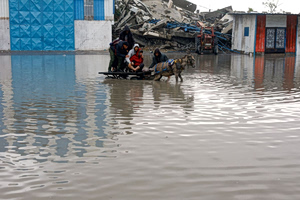
Ali Shaath, a Palestinian civil engineer selected to administer Gaza under a U.S.-backed plan, has outlined an ambitious vision to rebuild the war-ravaged territory, including pushing millions of tones of rubble into the Mediterranean Sea to create new land.
Shaath’s appointment on Thursday marks the beginning of the next phase of U.S. President Donald Trump’s plan to end Israel’s war in Gaza. He will chair a committee of 15 Palestinian technocrats tasked with governing the enclave after years of control by Hamas militants.
Under the plan, Israel has withdrawn from nearly half of Gaza, while retaining control of the rest — an area where nearly all buildings have been destroyed. Trump has previously described a vision of transforming Gaza into the “Riviera of the Middle East.”
Shaath faces the challenge of rebuilding shattered infrastructure and clearing an estimated 68 million tonnes of rubble and unexploded ordnance, even as fighting between Israel and Hamas continues. Drawing on past reconstruction efforts, he suggested repurposing debris by pushing it into the sea to reclaim land.
“If I brought bulldozers and pushed the rubble into the sea, and made new islands, new land, I can win new land for Gaza and at the same time clear the rubble,” Shaath said in a radio interview, adding that debris removal could be completed within three years.
He said his immediate priority would be emergency relief, including temporary housing for displaced residents. The next stages would focus on restoring essential infrastructure and eventually rebuilding homes and public buildings. Shaath predicted Gaza would be better than it was within seven years.
That optimism contrasts with a 2024 United Nations report estimating that rebuilding Gaza’s homes could take until at least 2040, and possibly much longer.
Born in 1958 in Khan Younis, Shaath previously served as deputy planning minister in the Palestinian Authority in the occupied West Bank, where he now lives. He has overseen industrial zone projects in both Gaza and the West Bank and holds a PhD in civil engineering from Queen’s University Belfast.
Significant obstacles remain, including disagreements over disarming Hamas and deploying peacekeepers. It is also unclear how the committee would secure permission to import heavy machinery, which Israel generally restricts on security grounds. Israel did not respond to requests for comment on Shaath’s plans.
Shaath said the committee’s authority would initially apply to Hamas-controlled areas and expand as Israeli forces withdraw further, eventually covering the entire Gaza Strip.
The committee has received backing from Hamas, which is holding talks with other Palestinian factions in Cairo. Senior Hamas official Bassem Naim said international mediators and the United States must now empower the committee to carry out its work.
Israel and Hamas agreed in October to Trump’s phased plan, which included a ceasefire, hostage and prisoner exchanges, and increased humanitarian aid. However, the agreement has since been strained by Israeli airstrikes, unresolved hostage issues, and delays in reopening Gaza’s border crossing with Egypt.