
European leaders reacted with outrage and alarm over the weekend after President Donald Trump threatened to impose new tariffs on key U.S. allies, explicitly linking the measures to his push for control of Greenland.
Tariffs tied to a demand over Greenland
In a post on his Truth Social platform on Saturday, Trump announced that the United States would impose a 10% tariff on goods from Denmark, Norway, Sweden, France, Germany, the United Kingdom, the Netherlands and Finland starting Feb. 1. The levy would rise to 25% on June 1 and remain in force, he said, “until such time as a Deal is reached for the Complete and Total purchase of Greenland”.
Politico reported that Trump justified the move by accusing those countries of sending military personnel to Greenland “for purposes unknown.” A small number of NATO troops landed in Nuuk on Thursday as part of a reconnaissance and support mission, an operation Denmark and its allies have described as defensive and fully transparent.
Denmark’s foreign minister, Lars Lokke Rasmussen, said the president’s “threat had come as a surprise”, stressing that the increased military presence was intended to strengthen Arctic security in cooperation with the United States. “We agree with the U.S. that we need to do more since the Arctic is no longer a low tension area. That’s exactly why we and NATO partners are stepping up in full transparency with our American allies,” said the Danish FM.
Brussels convenes an emergency meeting Sunday
The reaction in Brussels was immediate. The European Union called an emergency meeting for 5 p.m. Sunday in Brussels ((6 p.m. Greek time), bringing together ambassadors from all 27 member states, according to Reuters.
European Council President António Costa said he was coordinating a joint response from EU capitals and warned that tariffs threatened prosperity on both sides of the Atlantic. “We must open markets, not close them,” Costa said. “The European Union will always be very firm in defending international law, wherever it may be, and of course, starting within the territory of the European Union’s member states”, he concluded in his statement in the aftermath of the signing of the EU-Mercosur agreement on Saturday.
European Commission President Ursula von der Leyen said tariff threats would undermine transatlantic relations and risk a “dangerous downward spiral”. She also defended the Danish-led military activity in Greenland as a pre-coordinated exercise conducted with allies to bolster Arctic security.
Territorial integrity and sovereignty are fundamental principles of international law.
They are essential for Europe and for the international community as a whole.
We have consistently underlined our shared transatlantic interest in peace and security in the Arctic, including…
— Ursula von der Leyen (@vonderleyen) January 17, 2026
Eight countries issue joint statement of solidarity
In a coordinated show of support, eight European nations said on Sunday afternoon that they stood “in solidarity with the Kingdom of Denmark and the people of Greenland” following Trump’s threat to annex the Arctic island.
In a joint statement, Denmark, Finland, France, Germany, the Netherlands, Norway, Sweden and Britain said that, as members of NATO, they were committed to strengthening Arctic security “as a shared transatlantic interest.”
The statement warned that “tariff threats undermine transatlantic relations and risk a dangerous downward spiral,” underscoring European concerns that economic pressure could weaken cooperation among allies.
European leaders reject what they call intimidation
National leaders across Europe used unusually blunt language in rejecting Trump’s move.
French President Emmanuel Macron said “tariff threats are unacceptable” and vowed to stand by the sovereignty of European partners. British Prime Minister Keir Starmer called the tariffs “completely wrong,” a view echoed across European capitals.
Swedish Prime Minister Ulf Kristersson said Europe would not allow itself to be blackmailed and confirmed that Sweden was holding intensive discussions with other EU countries, Norway and the U.K. to forge a coordinated response.
EU foreign policy chief Kaja Kallas warned that divisions among allies would only benefit global rivals. “China and Russia must be having a field day,” she wrote on X.
China and Russia must be having a field day. They are the ones who benefit from divisions among Allies.
If Greenland’s security is at risk, we can address this inside NATO.
Tariffs risk making Europe and the United States poorer and undermine our shared prosperity.
We also…
— Kaja Kallas (@kajakallas) January 17, 2026
Trade deal in doubt and debate over the EU’s “trade bazooka”
The tariff threat is already reverberating through EU institutions. Politico reported that the European Parliament is poised to freeze ratification of a landmark EU-U.S. trade deal signed last summer, casting doubt on the future of a fragile trade truce.
Manfred Weber, leader of the European People’s Party, said in a post on X that approval of the deal was no longer possible “at this stage” given Trump’s threats regarding Greenland.
The EPP is in favour of the EU–U.S. trade deal, but given Donald Trump’s threats regarding Greenland, approval is not possible at this stage. The 0% tariffs on U.S. products must be put on hold. #EuropeanUnity
— Manfred Weber (@ManfredWeber) January 17, 2026
At the same time, Politico reported growing support among lawmakers for preparing retaliatory measures, including possible use of the EU’s Anti-Coercion Instrument , which is often referred to as the bloc’s trade “bazooka.” The tool was designed to respond to economic intimidation and allows the EU to deploy a wide range of countermeasures, from retaliatory tariffs to restrictions on investment, public procurement and intellectual property protections.
However, triggering the instrument would not be automatic. Politico noted that any move to activate the Anti-Coercion Instrument would be a decision for the European Commission, should Trump follow through on his tariff threat. Such a step would then require the backing of a qualified majority of EU member states, an unlikely scenario “given long-standing divisions among European capitals over how far to go without further antagonizing Washington”.
Protests in Greenland and Denmark
Public anger has accompanied the diplomatic fallout. The BBC reported that thousands of people demonstrated Saturday in Greenland and Denmark against Trump’s takeover plans.
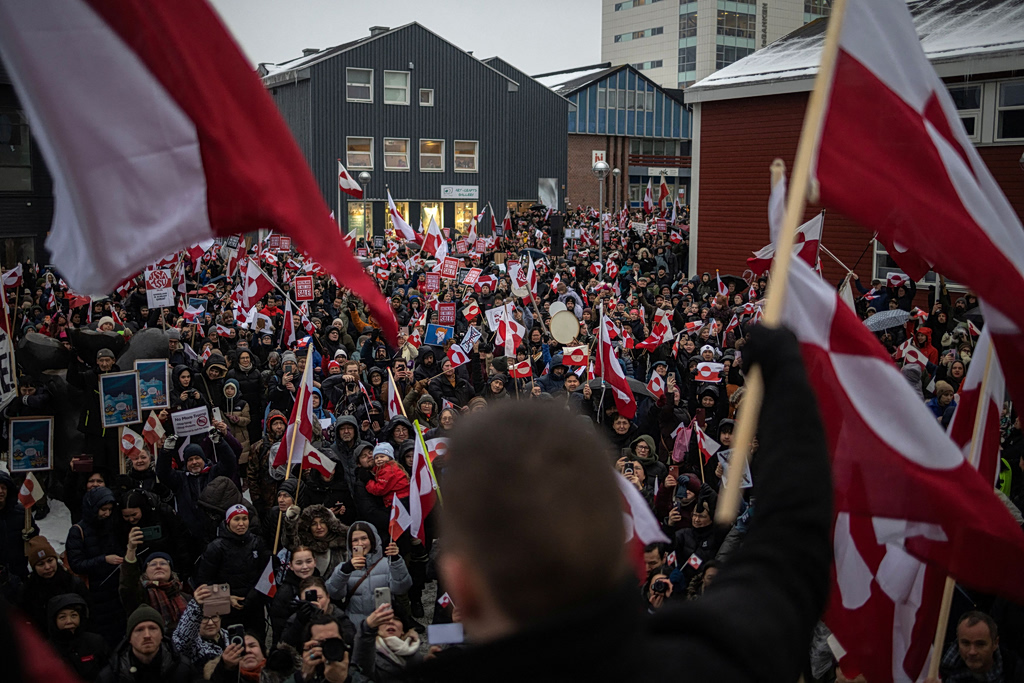
People attend a protest against U.S. President Donald Trump’s demand that the Arctic island be ceded to the U.S., calling for it to be allowed to determine its own future, in Nuuk, Greenland, January 17, 2026. REUTERS/Marko Djurica
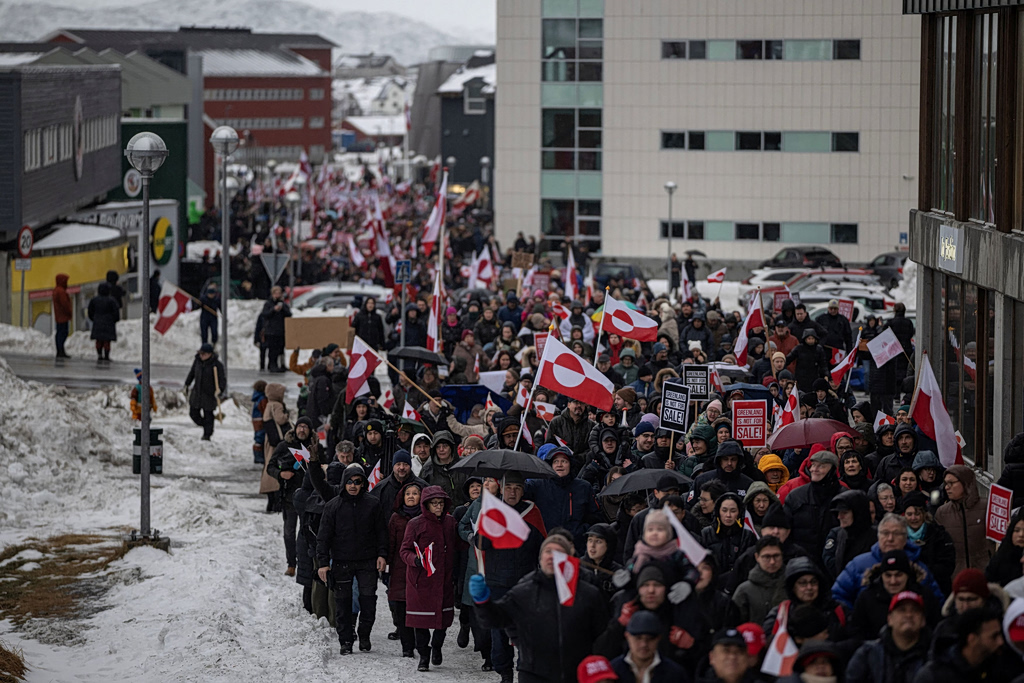
People attend a protest against U.S. President Donald Trump’s demand that the Arctic island be ceded to the U.S., calling for it to be allowed to determine its own future, in Nuuk, Greenland, January 17, 2026. REUTERS/Marko Djurica
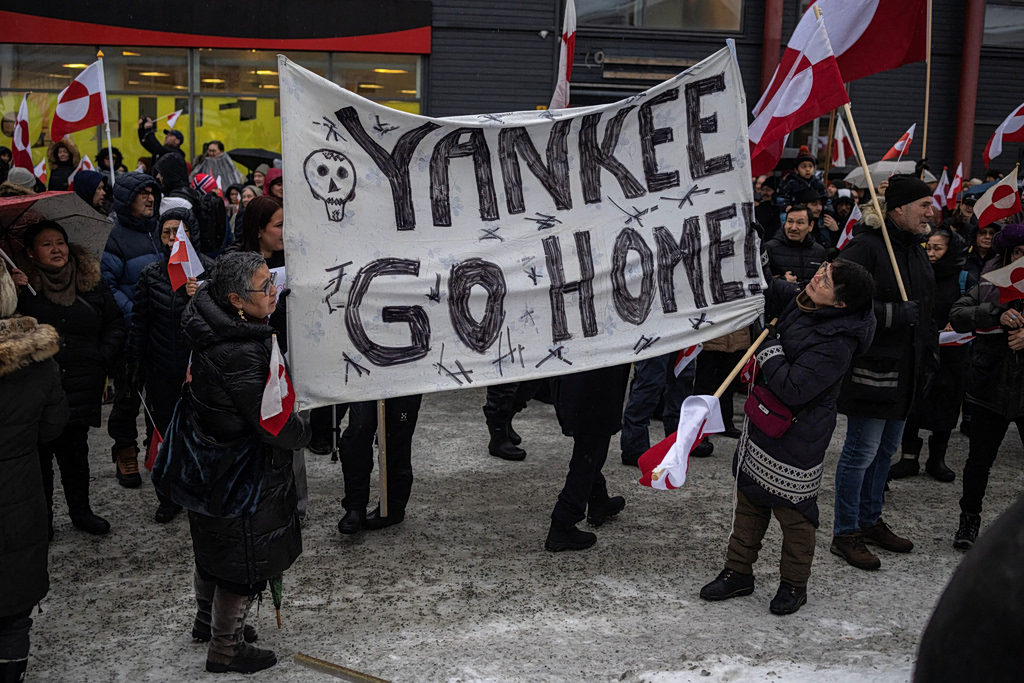
People attend a protest against U.S. President Donald Trump’s demand that the Arctic island be ceded to the U.S., calling for it to be allowed to determine its own future, in Nuuk, Greenland, January 17, 2026. REUTERS/Marko Djurica
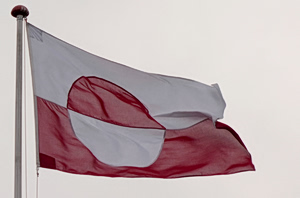
Le Monde reported that thousands of people gathered in Nuuk on Saturday despite light rain, waving Greenlandic flags and chanting slogans against the U.S. takeover plan. Demonstrators sang traditional Inuit songs, while some wore caps reading “Make America Go Away.” Greenland’s prime minister, Jens-Frederik Nielsen, joined the protest, which underscored the territory’s opposition to U.S. annexation.
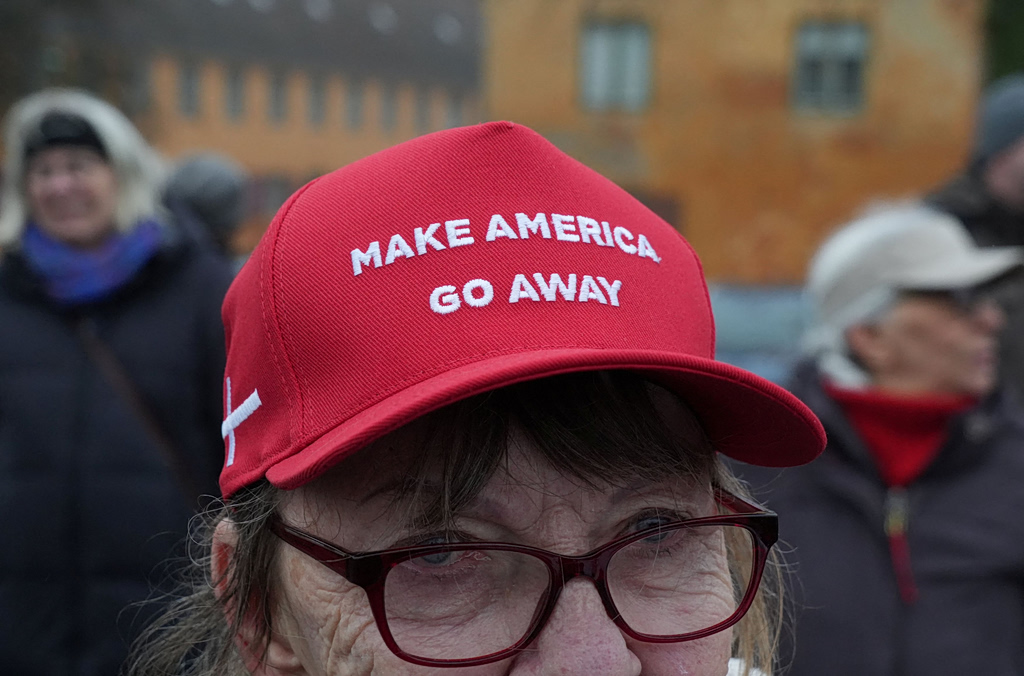
A protester takes part in a demonstration to show support for Greenland in Copenhagen, Denmark January 17, 2026. REUTERS/Tom Little
Pushback from U.S. Democrats
The escalation has also drawn criticism in Washington. According to the BBC, Gregory Meeks, the ranking Democrat on the U.S. House Foreign Affairs Committee, said he would introduce a resolution to terminate what he called “illegal and absurd tariffs.”
Trump, Meeks said, was “manufacturing a foreign crisis and sabotaging our closest alliance,” while ignoring domestic concerns such as affordability. Democratic lawmakers have also questioned the legality of using tariffs as leverage in a territorial dispute with close allies.
Davos meeting looms
The confrontation may soon move onto the global stage. According to the BBC, Trump is expected to come face to face with von der Leyen and other European leaders, including Macron, at the World Economic Forum in Davos, Switzerland, later this week.
Reporting based on coverage by Politico, the BBC and Le Monde.