
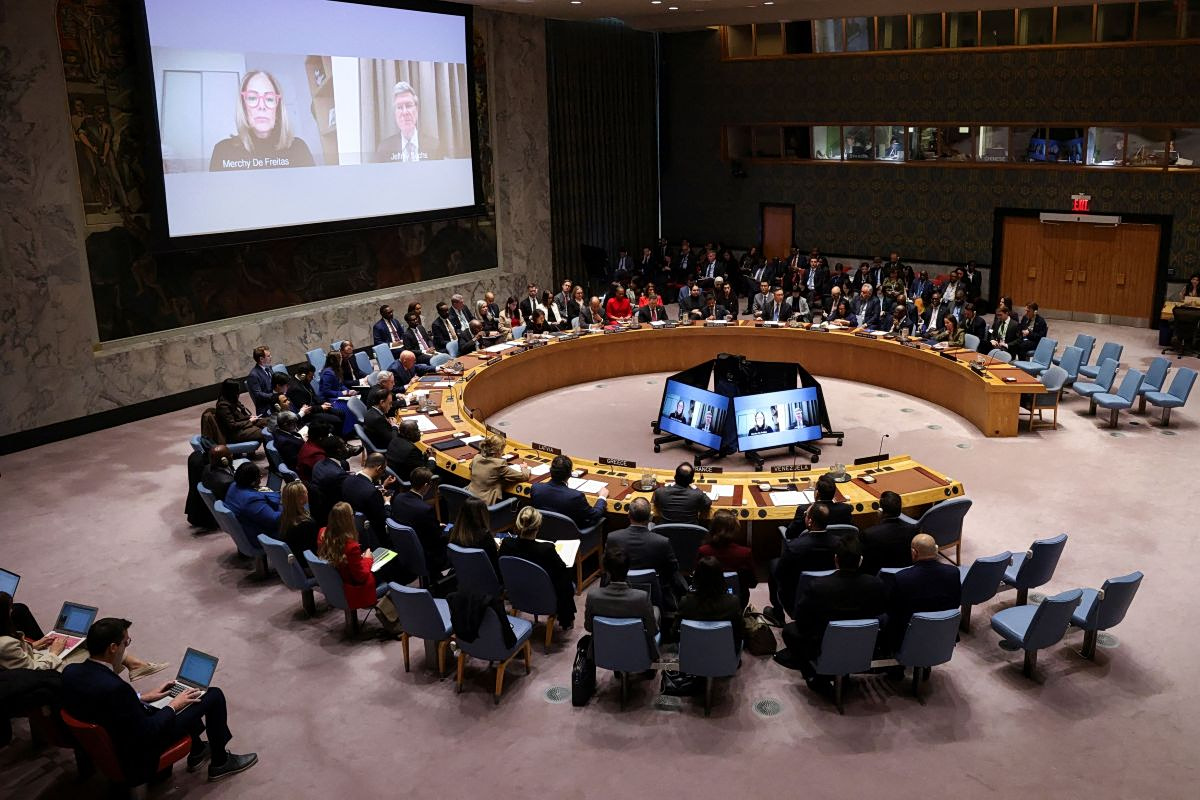
The U.N. Security Council met in emergency session on Monday amid mounting international concern over the fallout from a U.S. military operation that led to the arrest of Venezuelan President Nicolas Maduro, with several countries warning the move could further destabilize the region and undermine international law.
U.N. Secretary-General Antonio Guterres said he was deeply concerned about the consequences of the operation, citing risks of increased instability inside Venezuela, broader regional repercussions and the precedent set for relations between states.
Guterres urged all Venezuelan parties to engage in an “inclusive and democratic dialogue” and said the United Nations stood ready to support efforts toward a peaceful resolution of the crisis. He also questioned whether the U.S. operation in Caracas complied with international legal norms.
Strong criticism from Colombia, Russia and China
Colombia, which requested the Security Council meeting, delivered one of the strongest rebukes, condemning the U.S. action as a blatant violation of Venezuela’s sovereignty, political independence and territorial integrity.
“There is absolutely no justification, under any circumstances, for the unilateral use of force to carry out an act of aggression,” Colombia’s U.N. ambassador Leonor Zalabata Torres told the council, calling the operation a serious breach of international law and the U.N. Charter.
Russia also denounced the intervention, with its U.N. ambassador Vasily Nebenzya describing it as “shocking,” particularly for those who had hoped the Trump administration would pursue diplomacy and compromise rather than military force.
Nebenzya warned the arrest of Venezuela’s leader signaled a return to an era of U.S. dominance through “violence, chaos and lawlessness,” accusing Washington of committing crimes and demanding the immediate release of Maduro and his wife.
China echoed those concerns. Beijing’s deputy U.N. ambassador said China was “deeply shocked” and “strongly condemns the unilateral, illegal and coercive actions of the United States,” accusing Washington of flagrantly violating Venezuela’s sovereignty and calling for the immediate release of the detained Venezuelan leaders.
No sanctions likely
Legal experts have noted that the U.S. operation was carried out without authorization from the Security Council, without the consent of the Venezuelan government and could not be justified under the principle of self-defense.
However, any effort to impose sanctions on the United States is effectively blocked by Washington’s veto power at the Security Council, which it shares with Russia, China, Britain and France.