
President Trump said a 10-point plan proposed by Iran is the starting point for talks to resolve their conflict, calling it “a workable basis on which to negotiate.” But the 10 points are a long way from the White House position in February, before the war, when the U.S. was demanding the dismantling of Iran’s nuclear program and constraints on its ballistic missiles.
The talks, which will take place during the two-week cease-fire struck by the U.S. and Iran, are set to get under way Friday. Here’s the list of the 10 demands as published by Iranian state media, with our analysis of the issues they pose.
1. A guarantee of nonaggression
Inevitable as a condition for ending the war. Iran has suggested to mediators that China or Russia could act as guarantors. One question is whether Israel will agree to go along with it given what it sees as an existential, permanent conflict with Iran. Israel has agreed to the cease-fire, however, and it needs U.S. military support in any future campaign, limiting its freedom of action. Iran also established some deterrence with its missile strikes on the wider region, which it could repeat in the event of a new conflict.
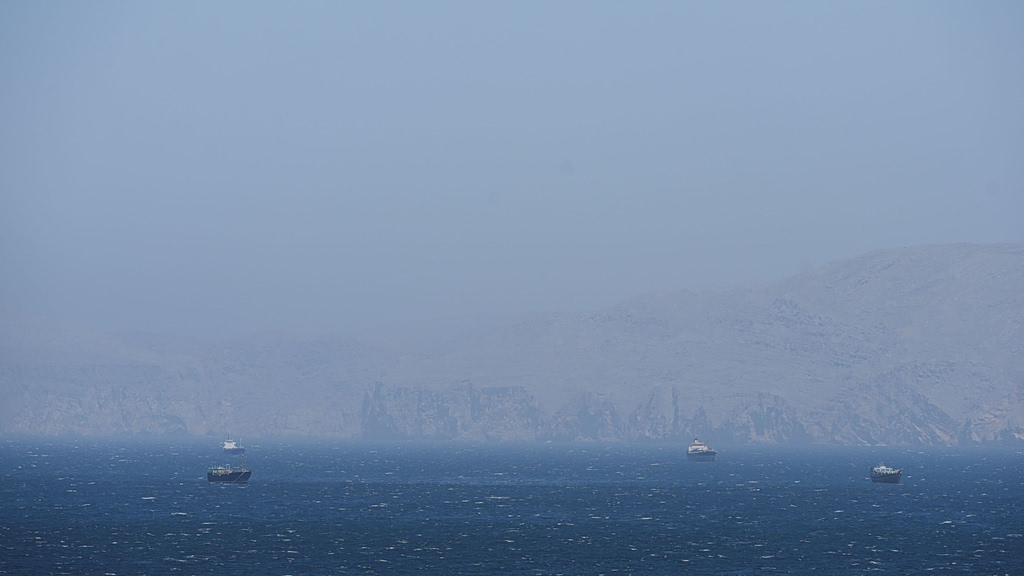
2. Iran will continue to control the Strait of Hormuz
This would be a big concession by the U.S., one that would give Iran an important new source of revenue and leverage . Iran, which has effectively shut the waterway, will supervise traffic during the cease-fire and hopes to establish a system of tolls. For America’s Arab Gulf allies, it is a nightmare scenario. U.S. officials such as Secretary of State Marco Rubio have said it would be unacceptable for Iran to hold sway over the waterway, transit point for a fifth of world oil supplies, but it may be a fait accompli. Iran has control now, wants it to continue and can maintain it with only occasional strikes on shipping.
3. Accepting an Iranian right to enrich uranium
On its face this would allow Iran to keep producing fuel that could be used to build nuclear weapons, while the U.S. has demanded an end to enrichment and the dismantling of key nuclear sites such as Natanz, Fordow and Isfahan. But there could be wiggle room. Previous rounds of negotiations have looked at ways that Iran could maintain a symbolic hold on enrichment but with strict limits that reduce its risks.
4. Lifting of all primary sanctions
The U.S. has said it would lift economic restrictions on Iran if it agrees to its demands regarding the nuclear program. Ending America’s longstanding trade ban, in place since the 1980s, could pave the way for U.S. companies to sign deals to do business in the Islamic Republic, which is something Tehran openly encouraged in talks this February. Still, U.S. investors tend to be wary of the country because of its political risks and often corrupt and heavily bureaucratic system.
5. Lifting of all secondary sanctions
If primary sanctions are removed, U.S. bans on banking and trading oil with Iran could also be eased. The U.S. is able to pressure Iran through its dominance of the global financial system and lifting these so-called secondary sanctions could open a flow of revenue to support Iran’s battered economy.
6. Termination of all Security Council resolutions
Iran in particular is looking for the United Nations Security Council to drop a 2025 arms embargo. A similar ban had been lifted earlier but was reimposed last year as concern grew among European nations over Iran’s supply of missiles and drones to Russia to support its campaign in Ukraine.
7. Termination of all IAEA Board of Governors resolutions
This would be a considerable prize for Iran. But getting it to comply with nuclear Non-Proliferation Treaty safeguards is also the U.S.’s main lever to compel Iran to give up its stockpile of highly enriched uranium. Lifting the International Atomic Energy Agency’s resolutions would be complicated given the patchwork of measures and jurisdictions including the U.S., European Union, individual European states and the United Nations, giving Iran hawks plenty of opportunity to object.
8. Payment of reparations to Iran
The U.S. is unlikely to agree to this but Iran and mediators have floated the idea of using fees on Hormuz traffic as a way to fund reconstruction. Other Arab nations have proposed using frozen Iranian oil funds in Qatar and elsewhere to finance Iran’s rebuilding efforts, an idea Iran is open to.
9. Withdrawal of U.S. combat forces from the region
The U.S. had 40,000 troops in the Middle East before the war. Trump has wanted to reduce that presence, closing bases in Syria and some in Iraq. But these bases are also more important to Gulf monarchies now facing an emboldened Iran. The United Arab Emirates has already said it would double down on security ties with the U.S. Analysts say the end of the war will likely force a continued role for the U.S. in the region.
10. Cease-fires on all fronts, including against Hezbollah in Lebanon
Israel has refused to accept this and is unlikely to be persuaded to halt its attacks as part of the talks. Iran has stood aside over the past three years as Israel pounded Lebanese ally Hezbollah, Hamas in Gaza and Yemen’s Houthis, so it is unlikely to be a deal breaker.