Robina Aminian was passionate about fashion, posting images of herself on Instagram wearing the dresses she hand-embroidered.
She was also passionate about politics. On Jan. 8 the fashion student finished her class at Tehran’s women-only Shariati College at around 7 p.m. and joined a group of antigovernment protesters not far from campus.
Iranians had been demonstrating for over a week, but Aminian knew that day was going to be different. The protests had been growing in size and expanding to more cities, with calls for regime change becoming louder. President Trump had threatened to intervene if security forces started shooting. Adding to the growing momentum, Reza Pahlavi, the exiled son of the deposed shah , had urged Iranians to pour onto the streets at 8 p.m., the start of the Iranian weekend.
Aminian wouldn’t survive the night. “She was a girl full of enthusiasm for life and a lover of design and fashion whose dreams were buried by the violence of the oppressors of the Islamic Republic,” said her aunt Hali Nouri, speaking from outside Iran.
Trump said Wednesday that the killing of protesters had stopped , comments that appeared to lessen the chance of a U.S. strike against the regime. If so, it is largely because security forces had unleashed an unprecedented wave of violence beginning late last week that Iranians reached by The Wall Street Journal said had left a tense pall over many cities.
Iran carried out the crackdown under the cover of an internet shutdown and extensive disruption to phone services, so it is hard to judge its true scale. Human-rights groups are trying to assemble a full account of the death toll, compiling evidence that includes images of body bags and testimonies from relatives, medical workers and other eyewitnesses.
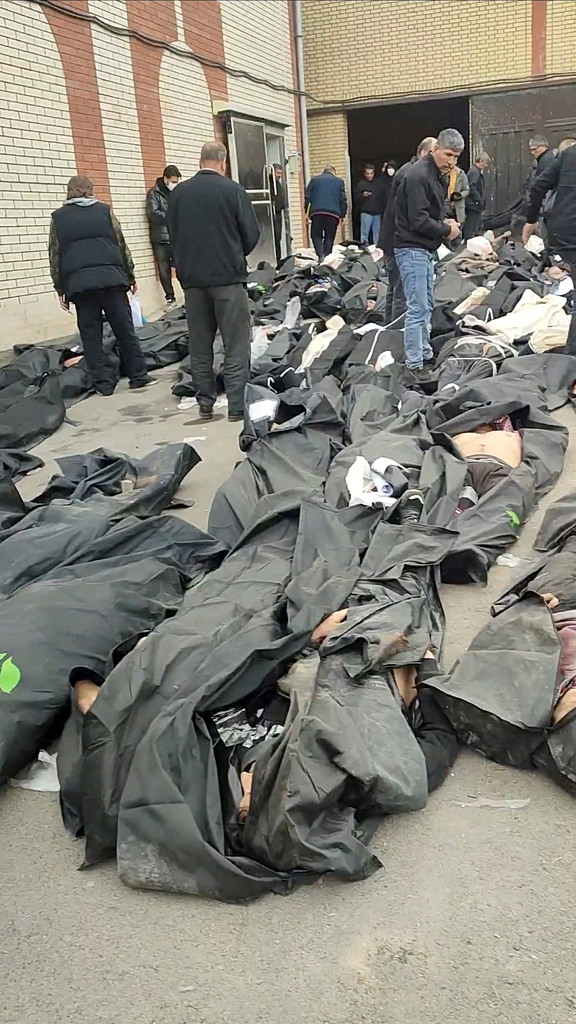
Bodies lie in body bags on the ground as people stand amid the scene outside Kahrizak Forensic Medical Centre in Tehran, Iran, in this screen capture from a video obtained from social media, January 11, 2026. Social Media/via REUTERS
But eyewitness accounts of localized violence and estimates by human-rights groups and intelligence services point to bloodshed that far exceeds the toll in previous bouts of protests, whatever the final tally of the dead may be.
Iranian officials initially acknowledged the economic grievances that sparked the unrest in late December. But the rhetoric shifted as pressure on the regime grew. By last week, the head of the judiciary was warning there would be no leniency for those aiding the enemies of the Islamic Republic, and other top officials were speaking menacingly of war with foreign-sponsored terrorists.
Late in the afternoon of Jan. 8, angry Iranians took to the streets in large numbers nationwide—from Tehran to Isfahan to the religious city of Mashhad and dozens of smaller cities and towns—chanting and spray-painting slogans that called for the fall of the Islamic Republic and “Death to the dictator.”
This time, the regime forces were ready to play a more lethal role in quelling the protests. Paramilitary Islamic Revolutionary Guard Corps and the voluntary Basij militia in plainclothes were deployed in large numbers across the country, often armed with Kalashnikov assault rifles. In one instance in west Tehran, security forces were seen with a heavy machine gun mounted on a pickup truck, according to footage verified by Storyful, which is owned by Journal parent News Corp.
From her campus, Aminian headed out with a group of friends to join a protest. The turning point came around 8:30 p.m. That’s when Iranian authorities shut down the internet across the country and escalated the crackdown, according to witnesses, relatives of victims and human rights groups.
“We are pretty confident that a massacre happened starting late Thursday night throughout the country,” said Hadi Ghaemi, executive director of the New York-based Center for Human Rights in Iran. “It was a complete war zone.”
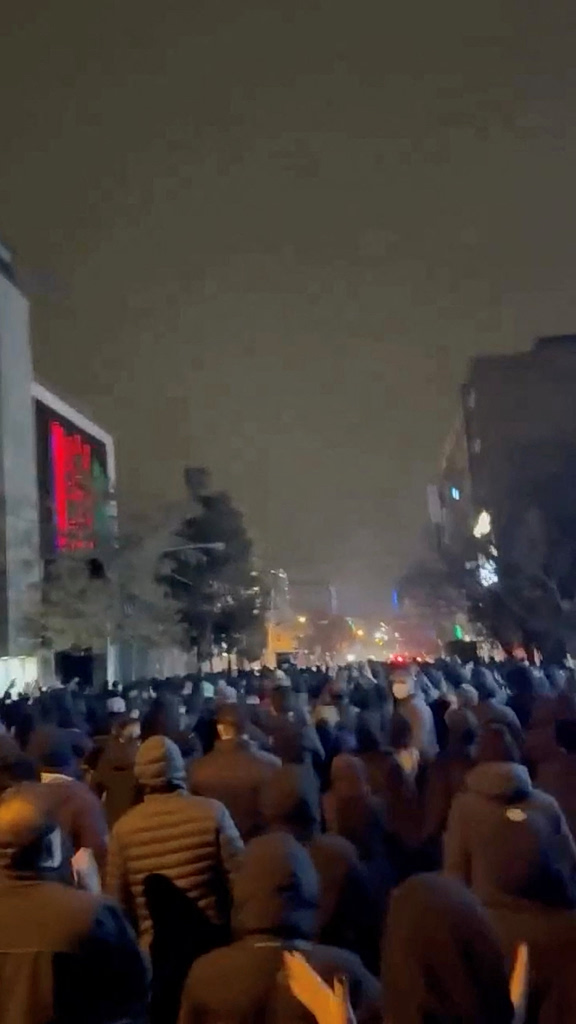
Protesters gather amid evolving anti-government unrest in Tehran, Iran, in this screengrab obtained from a social media video released on January 10, 2026. SOCIAL MEDIA/via REUTERS
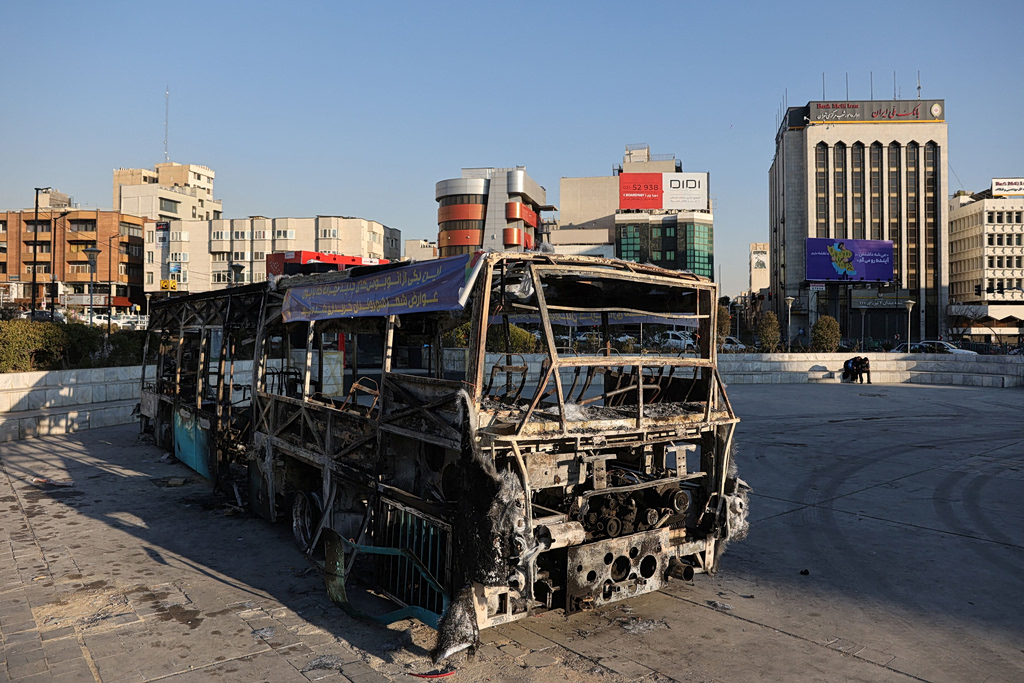
A bus burned during protests, on a street in Tehran, Iran, January 16, 2026. Majid Asgaripour/WANA (West Asia News Agency) via REUTERS
A video filmed that evening in Nazi Abad—a neighborhood close to Aminian’s school—shows protesters trapped in an alleyway as sounds of gunshots ring in the air. “They won’t let them leave,” says a voice in the video. “They are just shooting at them, killing them.”
Aminian’s mother was at her home in Kermanshah, a Kurdish city in western Iran, when her phone rang. It was a friend of her daughter’s. She said Aminian had been killed. The mother immediately jumped in a car with her husband and they raced to Tehran, according to Nezar Minouei, Aminian’s uncle.
Aminian’s parents arrived in the Iranian capital early in the morning on Friday. They found their daughter among hundreds of bodies. She had a bullet wound in the back of her head. Many of the other victims were also young women with injuries in the neck and face.
The bodies were supposed to stay where they were. The mother ignored the order and stealthily took her daughter’s body away. They drove for six hours with her lifeless form in the back of the car, crying the whole way.
Similar scenes of violence played out across the country that day, according to a half-dozen witnesses reached by the Journal, rights groups and videos verified by Storyful. In Mashhad, Iran’s holiest city, victims include Mahdi Salahshoor, a prominent 50-year-old sculptor and father of two. He was shot by a Kalashnikov rifle the night of Jan. 8, according to a family member reached by the Journal. Salahshoor was unhappy with life under the Islamic Republic and often worried about the kind of future his son and daughter faced there, the relative said.
“He was an incredibly kind, caring and family-loving man,” the relative said.
In the port city of Bushehr, a husband and wife were killed by direct gunfire near a mosque, according to Hengaw, a Norway-based human rights group that is tracking the victims. They left behind two young children.
In Karaj, a big industrial town west of Tehran, protesters were seen running away from gunshots late Thursday, according to footage verified by Storyful.
“Life was relatively normal until about 8:00 in the evening on Thursday, when the internet was cut,” a doctor said in an account shared by the Center for Human Rights in Iran.
Soon after that, he began to hear gunfire, screaming and sporadic explosions in Tehran: “I was called to the hospital. When I arrived, I saw that the nature of the injuries and the number of gunshot wounds had changed completely. The situation was totally different. Shots from close range, injuries leading to death.”
Residents described an extremely frightening and tense atmosphere in the capital, with the unrest more widespread and violent than previously. One person said when she went to the window to check the situation in the street, police outside shined a light in her eyes and over loudspeakers warned people to stay away from the windows.
While Aminian was joining the demonstration by her college, another protester reached by the Journal said he had headed to a gathering outside a police station in the Abuzar neighborhood of south Tehran and began chanting, “Down with the dictator, we want Pahlavi back,” a reference to the son of the shah.
Security forces were in the streets and on the roof of the police station, and soon started firing birdshot from shotguns and regular rounds from Kalashnikovs, he said.
The protester said he saw four killed, their bodies taken away by security forces. Another person went to the site the next day and took photos of a bloodied sidewalk and an assault-rifle round he found. Video verified by Storyful showed the protests, and state media showed footage of the burned-out local mosque after what it called a riot.
In the fight, not everyone ran away when the shooting started, the protester said.
“Other protesters engaged,” he said. “They didn’t retreat. They started throwing stones. In some cases, they set police motorcycles on fire.”
Estimates of the death toll vary widely, ranging from the hundreds acknowledged by Iranian Foreign Minister Abbas Araghchi in an interview with Fox News on Wednesday to multiple thousands asserted by some rights groups and intelligence services.
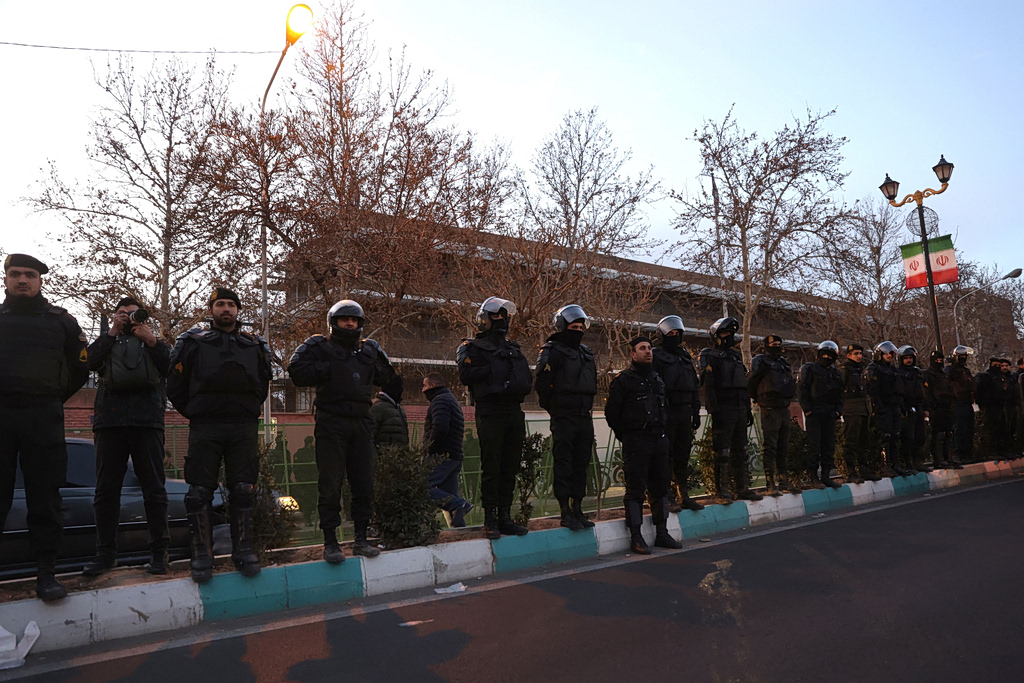
Members of the Iranian police stand guard at a protest in front of the British embassy following anti-government protests in Tehran, Iran, January 14, 2026. Majid Asgaripour/WANA (West Asia News Agency) via REUTERS
While the overwhelming majority of the dead were protestors, Human Rights Activists in Iran says more than 150 government forces have died in the unrest as well.
The U.S.-based group said it has confirmed more than 2,600 deaths and more than 18,400 arrests since the protests broke out in late December. That would make the current crackdown the deadliest in Iran since the 1980s , when the government executed thousands of political prisoners as it consolidated power following the 1979 revolution. More than 2,600 people were killed in 1981 alone, according to Amnesty International.
In regularly recurring bouts of protests over the past two decades, the regime has responded with increasing violence. Dozens died during the 2009 Green Movement protests over accusations of fraud in that year’s presidential election. During the 2022 protests over the mandatory veil following the death in police custody of Mahsa Amini, 551 people were killed, according to Iran Human Rights, another human-rights monitor based in Norway.
People reached by the Journal reported seeing masses of bodies in morgues and cemeteries and believed the death toll to be higher than what’s been acknowledged by authorities.
Verified footage from various parts of the country showed Iranians searching for the bodies of loved ones in makeshift or overcrowded morgues. At a morgue in south Tehran, videos showed there wasn’t enough room for all the dead, as bodies covered in white shrouds were strewn on the street outside. Some bodies arrived on the back of pickup trucks. The government blamed rioters for the deaths. Rights groups said they were protesters killed by live shots.
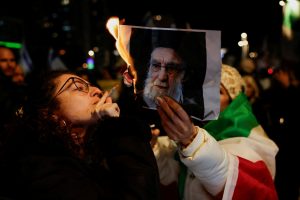
Iran’s top leaders aren’t hiding their harsh response. Ali Khamenei, Iran’s supreme leader, in a speech Jan. 9 called the protesters agents of the enemy and told security forces to deal with them with full force. The public prosecutor upped the ante, saying those who destroyed property or took up arms could be charged as an enemy of God, which can carry the death penalty.

FILE PHOTO: Iran’s Supreme Leader Ayatollah Ali Khamenei speaks during a meeting in Tehran, Iran January 3, 2026. Office of the Iranian Supreme Leader/WANA (West Asia News Agency)/Handout via REUTERS
The ministry of intelligence that day sent warnings via text messages to Iranian mobile phones: “Dear parents, inform your children about the consequences of cooperating with terrorist mercenaries, which is an example of treason against the country.”
Araghchi now refers to Jan. 8 as Day 13—a continuation of the 12-day war between Iran and Israel in June.
The fierce crackdown by security forces has succeeded in forcing demonstrators off the streets in some cities, with some residents reporting an eerie quiet after days of escalating violence. Families have been burying their dead—as best they can.
Authorities didn’t allow Aminian’s family to hold a mourning ceremony, her family members said. They buried Aminian in an unmarked grave near Kermanshah last Friday. When her mother returned home, she found members of the security forces parked outside so decided to stay elsewhere.
“The mother can’t go anywhere now,” said Nezar Minouei, the uncle. “They are following her like a shadow.”
Write to Benoit Faucon at benoit.faucon@wsj.com and Margherita Stancati at margherita.stancati@wsj.com