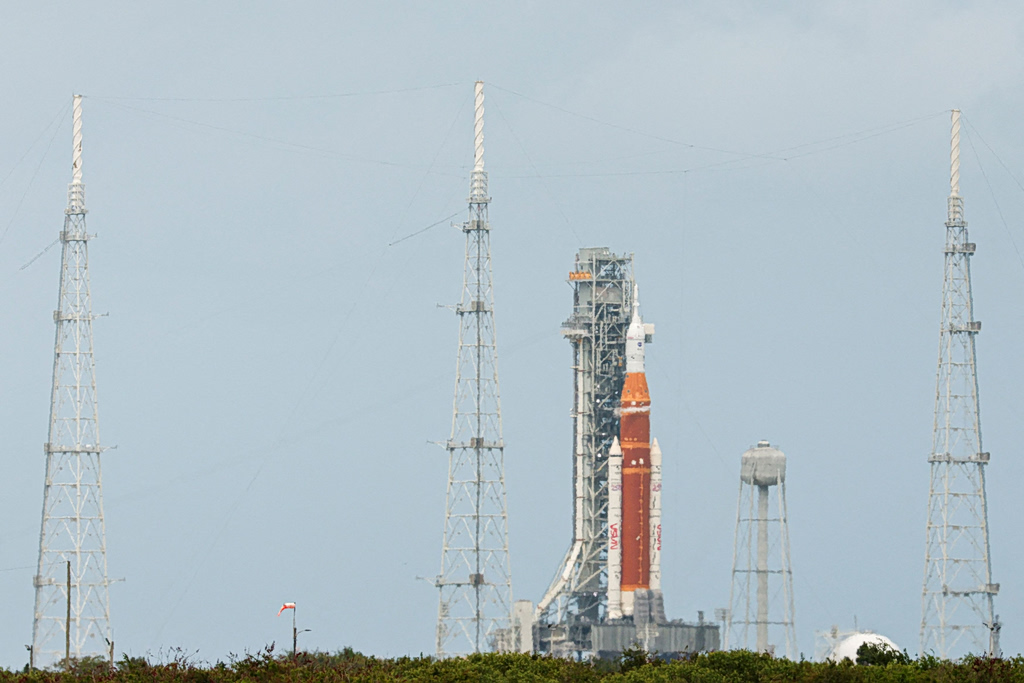

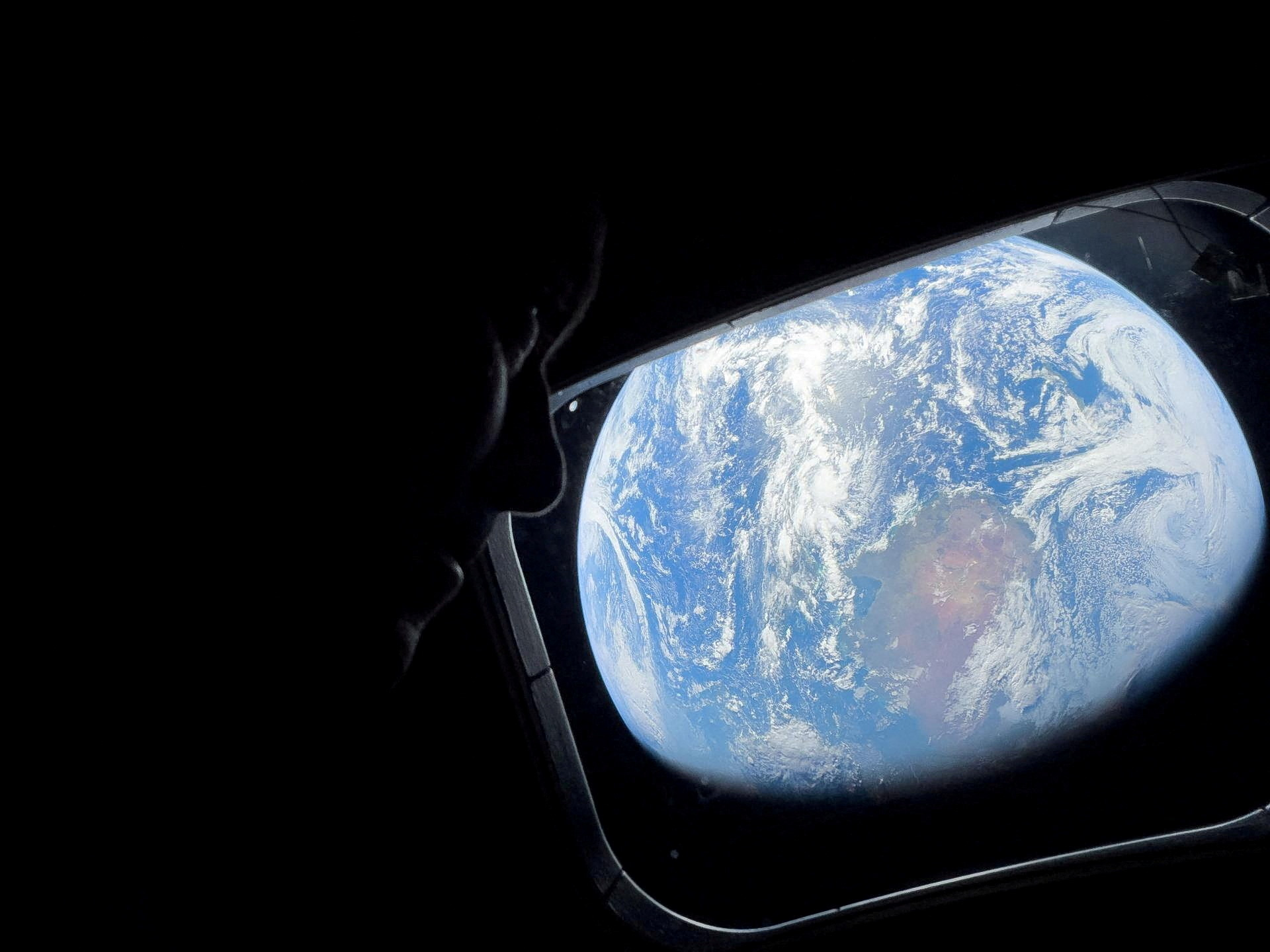
Just before 2 p.m. ET Monday, the astronauts on NASA’s Artemis II lunar mission steered their Orion craft into the record books, flying more than 248,655 miles from Earth. That surpassed the distance milestone set in 1970 with NASA’s Apollo 13 mission, with the four crew members journeying farther beyond the planet than anyone else.
“We, most importantly, choose this moment to challenge this generation and the next to make sure this record is not long-lived,” said Jeremy Hansen , the Artemis astronaut representing the Canadian Space Agency, after the crew set the new distance milestone.
Monday is one of the most consequential periods for the Artemis II mission, which has proceeded with only minor glitches so far.
Earlier in the day, Orion entered a point where the gravity of the moon was exerting a stronger pull on the spacecraft than the Earth, setting up the crew— Reid Wiseman, Christina Koch, Victor Glover and Hansen—for the kind of lunar flyby NASA hasn’t attempted in decades.
Around 6:44 p.m. ET Monday, Orion is set to transit behind the moon, where the crew will lose communications with Earth for 40 minutes or so. Shortly after that, the ship will reach its maximum distance from the planet during the mission, 252,757 miles.
Joining the dark side
Besides setting a new distance record for human spaceflight, the Artemis crew has been gearing up to make the most of the time they spend swooping around the moon. That means meticulously photographing and observing the lunar surface.
“We’re looking for the crew to take time during their flyby, let their eyes adjust to what they’re seeing, and call out any of those subtle color nuances—especially on parts of the far side that never have been seen before by human eyes,” Kelsey Young , the top lunar science official for the mission, said Saturday at a briefing.
Mission controllers sent the crew a list of 30 targets to track on the lunar surface. Among them is a 3.8 billion-year-old crater called Orientale Basin, and a different crater to its northwest.
Young said the crew trained extensively for the flyby, including classroom drills on “description practice” and a field trip to Iceland to work on describing geologic features.
The crew also proposed naming two craters on the moon as they approached it, saying they would like to call one Integrity, after the name of their ship. They suggested calling another one Carroll, after Wiseman’s late wife.
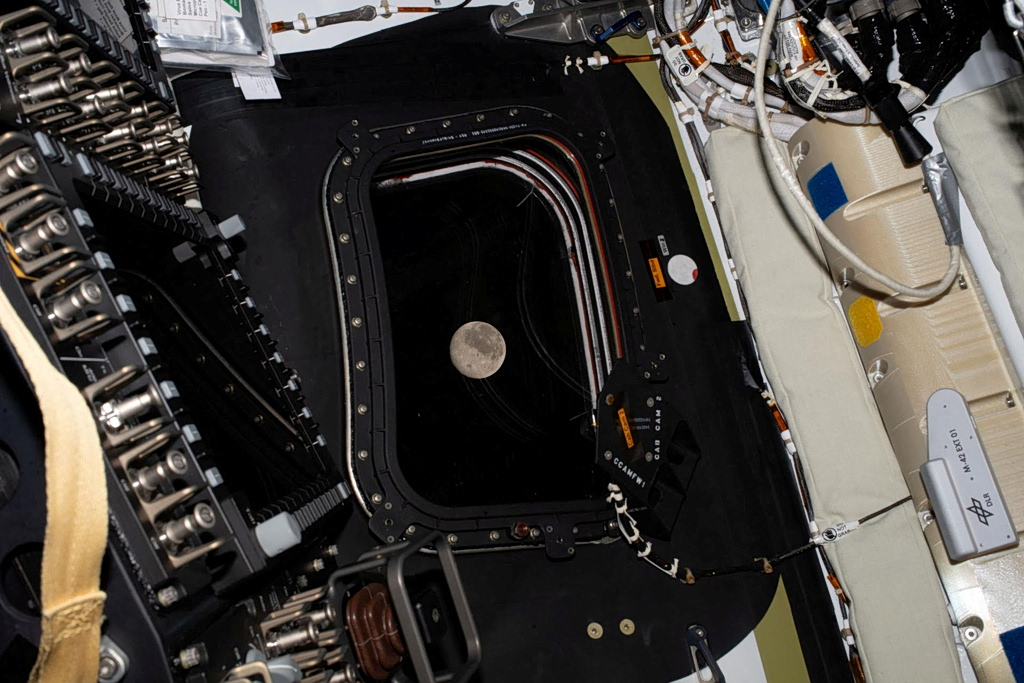
A view of the Moon taken by an Artemis II crew member through the window of the Orion spacecraft on day five of the mission, April 6, 2026. NASA/Handout via REUTERS. THIS IMAGE HAS BEEN SUPPLIED BY A THIRD PARTY
Toilet turbulence
A few issues cropped up on Orion over the past couple of days, including an unusual smell in the spacecraft. It wasn’t clear what was causing the odor, NASA officials said, which may have emerged from a mechanical system or materials like tapes onboard.
Mission controllers also spent time working to figure out why a wastewater vent line on the ship’s toilet wasn’t functioning as expected. The part probably was getting blocked by ice buildup, officials said, leading the crew to use other devices to urinate.
“It’s a little bit of camping in space already, but then it makes the camping a little bit tougher when you don’t have the full capability of the toilet,” said John Honeycutt, chairman of the Artemis II mission management team, at a Saturday briefing.
NASA officials said Sunday they were still working on the vent line.