Russia is stuck on the Ukrainian battlefield and lashing out with massive strikes on Kyiv . The growing fear in European capitals is that President Vladimir Putin will try next to reshuffle the cards by expanding the conflict to Europe.
In recent weeks, Russia has made increasingly bellicose statements against the Baltic states. It has threatened to bomb “decision-making centers” in Latvia after accusing the country of hosting Ukrainian drone operators, an allegation denied by the Latvian authorities. Air-raid alarms were sounded in Lithuania last week, forcing the government into a bunker, after suspected Russian drones approached its airspace from Belarus.
The Russian Ministry of Defense has also published the addresses of companies allegedly working on drone production with Ukraine in eight European nations, warning of “unpredictable consequences” and “sharp escalation” if military assistance to Kyiv doesn’t cease.
While fears that Russia could expand the conflict to Europe aren’t new, recent developments have made them more urgent. Several European national-security officials have warned that Russia could try to test the cohesion of the North Atlantic Treaty Organization by targeting one of the Baltic nations, Swedish and Danish islands in the Baltic Sea or alliance territory in the Arctic.
“The security environment in Europe has deteriorated during the last 24 months, and we see a greater inclination from the Russian side to take greater operational risks in their hybrid operations, moving up also to kinetic elements,” Sweden’s Defense Minister Pål Jonson said in an interview. “We are cognizant that we need to be focused on strengthening our ability to deter and defend against the Russians.”
President Trump’s recent threats to withdraw from NATO, and his moves to reduce U.S. forces deployed in Europe, have undermined this deterrence. Senior European officials say they fear Russia may see an opening in the next 12 months as the oil shock from the Iran war creates additional political turmoil in Europe, buoying far-right parties that seek a return to buying Russian oil and gas, and an end to aiding Ukraine.
“We know that Russia’s aim is to threaten the whole European security architecture, so there is every reason to be extremely vigilant, to continue the support of Ukraine, and to continue, of course, the efforts toward European rearmament,” said Benjamin Haddad, France’s minister for European affairs. France will hold a presidential election next year, with a candidate more friendly to Russia holding strong odds to win.
There are no signs of Russia actually moving troops or equipment to stage attacks on the Baltic states or elsewhere outside Ukraine in the immediate future, intelligence and military officials in several European nations say. But, they add, Putin will be confronted with a stark choice in the coming months because of a simple arithmetic of attrition.
Russian forces are losing nearly 35,000 soldiers a month, according to Western intelligence estimates, more than the Kremlin can recruit. Continuing the war in Ukraine at its current pace will soon become untenable without resorting to forced mobilization—something Russia hasn’t done since a one-off drive to draft 300,000 troops in 2022. Such a move would have huge implications inside and outside Russia.
“If you just mobilize for this war, then you would send a signal that you are not really winning this war,” Kaja Kallas , the European Union’s top official for foreign affairs and security policy, said in an interview. “So there comes the point where they need to escalate in order to justify the mobilization. And that’s a very dangerous point. Of course, nobody sees in the head of Putin, but this could be the calculus to move forward and change the linearity of this war.”
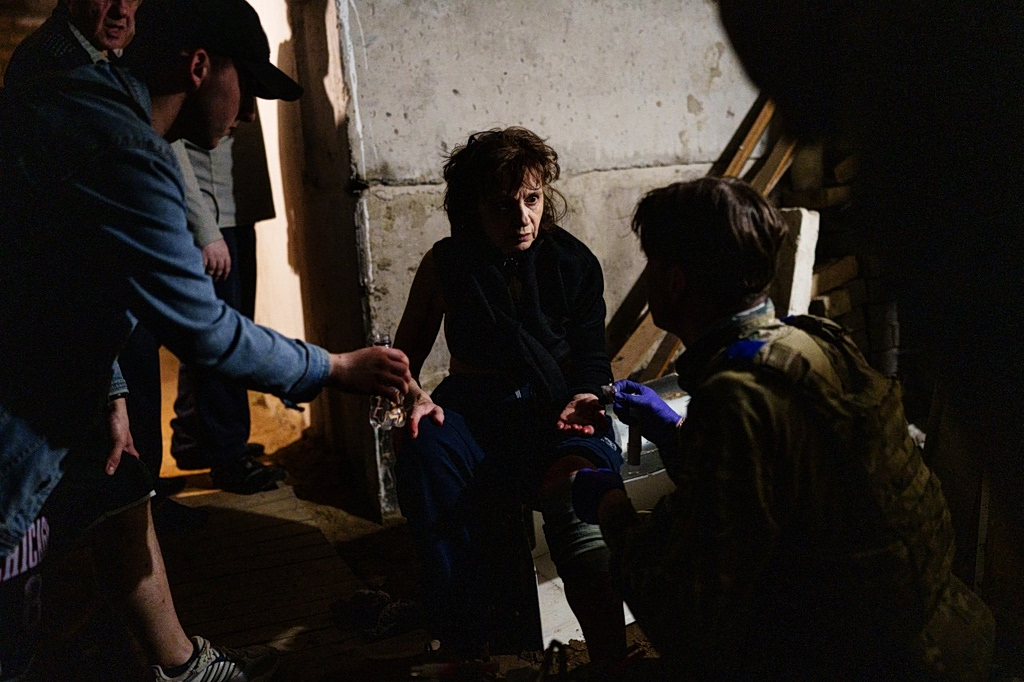
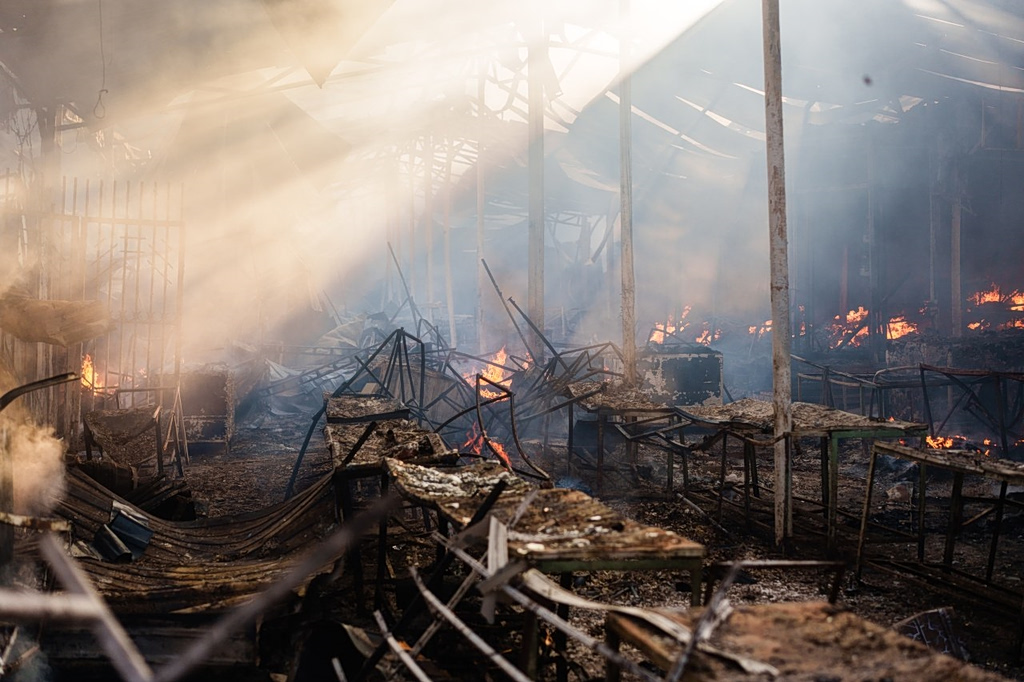
The current stalemate is largely due to Ukraine’s—and Russia’s— advances in drone warfare . What used to be a front line is now a vast “kill zone,” dozens of miles wide, in which any movement is usually quickly discovered and advancing troops are killed well before they reach enemy positions. Ukraine’s growing advantage in longer-range drones, enabled by Starlink, means that Kyiv can also target moving trucks and fuel and ammunition depots more than 100 miles in the Russian rear, severely disrupting Russian logistics behind the front line.
“Russia can’t afford to continue the war on its current trajectory because it will face the trap of diminishing resources,” said Oleksandr V. Danylyuk, chairman of the Center for Defense Reforms in Kyiv and a former Ukrainian defense and intelligence official. “This means that Putin will have to escalate. He can do it vertically, by increasing the intensity of violence, including through nuclear blackmail but without any real use of the nuclear weapons. And he can do it horizontally, by expanding the geography of the conflict as he seeks to freeze the war on better terms.”
Russia already conducted snap nuclear exercises that included deploying warheads to Belarus this month. Moscow has also warned that Kyiv will face a wave of “systemic” heavy bombardments like the wave of missile and drone strikes last weekend , urging foreign embassies and citizens to evacuate the capital.
Putin, whose military commanders now routinely make up battlefield advances, claiming control over towns that remain in Ukrainian hands such as Kupyansk and Lyman, keeps insisting that victory remains in sight. “The front-line situation for the armed forces of Ukraine is gradually turning from difficult and critical to catastrophic,” he said this month, urging Ukrainian troops not to follow the orders of the “illegitimate, thieving junta” in Kyiv.
There is no indication that Putin’s strategic objective—domination of all of Ukraine, and redrawing the balance of power across Europe—has been scaled back despite Moscow’s battlefield challenges. “Russia may be changing its tactics, but it hasn’t changed its strategy and its goals, and it won’t stop by itself,” said Mariana Betsa, Ukraine’s deputy foreign minister. “Its imperialist and revanchist aspirations remain.”
In Russia’s official discourse, relatively conciliatory toward the U.S. since Trump’s election, the EU—which now provides most of the support for Ukraine—features as the implacable enemy that must be punished or destroyed.
“Russia clearly sees the European Union as a threat to their system of governance, which is about oppression and fear,” Michael McGrath, the EU commissioner for democracy, justice and the rule of law, said in an interview. “Ultimately, their aim is to destroy the European Union. And we should be under no illusions about that because they don’t want a large, powerful and united democratic bloc on their doorstep.”
In recent wargames, Ukrainian drone teams quickly defeated much larger units of NATO forces. The problem is, Russian troops possess comparable experience and drone equipment—and would likely fare much better against European militaries than they do against Ukraine, especially if the U.S. doesn’t rush in to help.
To embark on such an escalation, Russia would first have to replenish the ranks of its military. “Mobilization, technically, is absolutely doable; their mobilization system has been fixed. But this would also create serious internal problems and pressure, which then could lead in different interesting directions. It would be a risky decision for Putin,” said Kaupo Rosin, director of the Estonian Foreign Intelligence Service. “Problems inside of Russia are starting to pile up: not succeeding on the battlefield, the finance situation, and the Ukrainian deep strikes that are affecting the economy but also the people.”
Jonson, the Swedish defense minister, reminded that hundreds of thousands of Russian men fled the country after mobilization began in the fall of 2022, afraid of being thrown into the Ukrainian meat-grinder. “The last time Putin did the mobilization, there was a considerable brain drain, and we also saw that the popularity of Putin severely declined,” he said.
Attacking NATO would be a severe mistake, Jonson added: “We’re very determined to keep every inch of Allied territory safe.”
The idea of breaking out of the stalemate in Ukraine by expanding the war to NATO countries in the Baltics could be seductive—but dangerous—to Putin, said Norbert Röttgen, a senior German lawmaker. “This would be such a huge and additional big risk for Putin to, after having been not sufficiently successful against Ukraine, to simply add another very strong adversary in a military conflict,” Röttgen said.
Putin, however, is known for taking big gambles, he added: “Despite my doubts, we also have to calculate that Putin behaves irrationally and in an escalatory way.”
Write to Yaroslav Trofimov at yaroslav.trofimov@wsj.com