 Μake us preferred on Google
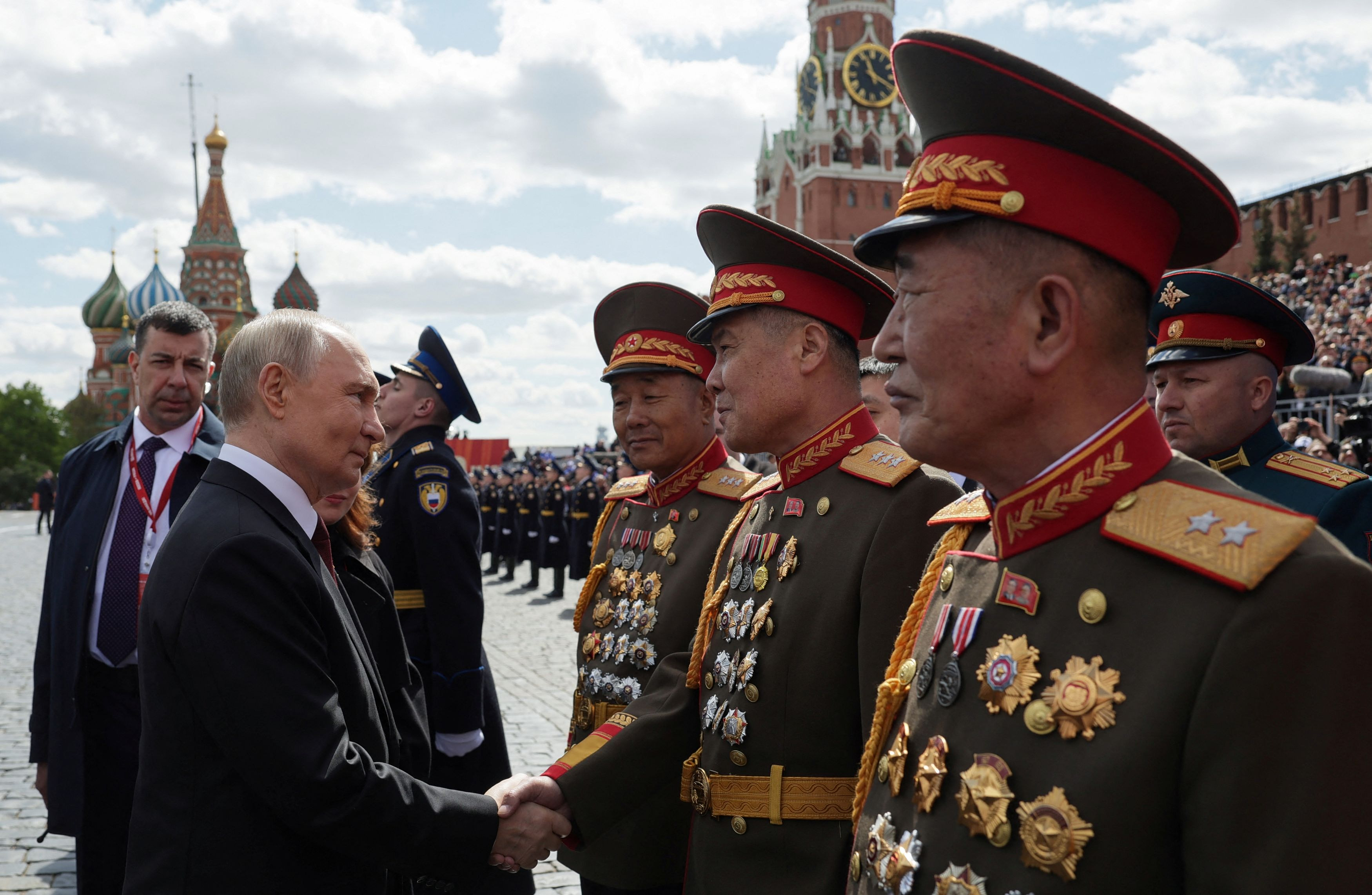
 Ever since coming to power more than a quarter-century ago, Russian President Vladimir Putin built a new state religion around May 9, the anniversary of the Soviet victory over Nazi Germany and the holiest day in the Russian calendar.
On Saturday, Putin will for the first time preside over a Victory Day parade held as his war on Ukraine has exceeded the length of the Soviet Union’s war on the Nazis.
He has no victories to celebrate. Persistent Ukrainian drone strikes across Russia, including on the capital , have forced Putin to ask for a cease-fire for the duration of the festivities. Parade organizers, citing security threats, have also dramatically downgraded the event, eliminating the display of armored vehicles and the march by military cadets. Cellphone and internet services are slated to be disrupted in Moscow for days.
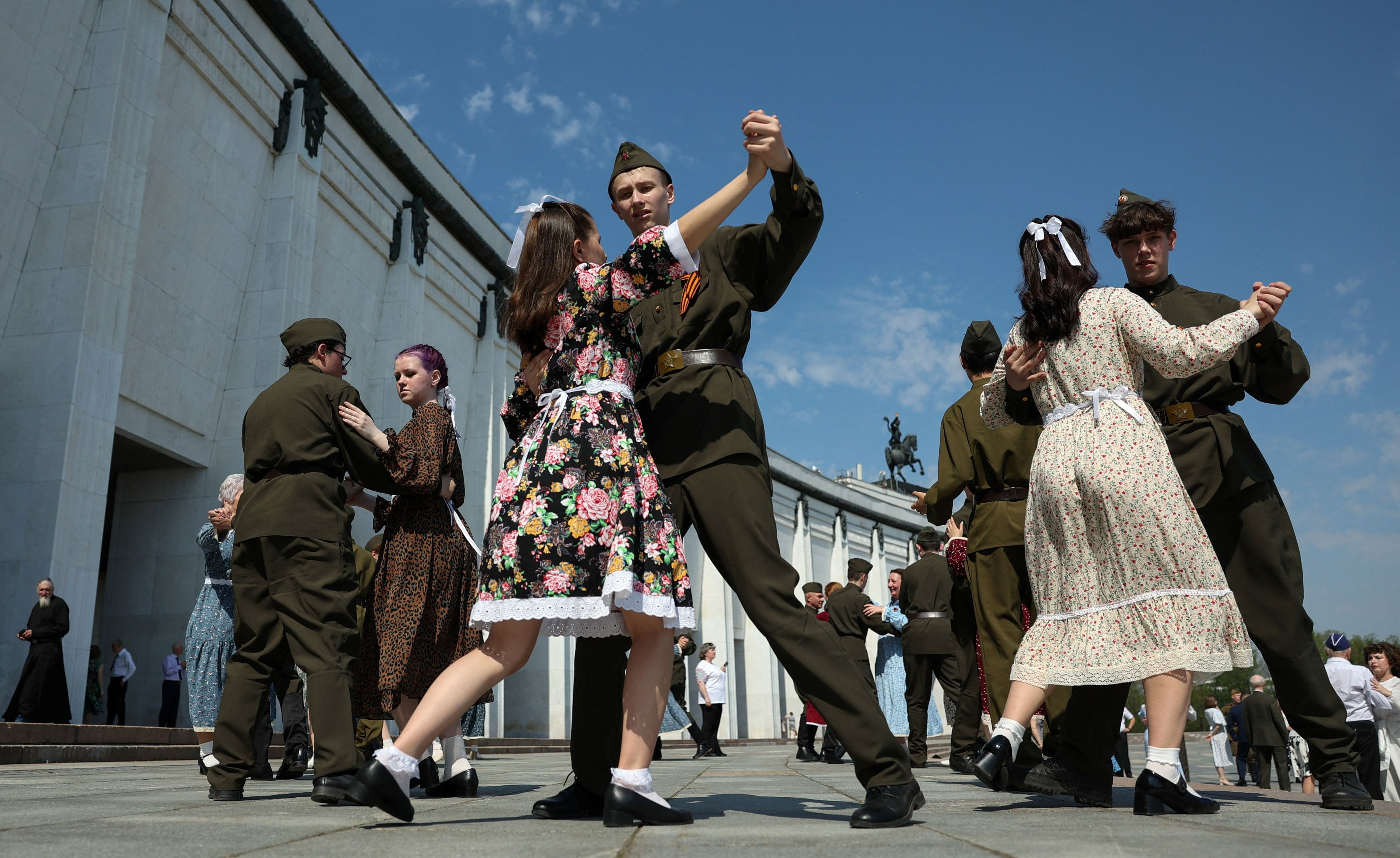
Participants dance during the Waltz of Victory event, held to recreate the atmosphere of spring 1945 and celebrate the upcoming Victory Day, which marks the anniversary of the defeat of Nazi Germany in World War Two, in Moscow, Russia, May 7, 2026. REUTERS/Ramil Sitdikov
With the front line stalled, Russian casualties topping one million, the economy suffering and missile and drone strikes becoming commonplace , a deep sense of discontent has spread through the country in recent months. It potentially poses the gravest challenge to Putin’s rule so far—and may be more insidious than the aborted putsch by warlord Yevgeny Prigozhin in 2023.
Russian security services have responded with draconian new restrictions, blocking most online activity in an imitation of China’s “Great Firewall.” The restrictions, justified by the need to prevent drone strikes that continue regardless, are so severe that even nationalist loyalists supporting the war have started talking about a looming revolution. Rumors of alleged coup preparations and infighting between various parts of the security establishment swirl through Moscow salons.
It doesn’t mean that revolution is imminent, nor that Putin, currently 73 years old, will be sidelined soon. But the change in mood is remarkable when compared with just last December, when Russian officials were buoyed by hopes that President Trump will pressure Ukraine into a peace deal on Moscow’s terms, lifting economic sanctions and unleashing a business bonanza.
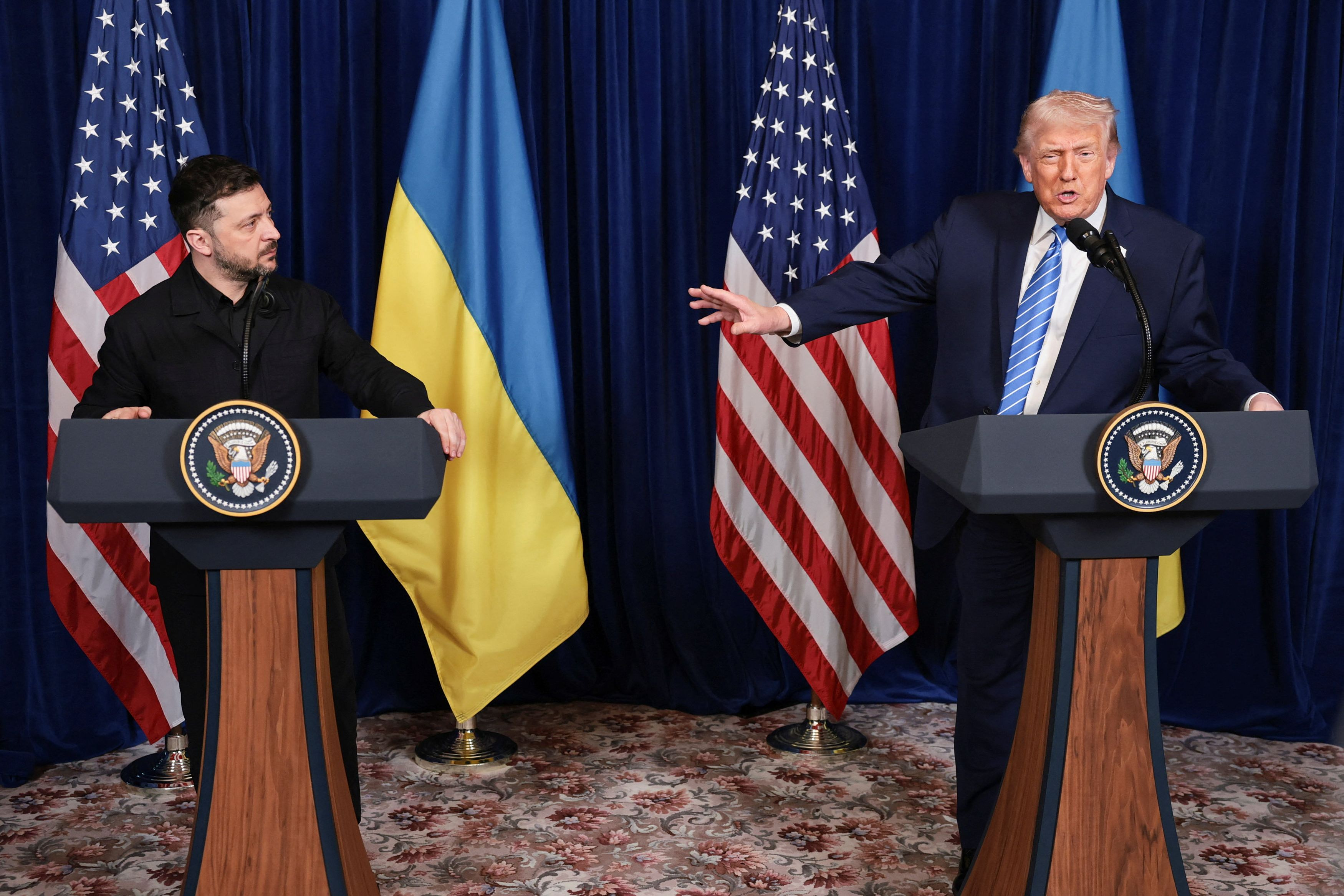
Ukrainian President Volodymyr Zelenskiy listens as U.S. President Donald Trump gestures during a press conference after their lunch meeting at Trump’s Mar-a-Lago club, in Palm Beach, Florida, U.S., December 28, 2025. REUTERS/Jonathan Ernst
Psychologically, the turning point came in January. That was when Putin’s so-called special military operation, which according to the Kremlin’s narrative aims to “denazify” Ukraine, blew past the duration of the 1941-45 war against Nazi Germany. That conflict is described in Russia as the “Great Patriotic War.”
“Every day since then adds to the sentiment that we aren’t worthy of the memory of our grandfathers,” said Abbas Gallyamov, a former Putin speechwriter who is now an opposition politician living abroad. “Putin created this cult of grandfathers, and now it’s backfiring on him.”
Kremlin spokesman Dmitry Peskov has said that the war caused a “phenomenal consolidation of the society around the president,” adding that it has lasted more than four years because its goals have yet to be fully achieved.
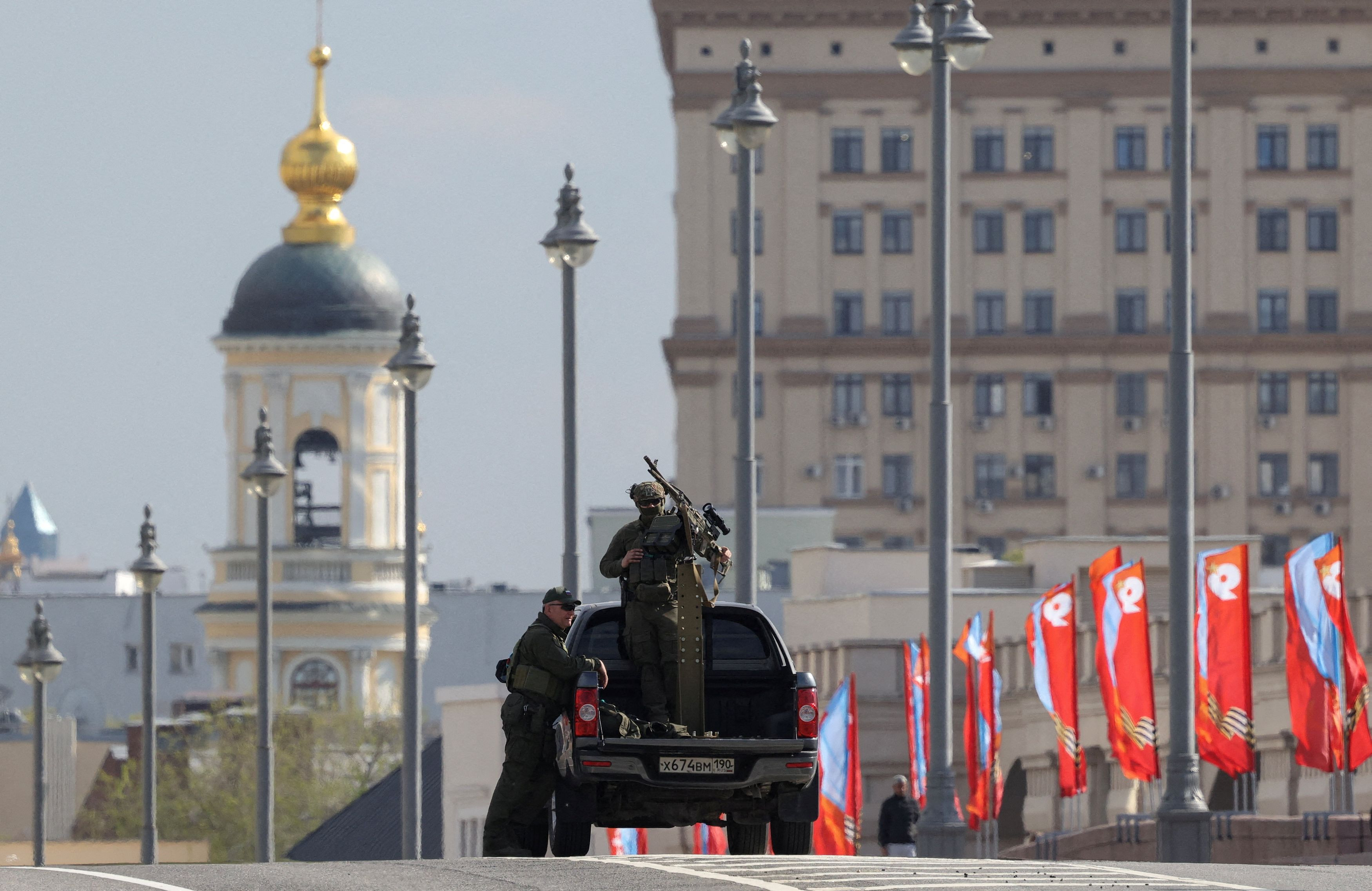
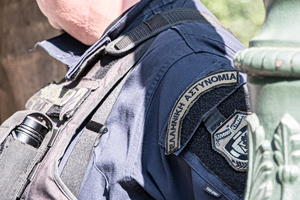
Security personnel armed with machine gun patrol in central Moscow, Russia, May 4, 2026. REUTERS/Ramil Sitdikov TPX IMAGES OF THE DAY
Anastasia Kashevarova, a pro-war Russian media celebrity, highlighted the shift in national mood when she noted on Telegram this week that the grandfathers in World War II had “already reached Berlin by now, and we for some reason continue just shaking our fists and talking nonsense about red lines.”
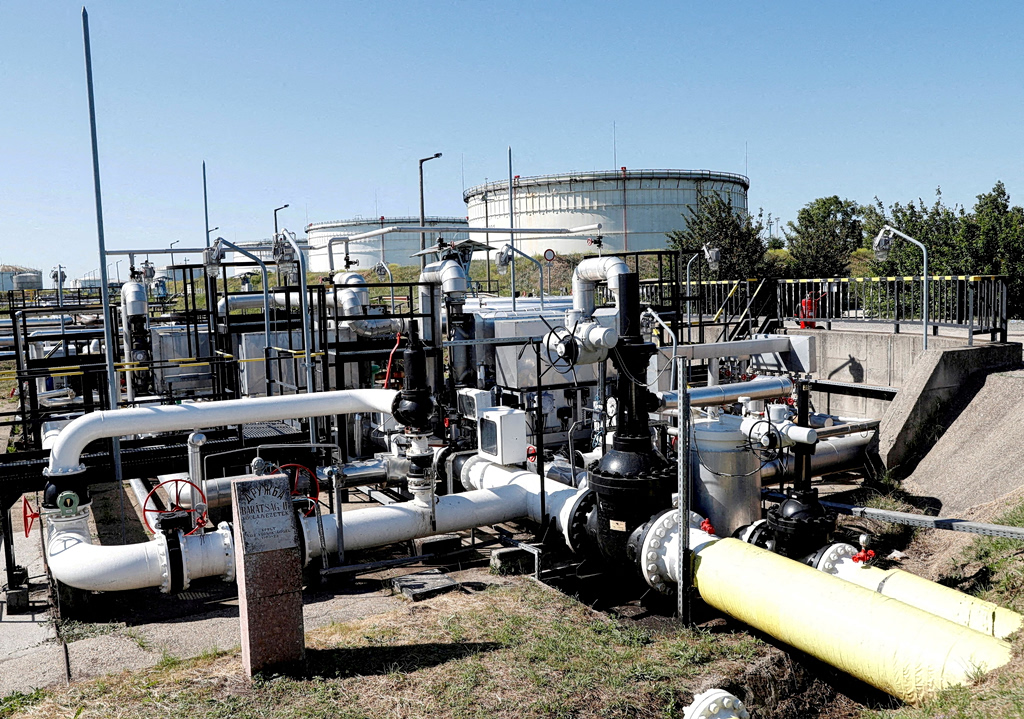
Ukrainian drone and missile strikes that target Russian oil export facilities, refineries and military plants have become routine in recent months. Some 70% of Russia’s population, including areas 1,000 miles away that considered themselves safe, are now within Kyiv’s range. Initially, these attacks contributed to a rally-around-the-flag effect. But now, with Ukrainian forces becoming more efficient, they merely illustrate Putin’s weakness.
“Putin is perceived today as an old grandpa, a grandpa unaware about the real state of affairs in people’s lives,” said Alexander Baunov, a senior fellow at the Carnegie Russia Eurasia Center and author of a Russian bestseller about the demise of autocratic regimes in 1970s Spain, Portugal and Greece. “He’s no longer seen as the protector. He’s no longer seen as Superman.”
In a recent conversation with Trump, Putin suggested a brief cease-fire to allow the victory parade to go ahead. Ukrainian President Volodymyr Zelensky countered with a unilateral cease-fire that was supposed to start Wednesday. The Russian military, however, continued attacks on Ukrainian cities past that deadline, making it likely that fighting—and Ukrainian drone and missile strikes—will carry on unabated through the parade weekend.
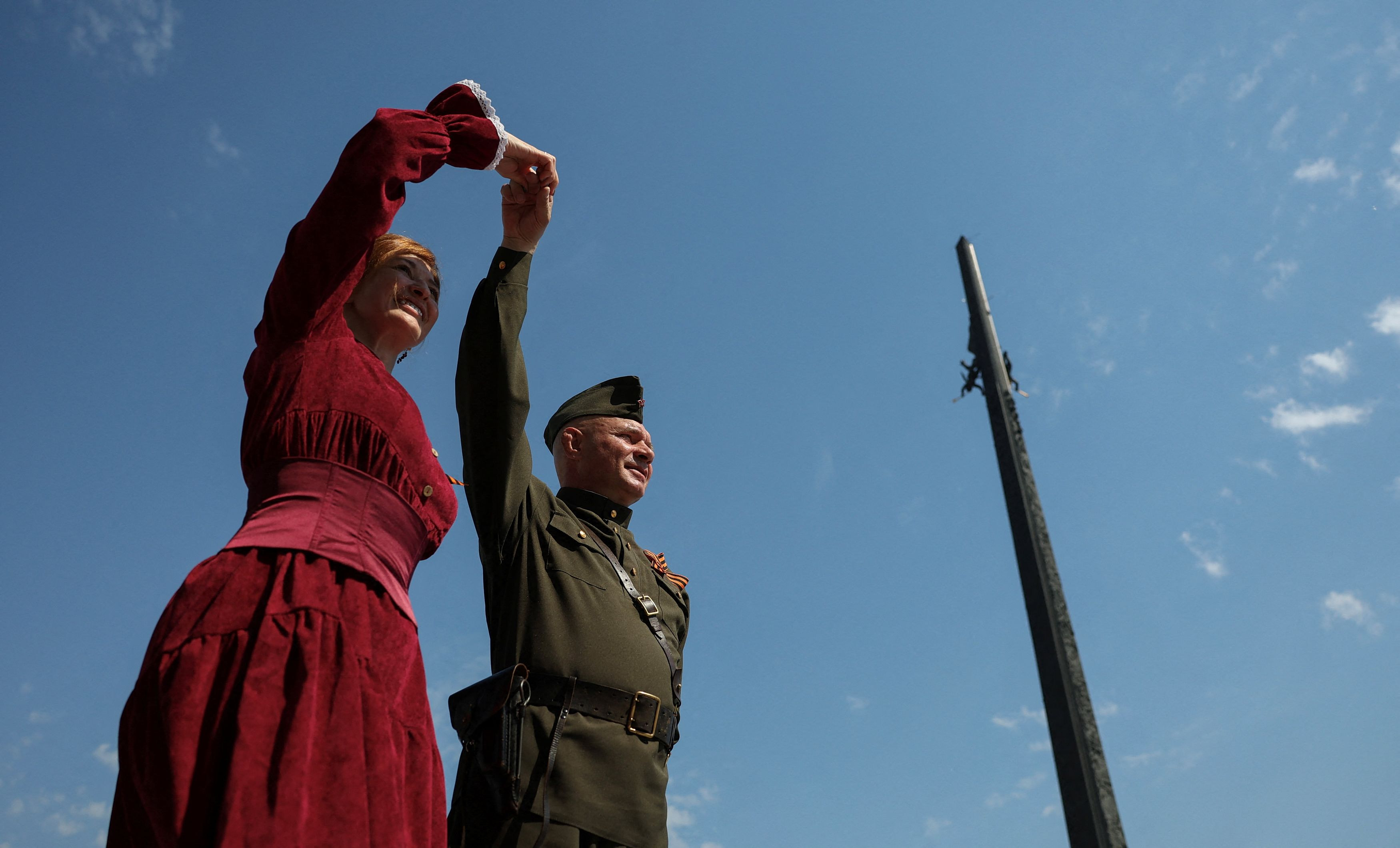
Participants dance during the Waltz of Victory event, held to recreate the atmosphere of spring 1945 and celebrate the upcoming Victory Day, which marks the anniversary of the defeat of Nazi Germany in World War Two, in Moscow, Russia, May 7, 2026. REUTERS/Ramil Sitdikov
“If Putin could freely choose, he would not have this parade. He doesn’t want to stand somewhere in the open, given the damage that has been done to Russian air surveillance and air defense, and the way Ukrainian drones and missiles are choosing where to fly,” said Nico Lange, a former senior German defense official who runs the IRIS think tank based in Germany. “But because of the quasi-religious meaning of May 9, he also cannot not have the parade.”
A local TikTok influencer captured public frustration in a post from the Volga region of Chuvashia, some 600 miles from Ukraine, an area that came under attack this week. Ukrainian missiles and drones targeting a key Russian military plant there also damaged the city’s main shopping mall and caused civilian casualties.
Instead of brimming with patriotic rage, Vova_Cola (who has 178,000 followers) urged Putin and Zelensky to sit down quietly and show that “brain beats brawn” so that people don’t have to die again and children grow up in peace.
“Everyone—possibly with the exception of Putin—has now started to understand that the war is not going to plan,” said Sergey Radchenko, a history professor at Johns Hopkins University.
For Radchenko, the key turning point was the series of Ukrainian attacks that devastated the refinery and the oil export port of Tuapse on the Black Sea in recent weeks—causing widespread pollution in a coastal area of popular tourist resorts. “This is when the war came home to those people who used to support it from afar,” he said. “The conclusion that some may make now is that the war was a bad idea. For others, of course, the conclusion is that it’s not being pursued vigorously enough.”
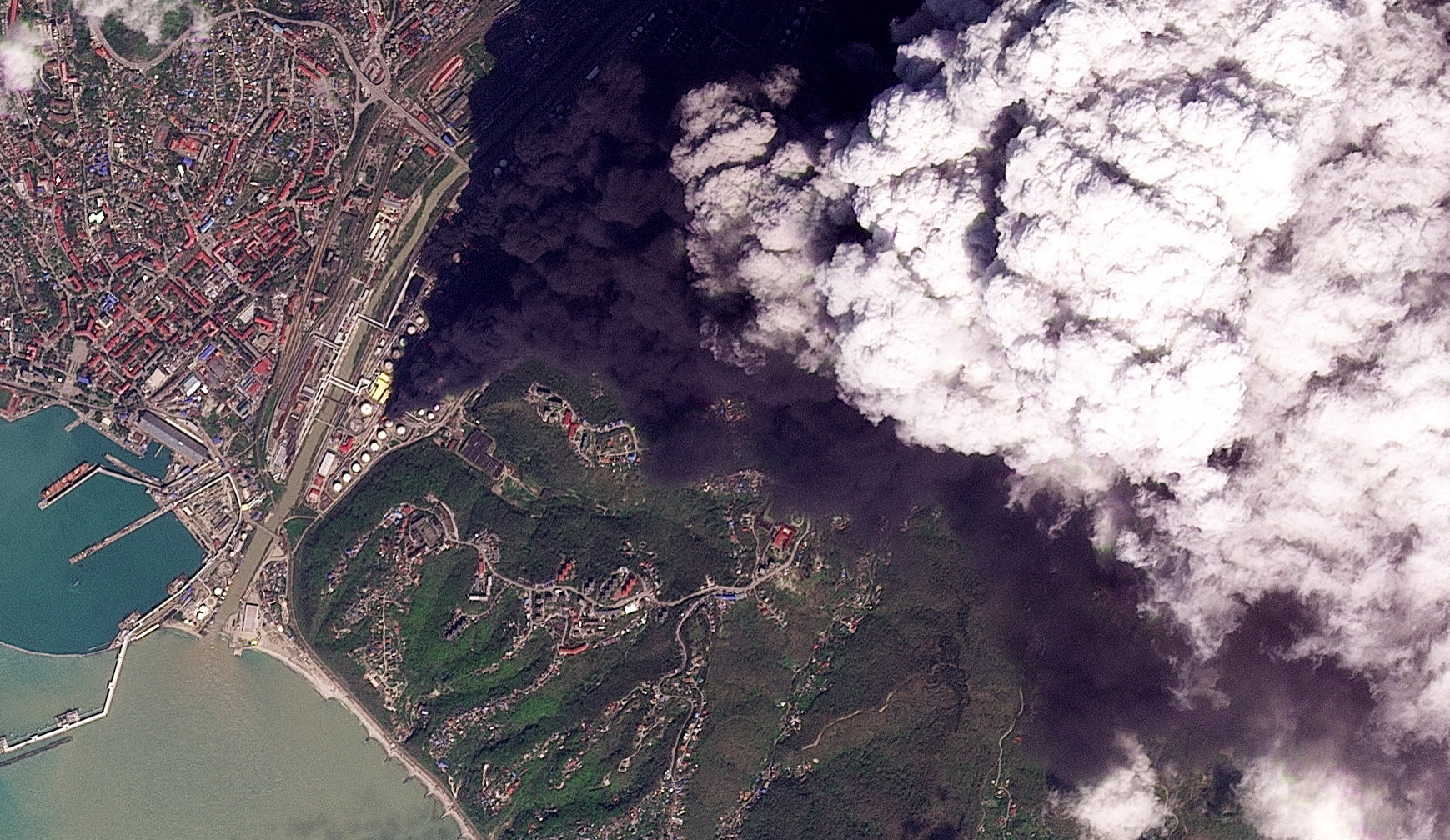
A satellite image of smoke rising after, according to Ukraine’s military, an overnight strike on an oil refinery hit reservoir tank storage and started a fire in Tuapse, Krasnodar Krai, Russia, April 20, 2026. 2026 Planet Labs PBC/Handout via REUTERS THIS IMAGE HAS BEEN SUPPLIED BY A THIRD PARTY. MANDATORY CREDIT
The latter is certainly the view of many military analysts and patriotic bloggers with huge followings on social media. They too, however, increasingly chafe at state-imposed restrictions and high-level corruption. The bête noire of that nationalist wing is Russia’s former defense minister and current National Security Council chief Sergei Shoigu , a onetime Putin confidant blamed for mishandling the initial stages of the war.
While four of Shoigu’s former deputies at the Defense Ministry have since been arrested on corruption charges, the ultra-patriots were rattled when Col. Gen. Aleksandr Chayko , who led the failed campaign to take Kyiv in early 2022, was promoted to become new commander of the Russian Air Force.
Nationalist commentator Aleksandr Kartavykh wrote on his popular Telegram channel that amid the current “collective psychosis” in Russia, society’s reserve of stability would last no more than two months, after which he predicted terminal revolutionary change.
The sense of widespread malaise and discontent was crystallized by Victoria Bonya, an Instagram influencer and former Russian TV star who lives in Monaco, and who stayed away from politics until now. In an Instagram reel that garnered 1.6 million likes, she told Putin he was unaware of the country’s real problems because thieving governors and bureaucrats keep lying to him, and because the country is governed by fear.
She didn’t directly mention the war—except for a reference to the Black Sea oil slick—focusing instead on government failure to respond to floods in the Caucasus, on how cheap Chinese goods are killing local entrepreneurs and on how new bans on Instagram make it impossible to communicate with customers, relatives and friends.
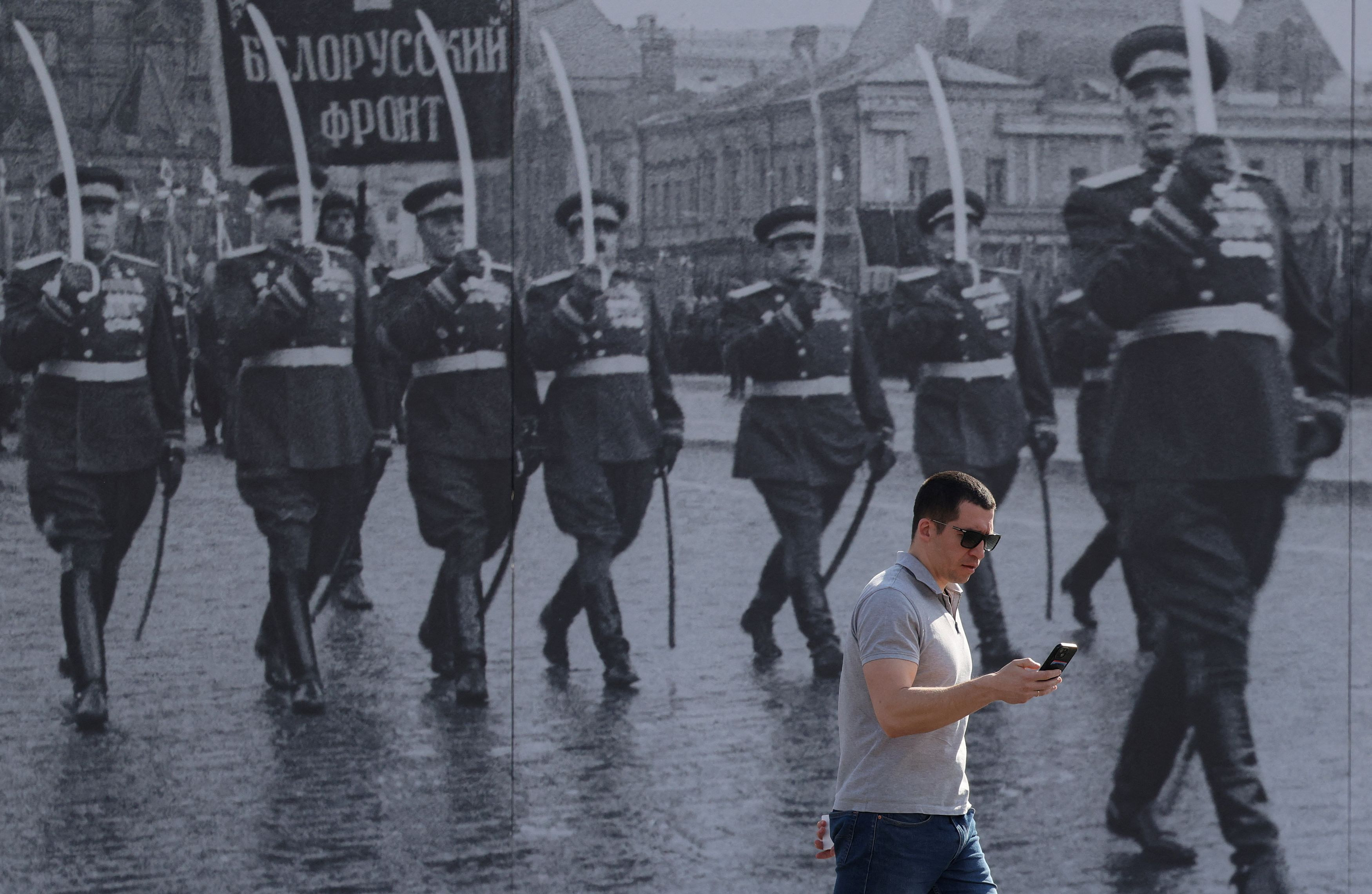
A man checks his mobile phone as he walks in front of a banner for the Victory Day military parade, marking the anniversary of victory over Nazi Germany in World War Two, in central Moscow, Russia, May 4, 2026. REUTERS/Ramil Sitdikov
“You don’t know what is happening in the country,” she told Putin, while insisting on being a loyal Russian citizen. “People will become tired of being afraid. They are being squeezed into a spring, and one day this spring will snap.”
Gallyamov, the former Putin speechwriter, said those sentiments expressed a trend. “People who didn’t care about politics before, now find it fashionable to express political views, to be concerned about the suffering of the people and to complain about authorities,” he said. “Historically, such fashions usually precede revolutions.”
The Kremlin responded to Bonya by saying it will take her advice under consideration. Other Kremlin officials have said in public that recent prohibitions have gone too far—though no action was taken to reverse them.
“The Kremlin understands that there could be serious discontent ahead, and so it has decided to allow low-level discontent to manifest itself for now,” said Marat Gelman, a former Putin adviser and senior state TV executive who now lives abroad and supports the opposition.
“For now he has enough resources to crush any civil revolt.”
John Sullivan, who served as U.S. ambassador to Moscow when the invasion of Ukraine began in 2022, wasn’t so sure. “In Russia, they say that things don’t happen fast, but when they happen, they happen fast,” he said. “I wouldn’t have said it a year or two ago, but I think it is possible now.”
Write to Yaroslav Trofimov at yaroslav.trofimov@wsj.com