
 Μake us preferred on Google
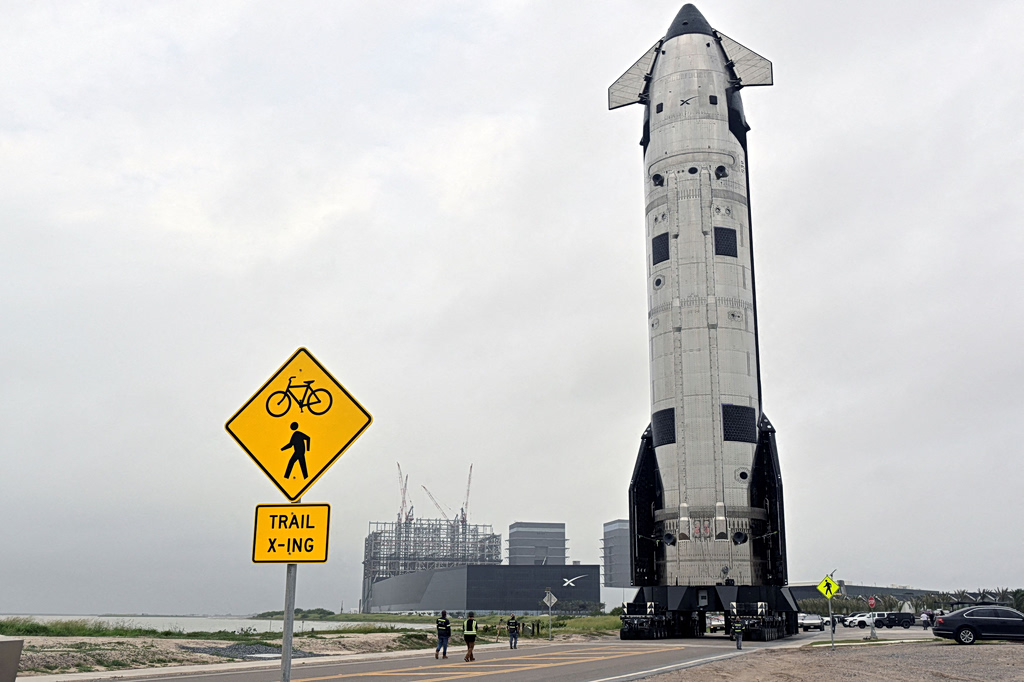
 Starlink, the satellite internet service operated by Elon Musk’s aerospace company SpaceX, has played a pivotal role in the Russia-Ukraine war since February 2022, when satellite connectivity was activated in Ukraine to replace domestic networks that had been destroyed or degraded during the Russian offensive. Since June 2023, the costs of Starlink services for Ukraine have been covered by the U.S. Department of Defense through a dedicated contract with SpaceX.
Russia’s Use of Starlink
Starlink has largely replaced encrypted military communications on the Ukrainian side. However, the service has declined to extend coverage to certain Russian-occupied territories, including Crimea, a decision that has drawn criticism from Ukrainians who see it as an obstacle to recapturing those areas. Russia, for its part, initially attempted to jam Starlink services operating within Ukraine, and later began acquiring Starlink terminals through third-party countries in order to use the satellite system without authorization.
Russia’s approach has been a double-edged one. On one hand, it considers commercial satellites assisting Ukraine to be legitimate targets and has resorted to electronic jamming of internet services and specifically Starlink on Ukrainian territory. On the other hand, Russia has been using the Starlink terminals it has acquired to extend the range of its drone strikes, make them more precise, and make them harder for Ukrainians to jam electronically. These terminals enable full real-time battlefield mapping, including troop positions and detailed terrain intelligence. Russian use of Starlink dates back to 2025 and has provided capabilities that help circumvent Ukraine’s anti-drone technology.
Ukrainian Hackers Intercepted Critical Intelligence
Ukraine’s response to Russia’s unauthorized use of Starlink terminals was to ask SpaceX to introduce a user registration requirement for access to Starlink on Ukrainian territory. Under this system, registration would take place on Ukrainian-controlled soil and require users to present identification. Unregistered devices were blocked, effectively blinding Russian operators at the front who relied on them.
In some cases, Russian troops attempted to purchase registration access from Ukrainians. But a reverse operation also unfolded: Ukrainian operatives posed as would-be traitors and invited Russian soldiers to pay in cryptocurrency in exchange for access similar to legitimate registration. During these interactions, the Ukrainians, operating as hackers, managed to intercept the coordinates of Russian positions, including headquarters, command posts, and drone operator locations. These coordinates were then handed over to Ukraine’s Ministry of Defense or to nearby Ukrainian brigades. In this way, critical Russian positions were exposed and rendered vulnerable to Ukrainian strikes.
SpaceX’s Role in Ukraine’s Spring 2026 Counteroffensive
Similar communication failures among Russian forces proved decisive during Ukraine’s spring counteroffensive, which began in April 2026. After SpaceX succeeded in cutting off Russia’s unauthorized access to its systems, Ukraine was able to exploit the resulting gaps in Russian communications to recapture roughly ten to twelve kilometers of territory on the southern front.
This advance was made possible because Russian forces on that front were operating with outdated battlefield maps that no longer reflected the current situation. In many instances, Russian troops resorted to improvised workarounds to restore communications, which only made matters worse, as those solutions made their positions even more visible.
The broader trend, however, points toward Russia increasingly shifting to domestically produced terminal stations. While this substitution is expected to succeed over the long term, in the short run it has created communication gaps that benefited Ukraine’s recapture of positions. This development has led Western allies to focus on electronic warfare systems, denial of communications access, and intelligence sharing as the most critical domains of the conflict. The summer of 2026 is widely considered a decisive window in this regard, as it represents a period during which Ukraine retains a relative advantage.
Why Russia Is Blocking Telegram
A related challenge for Russia’s war effort is the government’s decision to restrict the Telegram messaging app, citing its alleged use for sabotage operations, terrorist attacks within Russian territory, recruitment of operatives, and financial fraud targeting Russian citizens.
A further factor was the arrest in France of Telegram CEO Pavel Durov, a Russian-born holder of a French passport. His subsequent release was widely interpreted as the result of negotiations with French authorities. Critics of the Russian government, however, see these restrictions on internet applications as part of a broader push for greater state control over Russian citizens. The restrictions on Telegram have also had direct consequences for Russian soldiers at the front, who use the app to share operational information.
Telegram has long been considered the primary vehicle for Russian soft power and the dissemination of pro-government ideology. It is by far the most popular messaging platform in Russia, and its restriction, coming on top of the earlier blocking of Facebook, WhatsApp, and Instagram in 2022, has triggered unprecedented frustration among urban Russians, particularly younger demographics. That said, most banned apps remain accessible through VPN services.
Russia’s Mandatory App “MAX”
In place of Telegram and other banned platforms, the Russian government is pushing its state-owned application called “MAX.” Because digital signatures for official documents are processed through this app, its use has become mandatory for professionals. Similar requirements have been imposed on educators. In this way, “MAX” exemplifies a broader trend toward the nationalization of digital technology, consistent with the emergence of national internet blocs that run counter to the free-flowing, globalized logic of the open web. Internet access and digital communication have thus become central stakes in this conflict, both as a military instrument and as a tool of political control.