Early in her freshman year at Cornell, Vanessa Long got a Google Calendar invite from a classmate.
“Come over to my dorm?” read the invitation, scheduled for 10 p.m.
Long clicked “yes,” but she was perplexed. Later, she realized this was a typical interaction on campus. Her classmate just wanted to hang out.
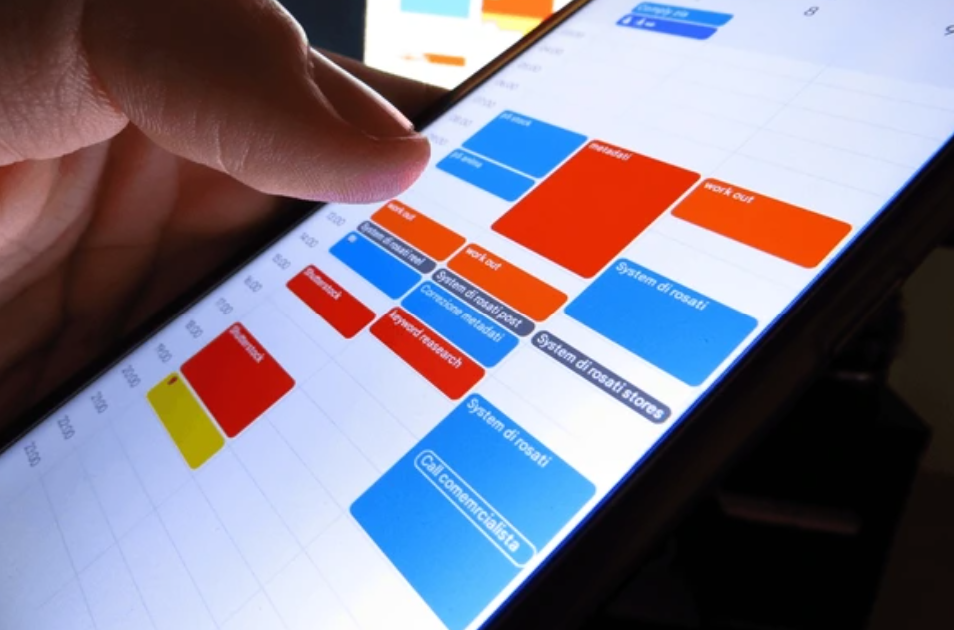
At Cornell, students use what they call “GCal” for everything.
Long ticked off some examples: “What time they go to sleep, what time they eat, if they’re going on a five-minute walk, if they want to grab lunch with you at the one dining hall on campus that you go to every day.”
“I thought I was the peak of being organized, and it turns out that I don’t even scratch the surface,” she said.
Across American campuses, it’s commonplace for students to schedule out their days and weeks in color-coded blocks. No event is too small and virtually nothing is out of bounds. At some schools students have even used it to get a date.
Some think it’s gone too far, eliminating any spontaneity and reducing life to slots on a grid. Others say that some GCal superusers just want the world to know how busy they are.
Kaitlin Martin, a senior at Georgetown University, estimates that events in GCal cover about 10 to 12 hours of her average day.
“It’s probably from an hour before class to when I’m finishing my last assignment or activity of the day,” she said. Martin uses the app to schedule her classes, her meals, her daily tasks and hangouts with friends. When she makes plans with a friend at Georgetown, one of them sends the other a calendar invite.
For Martin, it can be a relief to just go where GCal tells her. “There’s just so much going on all the time and so it’s nice to not have to think about it,” she said, “and just have a point of reference of, ‘OK, this is what I’m doing next.’”
“I don’t have to remember things,” she added.
One evening at the end of his freshman year at Williams College, Elijah Diallo was strategizing with friends about how to make a move on the cute girl in his theater group when he had an idea.
He sent her a GCal invite for the following Friday night. The event was titled “Hook up?” and set for 11:30 p.m.
“She responded with ‘yes,’ and then the rest is history,” he said. The two saw each other for the rest of the semester, though the romance fizzled after that.
“If I’m gonna make a move, I gotta make it funny at least,” Diallo said. “Google Calendar has such a place in all of our collective psyches at Williams College that it felt like the perfect way to execute it.”
Diallo isn’t the only one who has mixed romance and GCal. Asuka Koda, a student at Yale, said that when a classmate asked her out on a busy Friday, she sent him a screenshot of her calendar for scheduling purposes. “He slotted himself in a very awkward time from 5 p.m. to 6 p.m. and because it was on my GCal, I did go,” she said. There was no second date.
Such feats of scheduling are common for Koda. When she visited New York City on a recent weekend, she posted a screenshot of her calendar on Instagram so friends could reserve time with her. “I had a fully packed 48 hours as a result,” she said.
Later, Koda learned that her Yale classmates could look up her availability within the app, no screenshot needed. Thanks to the “meet with” search bar, students within the same university can see when most other users are busy.
Stanford sophomore Vivek Yarlagedda, who gets bombarded by invites for everything from student clubs to frat parties, said he is troubled by calendar creep, “in terms of how far we let our calendars dictate our lives.” He said some students send meeting invitations through Calendly, an appointment-scheduling website often used in workplaces to plan meetings and job interviews.
“Texting someone a Calendly link, like, ‘Let’s catch up,’ that’s kind of unnatural,” Yarlagedda said.
Kyra Ariker, a senior at the University of Michigan, lamented that some of her peers show off their packed calendars as a flex.
“It’s just kind of B.S. a lot of the time,” said Ariker, “if you’re GCaling every single minute of your day, like you can’t brush your teeth for five minutes without having it all into GCal.” She said she uses Google Calendar for sorority and student club events and little else.
By his senior year at Williams, the story of Diallo’s Calendar proposition had spread, and he found himself on the receiving end of a copycat “Hook up?” invite.
Diallo describes his initial response as the worst possible one: His love life was a bit complicated at the time, so he clicked “maybe.”
“That was evil,” he recalled.
Feeling bad, he sent a text message by phone explaining the situation, Diallo recalled. “I turned it down, but I told her how awesome of an idea that was, and how much I respected it.”
Write to Haley Zimmerman at haley.zimmerman@wsj.com