The first time I recall feeling old was on a commuter train headed home from the office a few years ago. It stopped near a prep school, where a group of noisy teenage boys in khakis and navy blazers boarded my car. They were lost in conversation and cussing up a storm until one of them noticed me sitting within earshot.
“Oh, sorry, sir,” he said sheepishly before turning back to the others, who immediately lowered their voices and cleaned up their language. When youngsters start apologizing for swearing in your presence, you’ve aged.
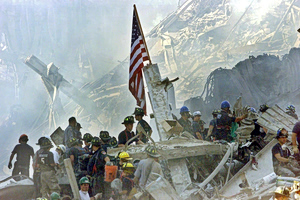
A more sober reminder of the march of time is this week’s 25th anniversary of 9/11. Around a third of the U.S. population is too young to remember the attacks. But like many of my colleagues at the Journal, whose offices were catercorner from the World Trade Center in lower Manhattan, I recall them like they happened yesterday.
I lived in Brooklyn and took the subway to work. As I was leaving my apartment that morning, my father phoned me.
“Son, are you watching television?”
“No, I’m headed to the office.”
“There’s a fire at the World Trade Center.”
“OK. Thanks. I’ll call you back when I get to work. Gotta go.”
“Be careful.”
If it was cold or rainy, I could enter my subway station in Brooklyn and reach my desk without going back outside, thanks to a network of tunnels and covered walkways that led through the World Trade Center to the Journal’s offices in the World Financial Center. That morning, however, the weather was sunny and pleasant, and I wanted to see what Dad was talking about. So I took the subway to a stop that put me a couple of blocks east of the towers. I had to walk past them to get to my office building.
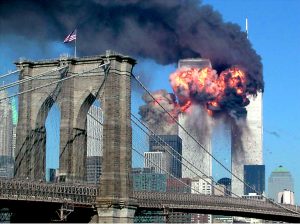
When I emerged from the subway, the police had already cordoned off the streets. I couldn’t get to work. All I could do—and all that thousands of other people nearby could do—was stand there, stare at the cloudless sky, and watch the towers burn. I pulled out my Verizon flip phone and tried to call my dad, but the cellular networks were overloaded and I couldn’t get a signal. I tried again and again. Then the first tower fell.
I watched it collapse into a gray cloud of debris that grew larger as it headed toward me. I dropped my phone, turned and sprinted. As I looked over my shoulder, it was clear there was no way I could outrun the cloud, so I began looking for cover. I saw a utility van and crawled underneath, but by then the cloud had engulfed everything. It was completely dark. My eyes burned. I could barely breathe. Lying there, I thought about Dad. My mother was already deceased, and we had lost my younger sister a few years earlier when I was still in college. I thought about how devastating it would be for him to outlive two of his children.
Then I began to worry that the van would run me over, so I crawled out from underneath and banged on the window. Someone slid open the door and I climbed inside, but too much dust had seeped in, and it was still difficult to breathe. I eventually left the van and police ushered me into a nearby building, where I was told moments later that it wasn’t safe in there either, and that I had to evacuate. Back outside, it was getting lighter. I saw a Burger King up ahead. Employees were giving out cups of water.
While inside, I heard what sounded like thunder. The restaurant had huge floor-to-ceiling windows facing the sidewalk, and suddenly they went completely black. The second tower had collapsed. I waited for the dust to settle and walked back home to Brooklyn. I looked as if I had been rolling around in a giant ashtray. The first thing I did was call my father. After that, I sat down at my desktop computer and typed an email to my editors to let them know what happened to me and that I was OK. To my surprise, the email was printed in the paper the next day.
For months after the attacks, the New York Times ran short biographical sketches of the victims—firefighters, flight attendants, bankers, restaurant workers, Pentagon employees. Every day, I would try to read them on the way to work, but I could never get past the first three or four without becoming too emotional and wondering what my obituary would have said. Twenty-five Septembers after 9/11, I don’t feel sad about getting older. I feel lucky.