Most hospitals are built with the expectation they will one day be full of people. This one was built with the expectation it would mostly be empty.
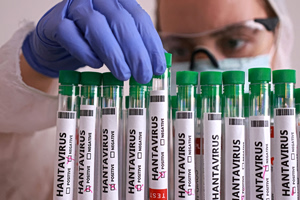
This is the Nebraska Biocontainment Unit, a high-tech facility designed to treat patients infected with highly lethal viruses or bacteria without transmitting them to hospital staff or the public. It got its first patient in six years on Monday, when a cruise passenger who tested positive for hantavirus arrived back in the U.S.
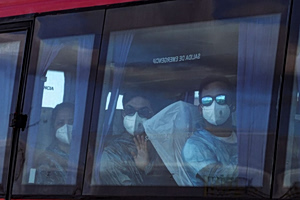
Fifteen other cruise-ship passengers were placed in a nearby quarantine facility on the University of Nebraska Medical Center campus in Omaha. A couple from the cruise, one of whom was exhibiting hantavirus symptoms , were brought to a biocontainment unit at Emory University Hospital in Atlanta.
Nebraska Medical Center and Emory are leaders in a small network of specialized centers established over the past couple of decades to treat patients with emerging or deadly pathogens as the prospect of outbreaks and bioterror events has grown. Their biocontainment units are essentially high-security wards inside hospitals, built to manage diseases that require strict isolation and specialized care. undefined undefined News of the Americans’ arrival brought back memories for Carl Goldman , who spent 30 days in the Nebraska facilities in early 2020 with what he described as a mild case of Covid. Goldman and his wife had been on the Diamond Princess cruise ship in Asia, and he spiked a fever while on an evacuation flight back to the U.S.
Over 10 days in the biocontainment unit, while his wife quarantined nearby, Goldman was hooked up to monitoring equipment, probed and tested every few hours and drank lots of Gatorade—his only medication, he said—to keep hydrated.
Nurses and doctors wore biohazard suits and three layers of medical gloves when they entered his room, swabbing him for virus up his nostrils and in other sites like his eyelids twice a day. Fans attached to their backs provided a separate oxygen supply to prevent them from getting infected—“so you’d hear like a lawn mower going,” said Goldman, who kept a journal of his experience quarantining on the Diamond Princess and his treatment in Nebraska.
Goldman celebrated his 67th birthday in the unit, with cake and an unlit candle delivered by his medical team, who also sang “Happy Birthday” to him on video. undefined undefined Once he felt better, Goldman was moved to the quarantine unit, a lower level of care. He settled in a spacious room with a stationary bike, TV and a window that had double panes and couldn’t be opened. The door was locked. Staff would drop off food outside the door, knock, leave and he would open it. undefined undefined This is where Jake Rosmarin , a Boston-based photographer and travel influencer who was on the cruise ship when hantavirus broke out , is now. He gave a tour of his room in the quarantine center on Instagram, showing the fridge, smart TV and thermometer he was given for temperature checks. undefined undefined So far, he has spent his quarantine chatting with his friends and family and using the exercise bike in his room, he said in an interview on the “Today” show Tuesday. He has even been able to order takeout.
“I feel good right now. I’m happy to be in a place where I know we are well cared for and, if anything happens, we have the medical attention that we need,” he said.
Officials said they are monitoring all cruise passengers for flulike symptoms like fever, body aches, dizziness, cough, shortness of breath, nausea, vomiting and diarrhea. The frequency with which asymptomatic individuals will be tested was still under discussion. If any quarantined passengers develop symptoms, they will be moved to biocontainment units.
The Nebraska and Emory biocontainment units cared for patients who were repatriated from West Africa in 2014 with Ebola and treated or monitored some of the earliest patients with Covid in 2020, as well as patients with SARS, Lassa fever and other deadly illnesses for which there are few treatment options.
Emory’s has 11 isolation beds. Nebraska’s biocontainment unit has five rooms, one of which is currently being operated as an in-house laboratory to run tests. The cruise passenger in the biocontainment unit wasn’t showing any symptoms as of Monday but was put there because of a positive test, officials said.
Each passenger is expected to get an individual plan, officials said, that will dictate if they can leave and isolate at home or if they will need to remain at the Nebraska facility for the full 42-day hantavirus incubation period. They added that individuals who are cleared to go home are still welcome to stay in the quarantine unit if they so choose.
Goldman, now 73, said that despite the confinement, time went by quickly between the medical visits, keeping his journal and giving interviews. He said his message to the cruise-ship passengers now in quarantine is to stay positive since stress can weaken an immune system.
“From day one we realized this was out of our control, we would go with the flow and stay optimistic and positive about it,” he said.