
The Iran war isn’t just affecting energy supplies. It is also cutting deeply into supplies of the invisible gas that is essential for cooling artificial-intelligence chip-making tools and keeping MRI scanners humming.
The global supply of helium—the natural-gas byproduct better known for keeping party balloons aloft—is being squeezed by a halt in natural-gas exports from Qatar, the source of about a third of the world’s total.
The shortage is straining a market where supplies can’t be switched on quickly, threatening to hamper production of everything from semiconductors to military-drone components and space rockets.
Helium is the second-most-common element in the universe after hydrogen, but it is rare on Earth, where it mainly exists in small concentrations in pockets of natural gas. Energy producers separate it out from methane, nitrogen and other gases, then ship it as a supercooled liquid.
While many chip makers and defense manufacturers won’t immediately feel the shortage, suppliers are already telling some customers to expect supply cuts and surcharges, industry participants said.
Helium users, who mostly lock in supply through long-term contracts, are now scrambling for scarce short-term spot market cargoes, a bidding war that has caused prices to more than double, market watchers say. South Korea, a major chip manufacturer that relies heavily on Qatari supplies, has been approaching U.S. producers for additional volumes of the gas.
“This is the big one that we always feared would happen, it’s the black swan event,” said Cliff Cain, manager of commercial and external affairs at Pulsar, a helium exploration company with projects in Minnesota and Greenland. “It is just going to be a building crescendo of who’s going to be able to get their molecules and who is not.”
Helium is deeply embedded across many modern industries. The gas transfers heat exceptionally well, making it ideal for rapid cooling. Chip makers use it to maintain stable temperatures while etching silicon wafers into advanced semiconductors.
For many current semiconductor cooling applications, helium has no easy substitute. The medical industry uses it to cool the superconducting magnets inside MRI scanners. It supports aerospace technology, including NASA missions, where it is used to purge rocket fuel tanks. It is also key in fiber-optic manufacturing and defense applications.
“The helium shock highlights a deeper vulnerability in the AI build‑out: extreme dependence on a small number of geopolitically exposed nodes,” said Ralf Gubler, research director at S&P Global Energy specializing in industrial gases.
The nonrenewable gas is produced by radioactive decay deep under the earth and escapes into space once released. Last year, the world produced about 190 million cubic meters of helium—enough to fill roughly 76,000 Olympic-size swimming pools.
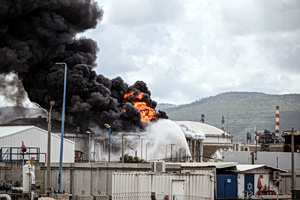
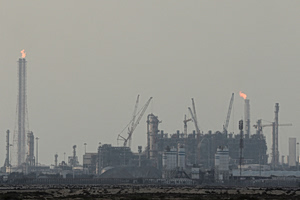
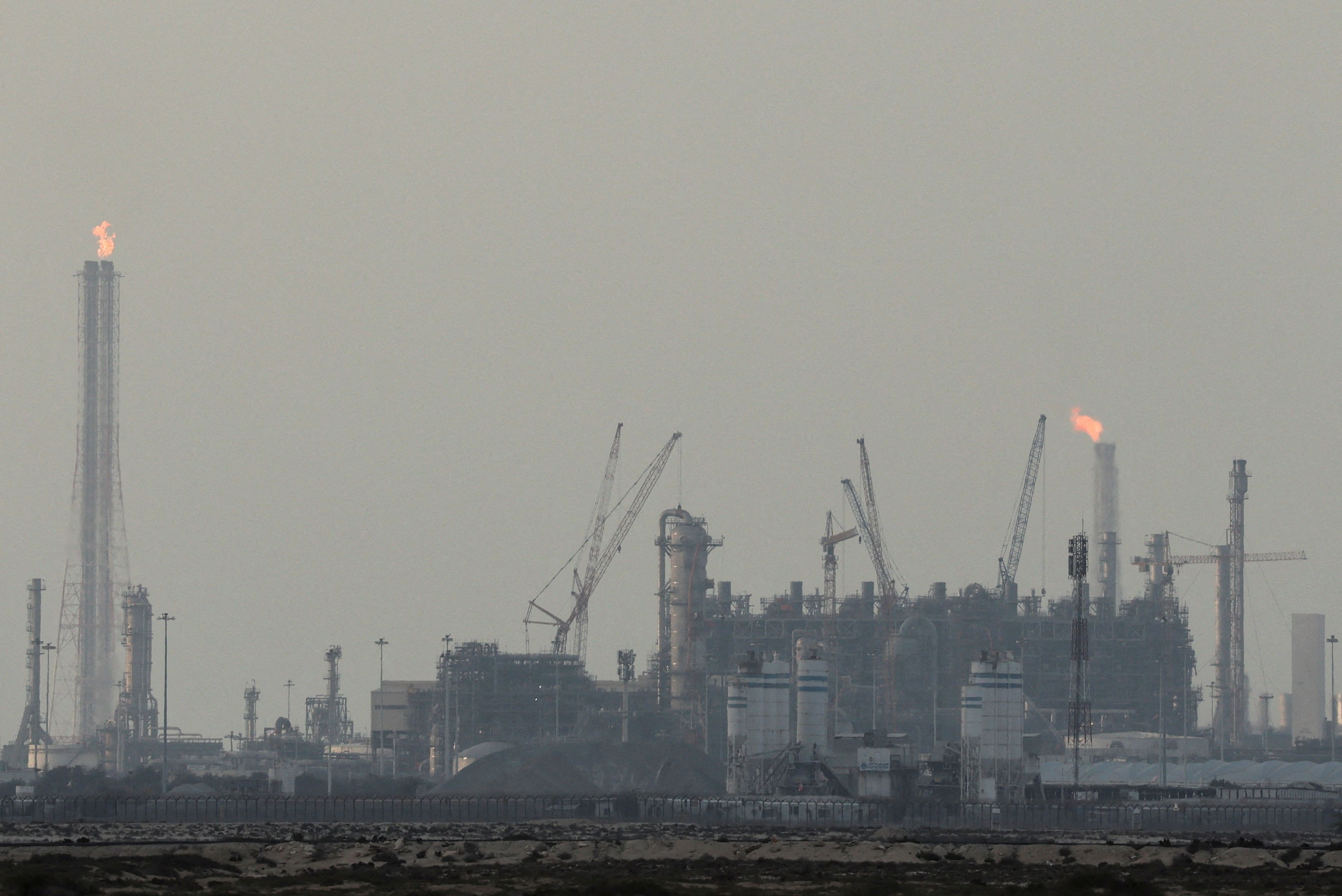
The disruptions to Qatar’s shipments of liquefied natural gas have directly curtailed helium feedstock. Qatar exports virtually all of its helium via the Strait of Hormuz, the vital commodities superhighway paralyzed by the conflict.
Even if the war ends swiftly and the strait reopens, some of the losses won’t be easily reversed. Qatar said Iranian strikes on its Ras Laffan LNG plant earlier in March caused extensive damage that cut its annual helium exports by 14% and could take up to five years to repair.
Some suppliers are already rationing.
Citing the Qatari outage, U.S. industrial gas supplier Airgas declared a force majeure earlier this month, telling one customer that it would only meet up to half of their normal monthly helium demand, according to a letter to the customer reviewed by The Wall Street Journal. Airgas also told the client that it would add a surcharge of $13.50 per hundred cubic feet above the contracted price.
Airgas and its parent company Air Liquide didn’t respond to requests for comment.
Pulsar’s Cain said helium buyers as far apart as India and Brazil have also received force majeure notices in recent days from their suppliers.
Because helium’s industrial uses are so broad, shortages are ricocheting through multiple sectors and countries at once. South Korean officials have warned that a prolonged supply crunch would hurt its output of semiconductors. The country sourced about two-thirds of its helium imports from Qatar last year, according to Fitch Ratings.
In recent days, the Korea Trade-Investment Promotion Agency, an arm of the country’s Trade Ministry, approached U.S. helium suppliers about supply options in response to rising demand from Korean companies, according to an email reviewed by the Journal.
Taiwan faces similar risks because it relies on Qatar for a large chunk of its helium supplies, Fitch said. In Germany, chemical industry group VCI said the conflict was raising concerns about supply bottlenecks in raw materials, including helium.
The U.S., the world’s largest producer of the gas, is more insulated for now, though analysts say a prolonged Qatari outage would hit it hard, too.
Chip companies keep inventories of helium on hand. There were also shipments en route to Asia when the conflict began. Both will help delay the onset of a shortage.
Chip maker GlobalFoundries, which has a manufacturing footprint across the U.S., Europe, and Asia, said it is actively monitoring developments in the Middle East but doesn’t anticipate a near-term impact. “The situation remains fluid,” the company said.
One problem is that helium, particularly in the supercooled liquid form used for transport, has an effective shelf life.
Liquid helium continually absorbs heat and gradually turns back into a gas, building pressure in its container. If the maximum pressure is exceeded, the helium escapes—a process known in industry parlance as “boil-off.” Most containers have a hold time of between 35 and 48 days, said Phil Kornbluth, president of U.S.-based consulting firm Kornbluth Helium Consulting, before too much of the gas starts being lost.
Hundreds of specialized cryogenic containers—each costing around $1 million—are now stuck in the Middle East, Kornbluth said.
Companies are already preparing for a bigger supply crunch ahead. Fitch said major Asian chip makers have conducted comprehensive assessments of helium inventories.
Anish Kapadia, founder of U.K.-based consulting firm AKAP Energy, said clients are inundating him with calls about impending impacts, adding that gas suppliers are likely to give priority to chip makers and medical imaging.
“The first victims are party balloons: you can quite easily allocate less there and deal with a few angry parents,” Kapadia said. “But clearly when you take a third of global supply off the market overnight, there’s going to be a significant impact across the board.”
Write to Georgi Kantchev at georgi.kantchev@wsj.com