WASHINGTON— King Charles III issued a veiled plea for President Trump not to turn his back on the trans-Atlantic alliance between the U.K. and its former colony during a rare address to Congress to mark 250 years of American independence.
During a speech peppered with light-hearted jokes and frequently interrupted by applause from the packed chamber, the British monarch listed the joint achievements of the U.S. and U.K. and urged the two nations to continue to work together despite recent tensions.
“I pray with all my heart that our alliance will continue to defend our shared values, with our partners in Europe and the Commonwealth, and across the world,” Charles told Congress. “And that we ignore the clarion calls to become ever more inward-looking.”
The king’s remarks—only the second instance ever that a British monarch has addressed Congress—come at a time of growing fears in London that Trump is souring on the North Atlantic Treaty Organization and losing patience with U.K. Prime Minister Keir Starmer , whom he has repeatedly criticized over his reluctance to join U.S. strikes on Iran.
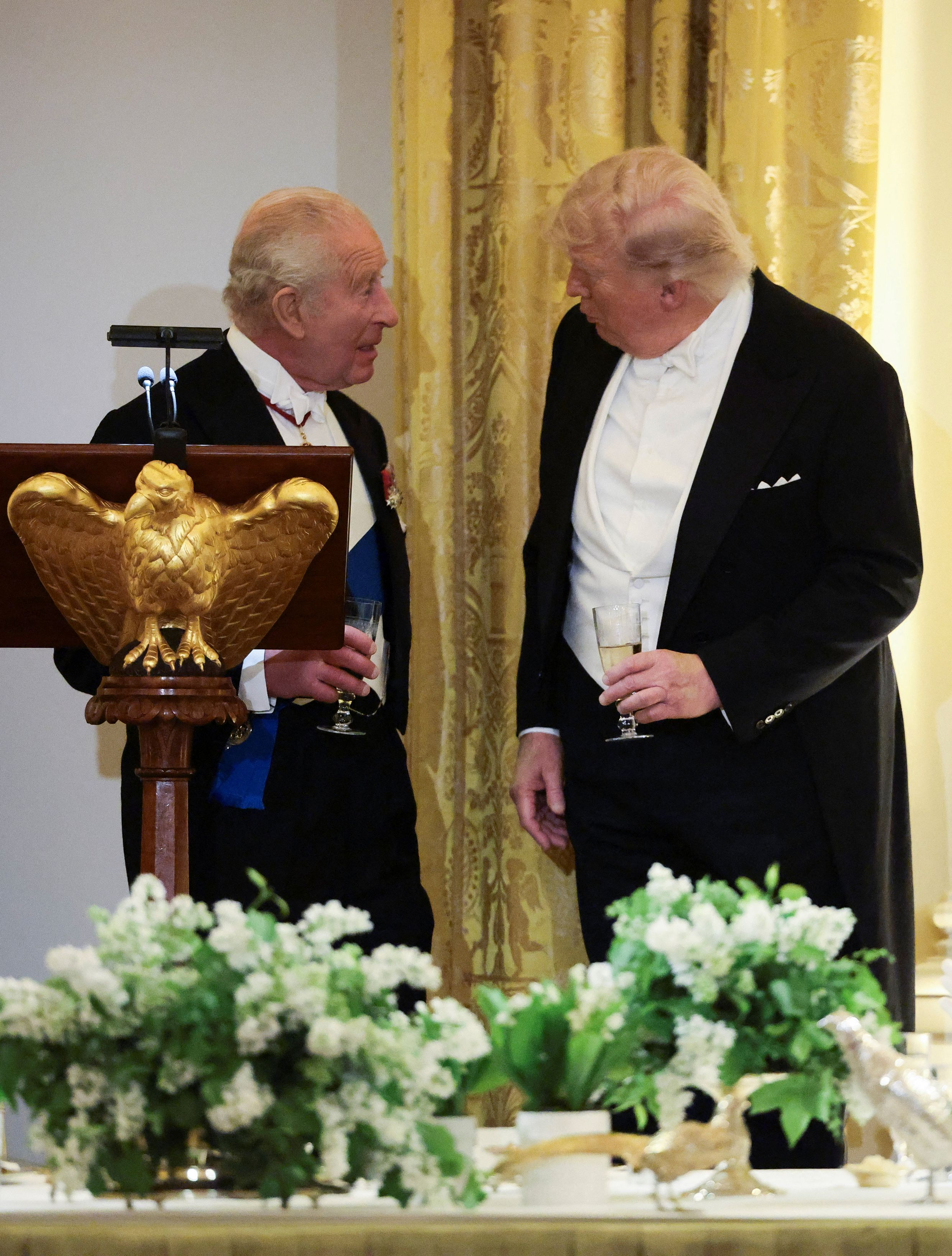
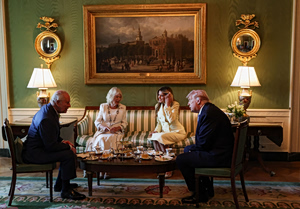
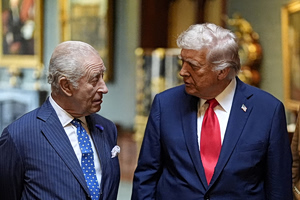
Britain’s King Charles and U.S. President Donald Trump talk during a state dinner for Britain’s King Charles and Queen Camilla at the White House in Washington, D.C., U.S., April 28, 2026. REUTERS/Evelyn Hockstein
The event, presided over by House Speaker Mike Johnson (R., La.) and Vice President JD Vance , marked the diplomatic crescendo of the monarch’s four-day state visit to the U.S. While British officials say that the king’s trip is a celebration of trans-Atlantic ties, the monarch’s arrival is also a crucial diplomatic play for Britain , which sees Charles as a vital conduit to the royal-loving U.S. president.
The king’s address, rubber-stamped by the U.K. government but largely penned by the monarch himself, touched on several topics of contention with Trump, including the importance of supporting Ukraine in its fight against Russia, the vital work of NATO and tackling the “disastrously melting ice-caps of the Arctic.”
Charles also alluded to recent tensions. “With the Spirit of 1776 in our minds, we can perhaps agree that we do not always agree—at least in the first instance!” But overall the message was one of conciliation: how the two nations had repeatedly overcome their differences to better serve the world and each other.
So far, the operation to deploy royal stardust to improve the mood music between the nations appears to be working.
Some lawmakers sought to claim aisle seats so they could have the opportunity to shake hands with the king and Queen Camilla. Democrats and Republicans both gave Charles a warm reception, with loud standing ovations when he talked about solidarity after the Sept. 11, 2001, terrorist attacks, denounced the political violence at the White House Correspondents Dinner on Saturday and noted the upcoming 250th anniversary of the Declaration of Independence.
Earlier in the day Trump and the royals were treated to a 21-gun salute, a 200-strong military band including U.S. Navy Sea Chanters and 500 members of the U.S. armed forces marching on the White House lawn in the light rain, which Trump joked was very British weather. Cannons fired as the U.K. and U.S. national anthems were played.
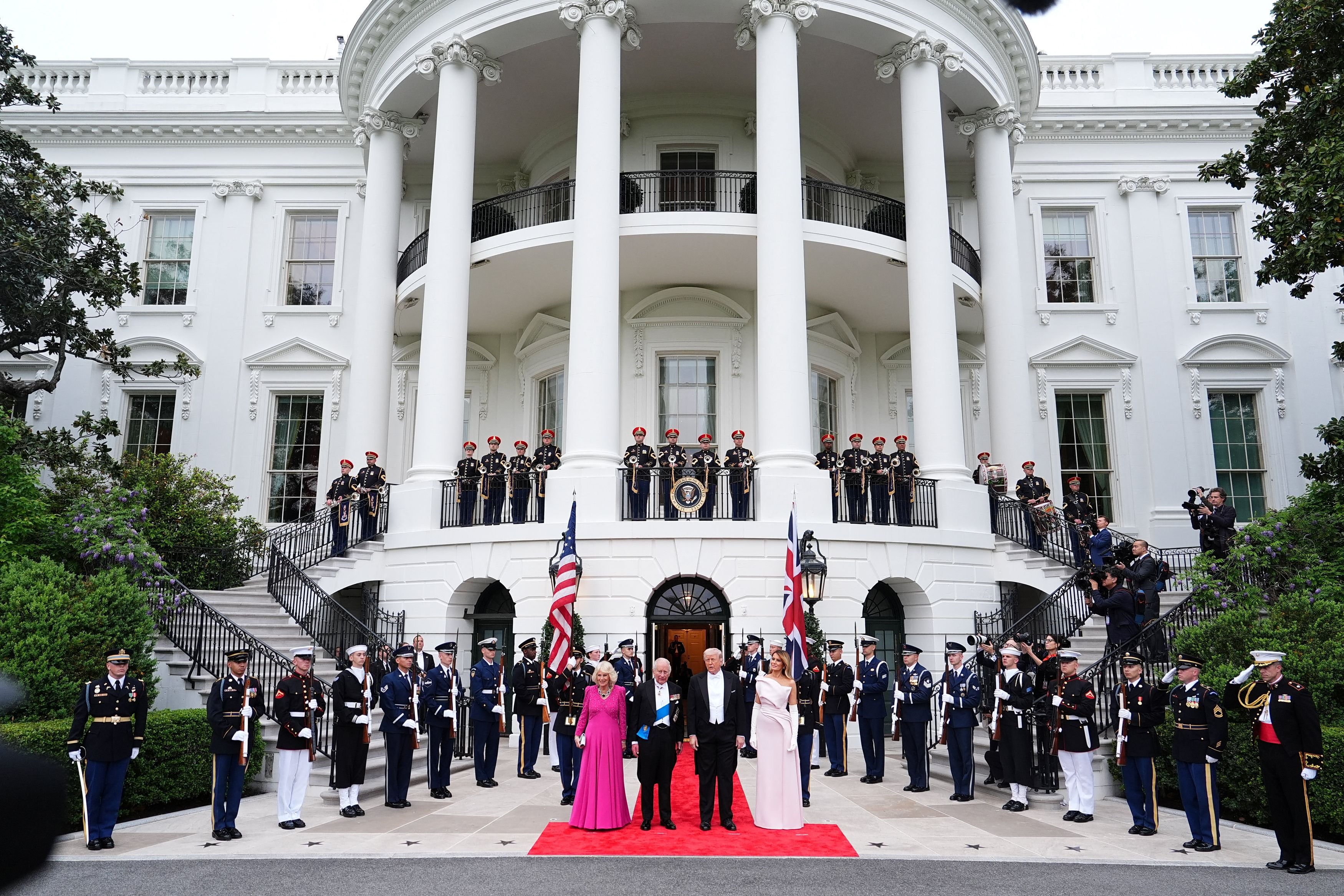
U.S. President Donald Trump and first lady Melania Trump receive Britain’s King Charles and Queen Camilla as they arrive for a state dinner at the White House in Washington, D.C., U.S., April 28, 2026. Aaron Chown/Pool via REUTERS
Trump made a speech in which he waxed lyrical about Britain’s role in shaping the U.S., and praised Charles for his accent and looks. “Americans have had no closer friends than the British,” Trump said, while a smiling Charles and Camilla looked on. He added that the bond between the two nations “would continue long into the future.”
Trump spoke of his own longstanding familial affinity for the royal family. He recalled how his Scotland-born mother, Mary Anne MacLeod, “would be glued to the television” anytime the king or queen appeared. “But I also remember her saying very clearly, ‘Look—young Charles. He’s so cute!’ My mother had a crush on Charles! Can you believe it?” A bemused Charles looked on while Camilla laughed out loud.
Behind the bonhomie, however, lies a stark reality that relations between both allies are far weaker than when Charles’s mother, Queen Elizabeth II, addressed Congress in 1991. Back then, Britain had just fought by America’s side in the first Gulf War and relations were at a high point. Elizabeth spoke of how Britain and the U.S. could be the driving force to spread democracy and freedom to peoples around the world in the post-Soviet era. The U.S. was “the guardian of civilized conduct between nations,” she said to huge applause.
Today, relations are at a lower ebb. Polls show that Britons’ views of America have sharply deteriorated following the attacks on Iran, which have pushed up energy prices across Europe. A recent YouGov survey showed just 30% of Britons have a positive opinion of the U.S. now compared with 64% who hold a negative view—marking a sharp deterioration in recent years.

President and Mrs. Bush host a State Dinner for Queen Elizabeth II and Prince Philip of Great Britain at the White House, May 14, 1991. Public Domain
The British ambassador to the U.S., Christian Turner, was recorded earlier this year telling a group of students that the U.S. “special relationship” was now with Israel, not the U.K.
Charles said it was now a “more volatile and more dangerous” world than the one his mother addressed in 1991. “The challenges we face are too great for any one nation to bear alone,” he said. “But in this unpredictable environment, our alliance cannot rest on past achievements, or assume that foundational principles simply endure,” he added.
Trump has recently denigrated Britain’s military, which has shrunk after years of budget cuts. In a quiet riposte to this, the king in his speech riffed on past military endeavors the two countries have undertaken and the sacrifice both nations have made.
Trump had earlier noted the irony of honoring the British king on the eve of the U.S. semiquincentennial and “here in the shadows of monuments to George Washington and Thomas Jefferson” before underscoring the shared Western heritage of the two nations. “Before we ever proclaimed our independence, Americans carried within us the rarest of gifts of moral courage,” he said, “and it came from a small but mighty kingdom from across the sea.”
If the Founding Fathers of 1776 and King George III saw the president and the new king sharing a stage, Trump said, “They might be absolutely shocked.”
But he added that those two camps, once enemies during the American Revolution, “surely would be delighted that the wounds of war healed into the most cherished friendship.”
Write to Max Colchester at Max.Colchester@wsj.com and Philip Wegmann at philip.wegmann@wsj.com