 Μake us preferred on Google
 The week in Westminster opened in a highly charged political atmosphere. Before the House of Commons Foreign Affairs Committee, the testimony of Sir Oli Robbins, a former senior official at the British Foreign Office, thrust into the spotlight the way Keir Starmer’s Labour government handled one of its most sensitive diplomatic cases.
Robbins spoke of a “dismissive attitude” from Downing Street regarding the security vetting of Peter Mandelson, who is reported to have had close ties with convicted pedophile Jeffrey Epstein, during the period Mandelson was serving as the UK’s ambassador to the United States. Downing Street rejected the claims, but the political damage to the Starmer government lingers, particularly at a time when Britain’s international standing is under pressure.
The Weight of History
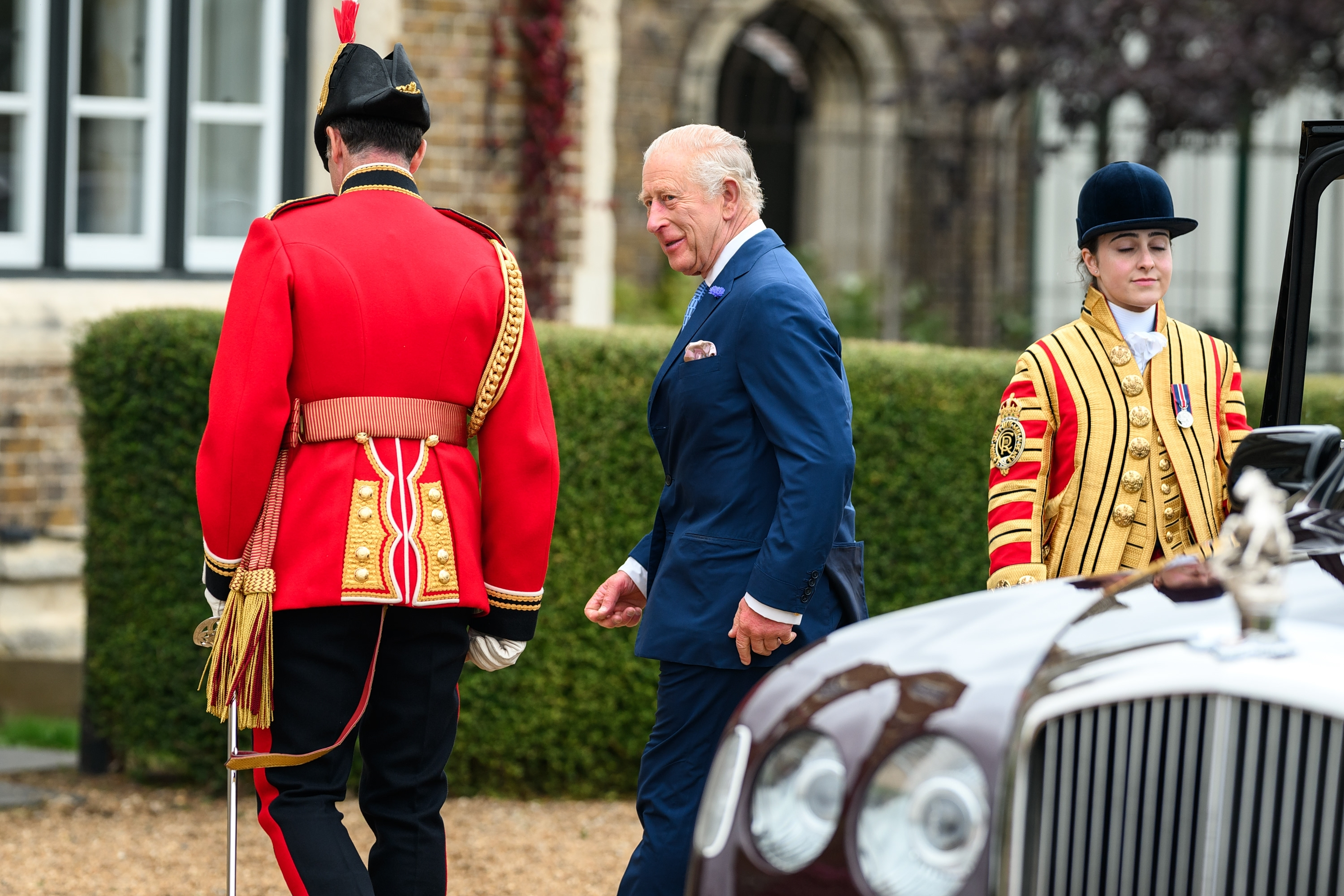
Against this backdrop, King Charles and Queen Camilla are set to make one of the most significant royal visits to the United States in recent memory, from April 27 to 30, marking the 250th anniversary of American independence. The symbolism is striking: a British monarch honoring the moment the American colonies broke away from his ancestor George III, while simultaneously seeking to reinforce the modern “special relationship” between the two countries. The visit comes at a time of considerable turbulence.
President Donald Trump has been sharply critical of the British government over its stance on the war with Iran. Many MPs, mostly from Labour, called for the royal trip to be cancelled. Professor Andrew Gamble, Emeritus Professor of Politics and International Relations at Cambridge University, told To Vima: “The King would have been in a very difficult position if the visit had been cancelled. It would have been seen as a serious snub to Donald Trump and the White House.” Charles’s schedule includes a meeting with the US president, a formal dinner at the White House, and an address to Congress. There are symbolic gestures too, the gardens of the British Embassy in Washington are organic and pesticide-free, a detail reflecting the King’s longstanding environmental commitments. Yet, as Gamble notes: “The King is constitutionally required to remain a monarch and cannot speak publicly on political matters.”
Can such a visit make any real difference? Professor Richard Toye, Professor of Modern History at the University of Exeter, told To Vima: “Marginally, it might help smooth things over, but it doesn’t address the deeper problems.” On Trump, Toye observes that he “is very receptive to things that look like flattery,” but adds: “Because he operates on such a transactional basis, whatever he agrees to in the moment doesn’t necessarily hold the next day.”
To some degree, the King’s visit echoes his mother Queen Elizabeth II’s trip in 1957, immediately after the Suez Crisis, when the UK-US relationship had been severely strained. On that occasion, the Queen’s presence helped restore the atmosphere. President Eisenhower said at the time that American respect for Britain was reflected in the affection felt for the royal family. That historical moment is considered a textbook example of the monarchy’s successful deployment of soft power.
Today, the weight of such visits has shifted. Toye points out that “even events like orbiting the Moon ended up fourth in the news cycle. Royal visits now serve as a periodic reminder that Britain exists, generating goodwill.”
Scandals and Diplomatic Shadows
The Epstein affair continues to cast a long shadow, particularly given its connection to Prince Andrew. Professor Robert Hazell, Professor of Government at University College London, told To Vima: “For the American public, the Epstein case is the most important issue.” He also noted “a contrast between Britain and the US, where the only person convicted is Ghislaine Maxwell.” He warned that “Trump is so unpredictable and so rude that anything could happen. Most people will be relieved if everything goes smoothly.”
Professor Christopher Hill, Emeritus Professor of International Relations at Cambridge, told To Vima: “The so-called ‘special relationship’ is largely a rhetorical convention. There is a strong emotional element and interest in the royal family functions as a kind of television spectacle.” Toye adds: “The royal family is a tool, but it cannot change things permanently.” Gamble concurs: “These visits are primarily ceremonial — they express goodwill, but carry no real political substance.” He also flags an inherent tension: “The King holds views that clash with Trump’s, but cannot express them publicly.”
Expectations are firmly limited. Hazell notes that “the significance of the visit isn’t that it will resolve tensions, but what could go wrong.” And Hill adds: “President Trump may tone down his rhetoric temporarily out of politeness, but the impact will be mostly symbolic.”
Symbolism and Reality
King Charles’s visit to the United States is a carefully choreographed diplomatic moment. It is not expected to resolve geopolitical differences or erase the shadows of scandal. It may, however, offer a temporary smoothing of relations — and a reminder of the historical bond between the two countries. In an age of uncertainty, perhaps that is enough.