MINERAL KING VALLEY, Calif,—Andrew Reinhart was so tired after hiking up a mountain pass last month, he laid down for a nap—only to wake to a wet tongue on his ear. A marmot stared back.
“It scared the s— out of me,” said the 28-year-old engineer from Livermore, Calif. “You don’t expect to get licked when you go to sleep in the woods.”
Welcome to Sequoia National Park, also known as Marmot Country. Yellow-bellied marmots are stalking hikers and campers in a park more famous for its namesake giant trees. They snatch backpacks, swipe shoes and nibble on trekking poles. Some even chase humans.
Jeff Weit, 66, now ties his shoes together at camp after a marmot stole one on a previous trip. He looked around to find the missing shoe and noticed one of the plump rodents sneaking peeks at him from behind a log.
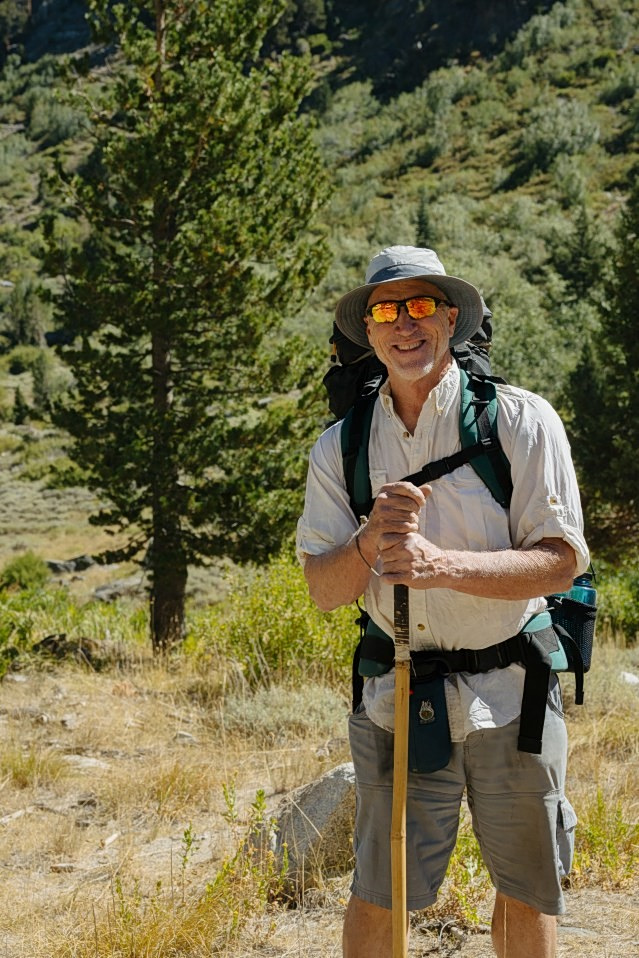
Jeff Weit says ‘you have to treat your shoes like bear food.’ Photography by Angela Owens
“I reached underneath the log and there was my shoe!” the Atascadero, Calif., resident warned before heading out on a multiday trek. “You have to treat your shoes like bear food.”
Nitin Gupta, 31, watched a “quite big” marmot steal his hiking pole—then charge his girlfriend when she tried to retrieve it. “I heard this almost war cry,” the San Francisco founder recalled.
They surrendered the pole.
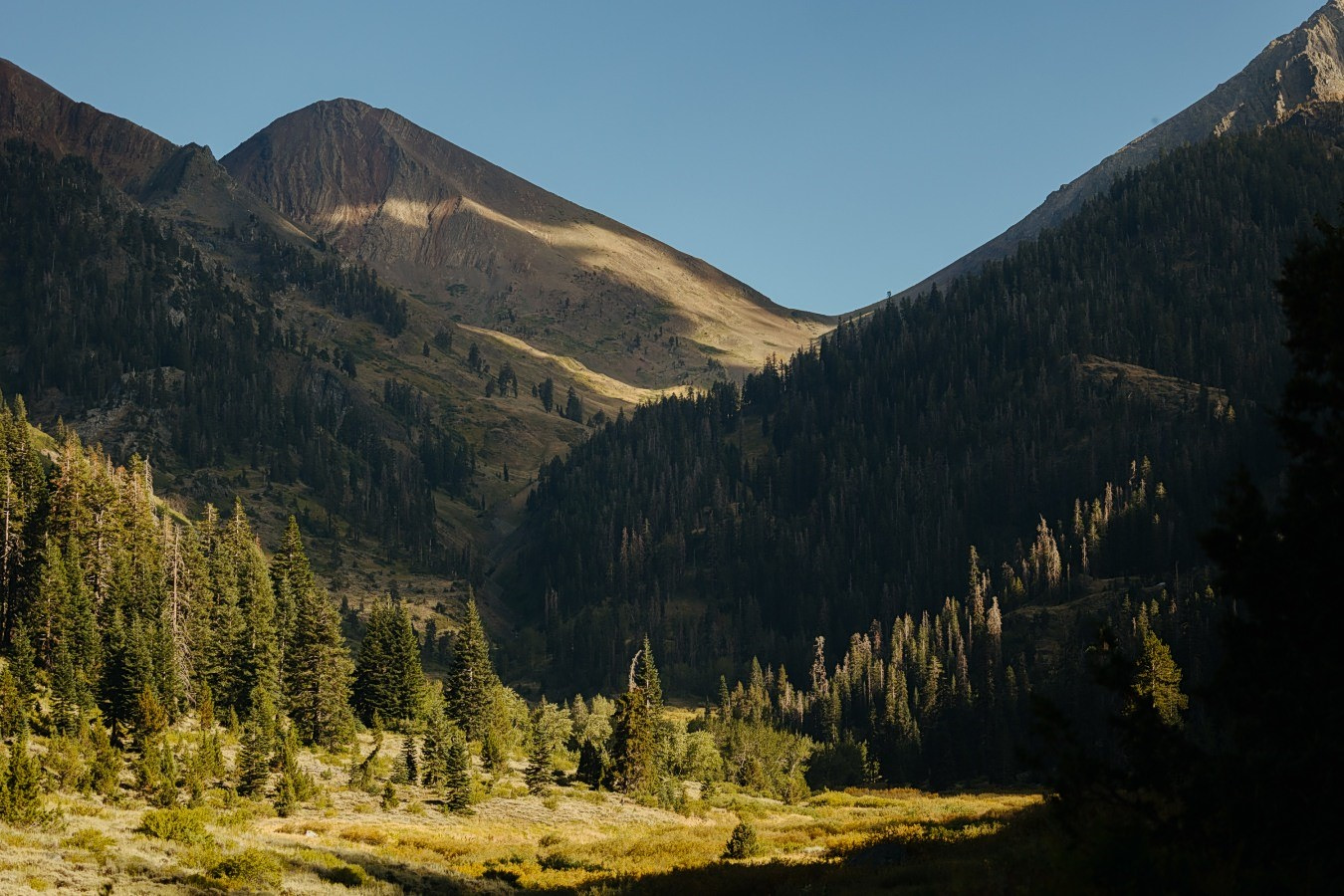
But what has really put Sequoia on the marmot-shenanigans map is their all-out assault on the parking lots bordering trailheads in the Mineral King Valley—one of the wildest parts of the park.
Here, marmots crawl inside vehicles to chew hoses and lap up fluid, sometimes disabling cars. One unlucky hiker paid more than $1,000 for a tow down the narrow, 23-mile mountain road after a marmot attack.
Ironically, the underside of his Subaru had been covered with a tarp like a diaper—a relatively new line of defense against the cute but destructive rodents, which belong to the ground-squirrel family but are as big as small dogs. “There must have been a hole somewhere,” reckoned Joe McManus, the tow operator, of the tarp breach.
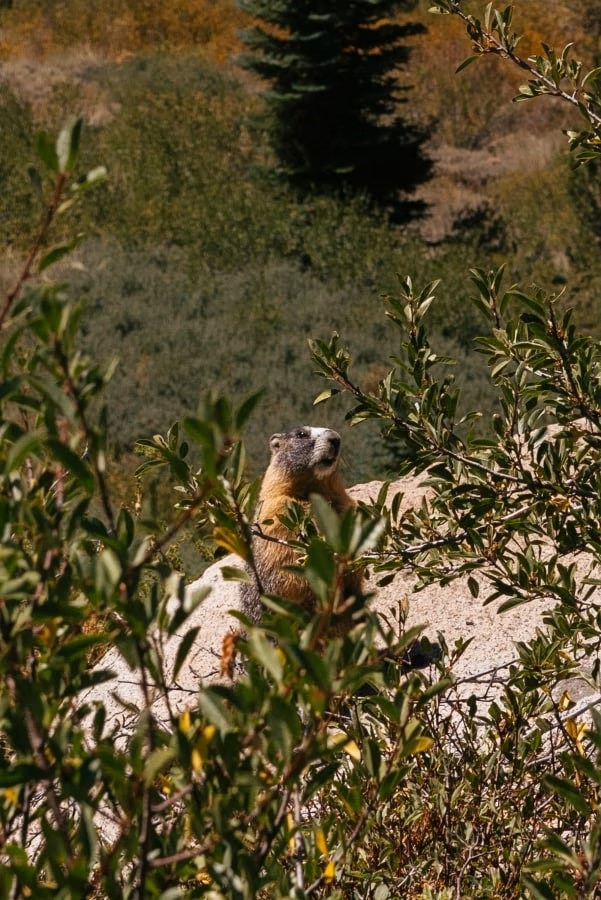
A marmot stands on top of a rock in Mineral King Valley, where the critters are known to crawl inside vehicles to chew hoses and lap up fluid. Photography by Angela Owens
Photography by Angela Owens
Marmot mayhem has also hit other parts of the West, including Colorado. Julie Jensen’s friend screamed when one bit his hand atop a peak. The marmot “would not move, no matter how loudly we yelled,” said Jensen, 56. “He gave serious honey badger vibes.”
One Colorado marmot sneaked into a car and hitched a ride to Arizona, prompting a call to Dan Blumstein, a marmot expert from the University of California, Los Angeles who heads a research project on the critters in that state.
“They say, ‘this is one of your marmots, it has an ear tag,’” recalled Blumstein. The creature, nicknamed “Fork,” for its fur mark, was flown home in a state plane. “We refer to it as Fork Kardashian,” he said.
Many marmot problems appear to revolve around their appetite for salt, which they find on sweat-stained hiking poles and backpack straps as well as radiator fluid, said Blumstein, an ecology and evolutionary biology professor.
Sequoia’s Mineral King Valley has become such a hot spot for marmot car invasions that the National Park Service warns “You Are Entering Marmot Country.”
Trail parking lots there sit next to a boulder-strewn meadow where marmot mothers nurse their young in burrows, making nearby cars irresistible targets, said park spokeswoman Holly Streit.
Visitors initially used chicken wire as a deterrent. “It’s fast to set it up and we have it at the cabin,” said Jamie Daroff, whose family owns one of the homes that sit on federal land.
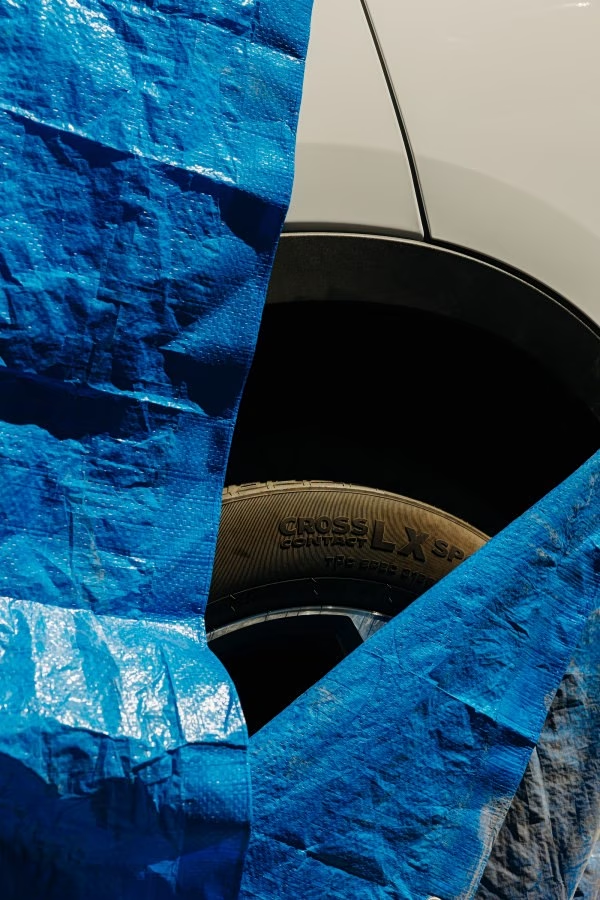
But over the past 15 years or so, he and other visitors switched to plastic tarps after the marmots learned how to beat it.
Photography by Angela Owens
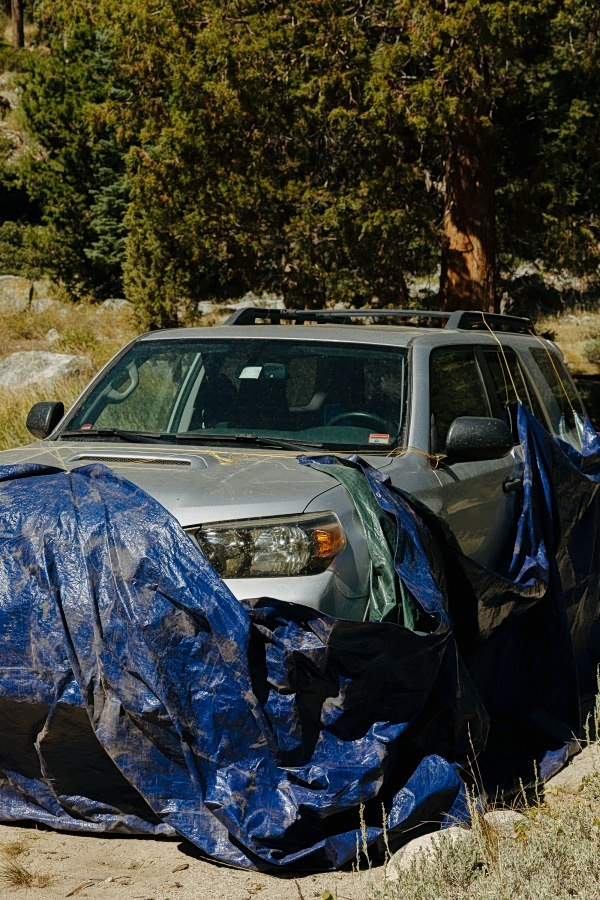
During high marmot season, so many cars are wrapped in tarps that one resident said it looks like a ‘parking lot full of giant Christmas presents.’ Photography by Angela Owens
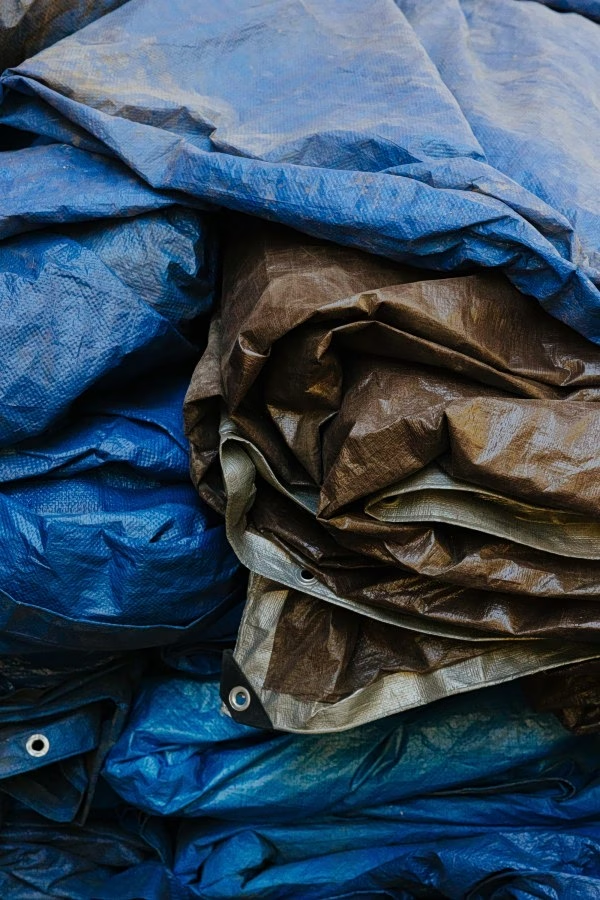
Photography by Angela Owens
Now, during high marmot season between May and July, blue, green and beige tarps shroud most cars at Mineral King, which sits below jagged Sierra Nevada peaks.
“It looks like a parking lot full of giant Christmas presents,” said Eileen Vasko, a server at the Silver City Mountain Resort, which sells marmot caps and magnets.
A favorite local pastime is trading pictures of poorly wrapped vehicles. “We’ve seen one car just pull on top of the tarp and not even wrap,” Vasko said. “And then I saw a really fancy car with like a zip-up wrap. I was like, where did they get this?”
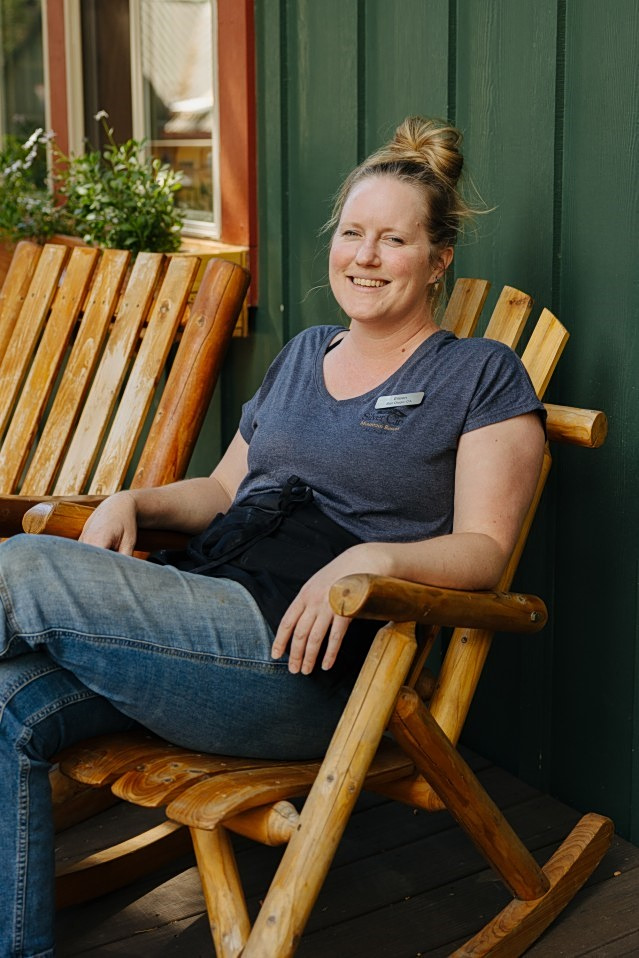
Eileen Vasko said locals like to trade photos of poorly wrapped vehicles. Photography by Angela Owens
The tarps are believed to serve as a visual deterrent, since marmot teeth could easily slice through fabric. Damaged cars seem to be on the decline, though no one has numbers. Tarp sales have been brisk, with the Three Rivers Mercantile store at the bottom of the mountain reporting 60 sold this season.
“It’s just a thing, you go up there, this is what you do to prepare,” said Laci Montgomery, a clerk there.
With break-in season officially over, the ranger station at Mineral King posted a sign advising visitors they no longer needed to tarp and asking them not to borrow any more from their stash.
Not everyone bought it. Blue tarps covered three hikers’ vehicles—including Reinhart’s Subaru—one recent day.
Samantha Weldon, manager at the Silver City resort, still encourages people to tarp up, especially if they are embarking on a multiday hike. “The risk is lower, but it’s never gone,” said Weldon, who once engaged in a tug of war with a marmot over her backpack on a hike.
Near the parking lot, two hikers spotted a marmot on the trail. It let out a loud whistle then retreated from view.
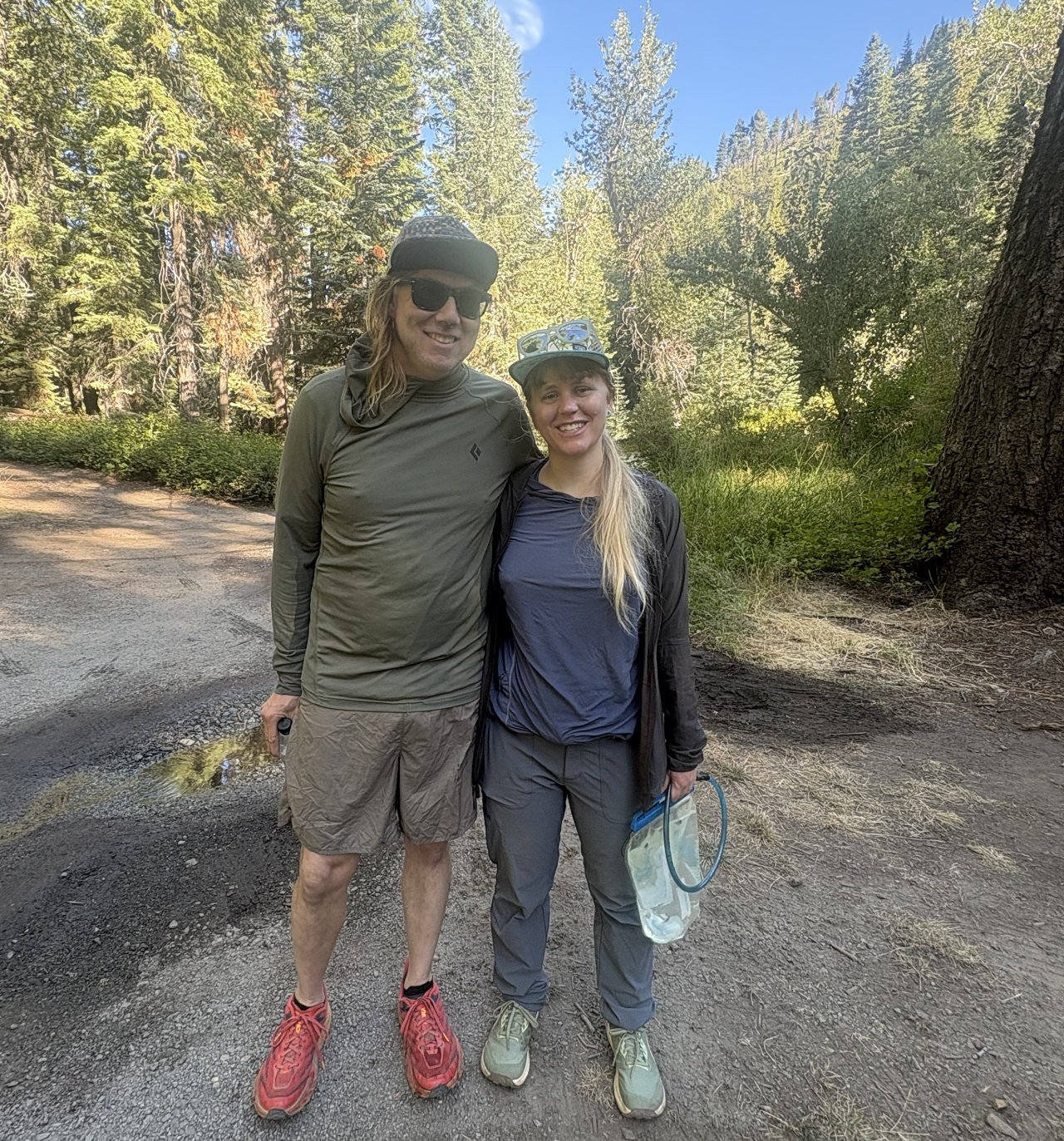
Kay Walker, about to start a hike with friend Billy Hoag, says she adores marmots. ‘They’re on the rocks, bathing in the sun in the alpine, and it just feels like I relate to that.’ Jim Carlton/WSJ