
 Μake us preferred on Google
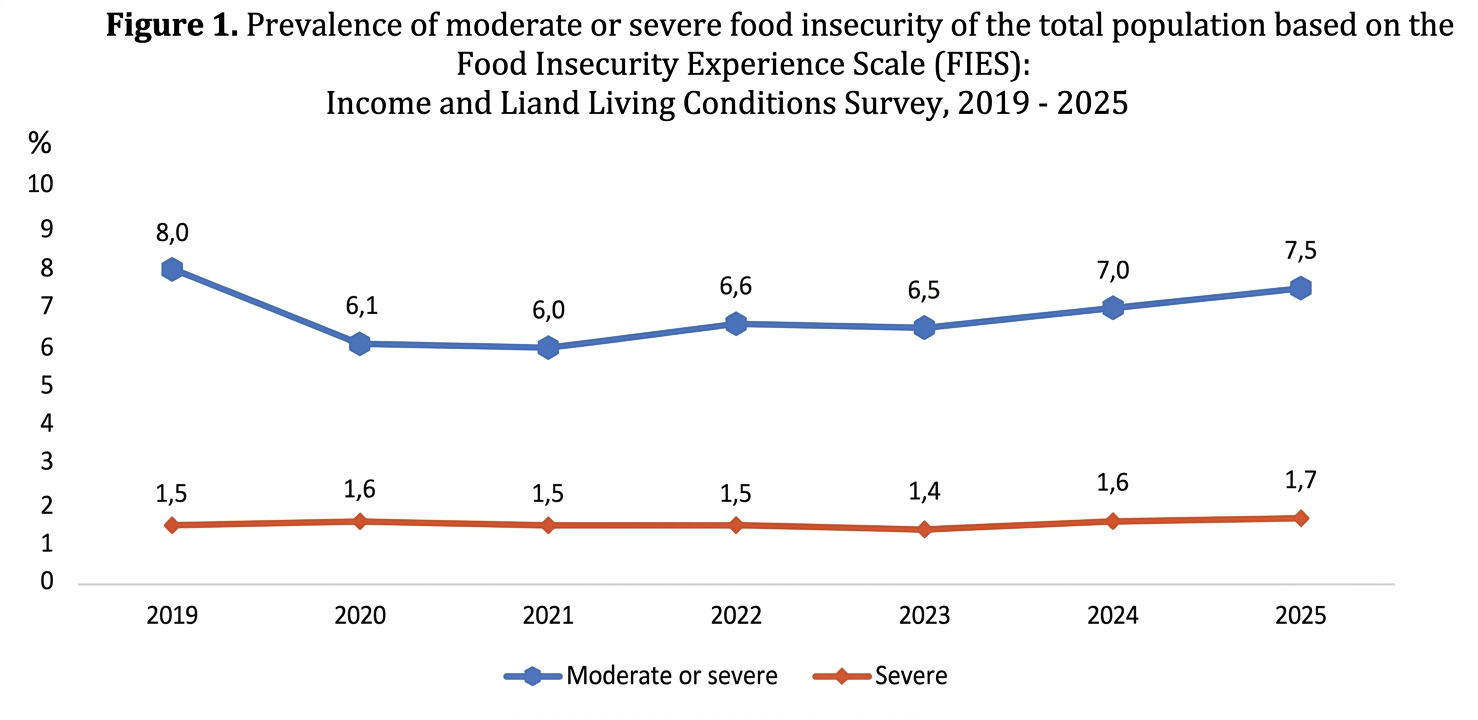
 One in 13 people (7.5%) in Greece reported experiencing moderate or severe food insecurity, while 1.7% reported severe food insecurity alone (based on the global Food Insecurity Experience Scale, FIES), according to the results of ELSTAT’s “Survey on Income and Living Conditions of Households: Year 2025,” with 2024 as the income reference year.
The survey is the main reference source for comparative statistics on income distribution and social exclusion at the European level. Since 2019, ELSTAT has included in the Survey on Income and Living Conditions of Households eight questions proposed by the Food and Agriculture Organization (FAO) to compile indicator 2.1.2 of Sustainable Development Goal 2 (ending hunger by 2030), which concerns the prevalence of moderate or severe food insecurity.
The corresponding rates for moderate or severe food insecurity ranged from 6.0% to 8.0% between 2019 and 2024, with 7.0% in 2024, while severe food insecurity remained at relatively stable levels, between 1.4% and 1.7%, reaching its highest value in 2025 (Chart 1).
As ELSTAT notes, a household is considered to have moderate or severe food insecurity when at least one household member reported that, during the 12 months before the survey, they had to skip a meal, ate less than they felt they needed, ran out of food, were hungry but did not eat, or went a whole day without food due to a lack of money or other resources.
A household is considered to have severe food insecurity when at least one household member reported that, during the 12 months before the survey, they went a whole day without food due to a lack of money or other resources.
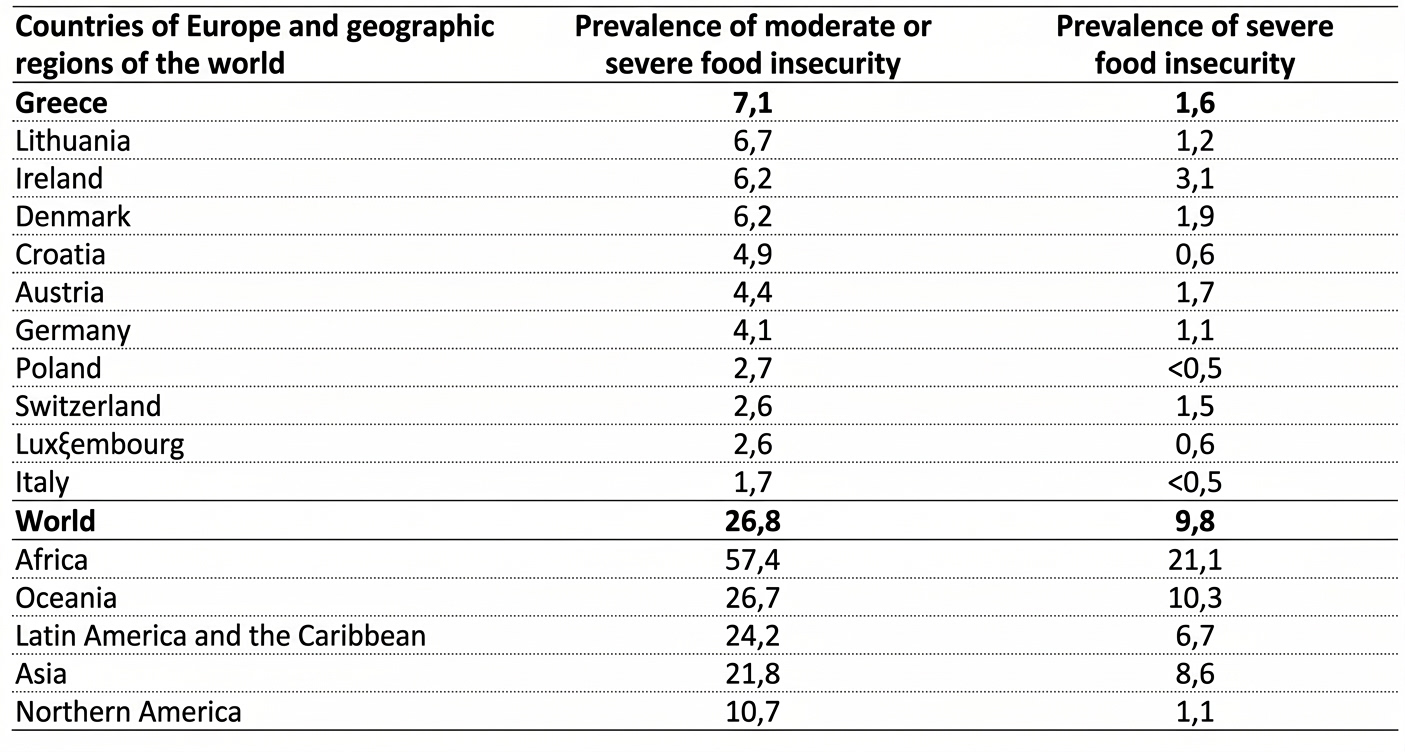
Table 1 shows the prevalence of food insecurity in the total population, based on the Food Insecurity Experience Scale (FIES), in Europe and worldwide, for the three-year period 2023-2025.
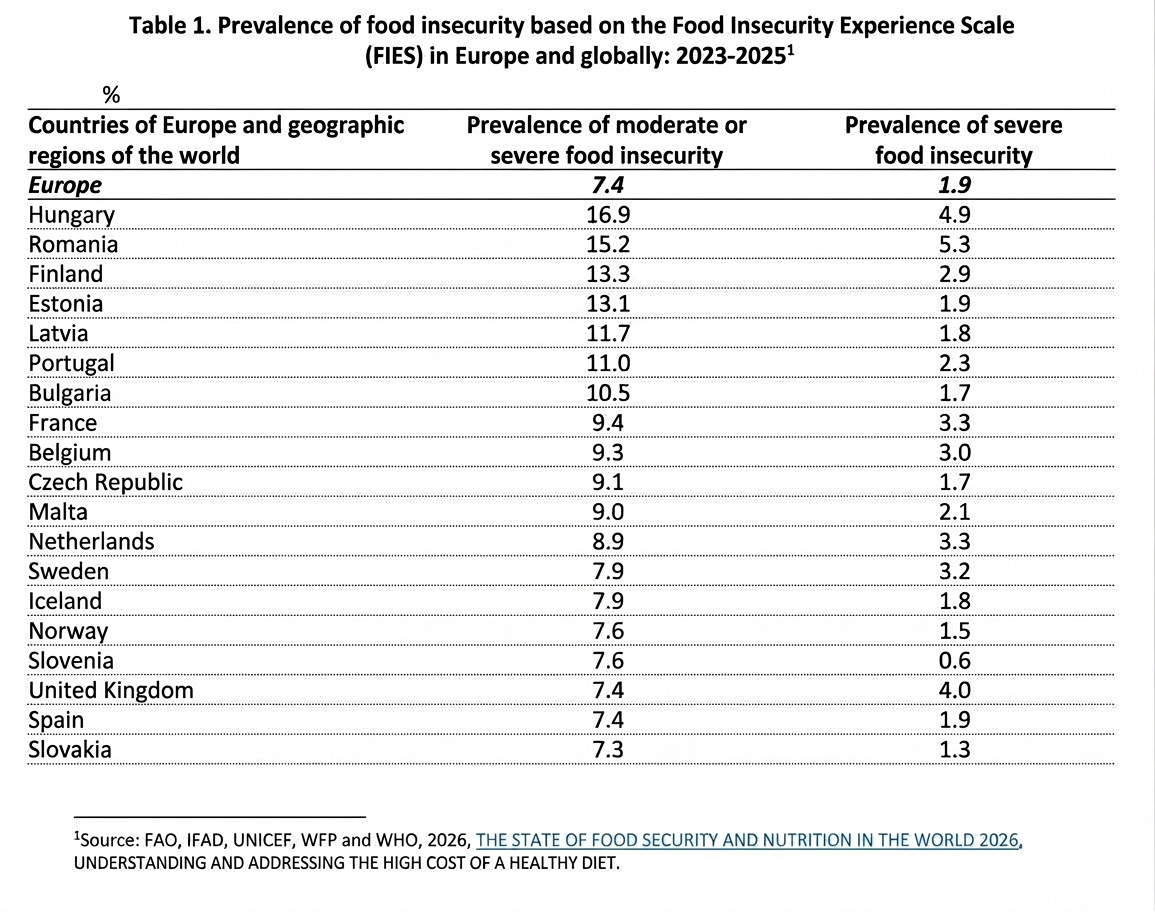
As the table shows, Greece has the highest rate (7.1%) of moderate or severe food insecurity in all of Europe, ahead of Lithuania (6.7%), Ireland and Denmark (6.2%) and Croatia (4.9%). In terms of severe food insecurity, Greece ranks fourth in Europe at 1.6%, behind Ireland (3.1%), Denmark (1.9%) and Austria (1.6%), followed by countries such as Switzerland (1.5%) and Lithuania (1.2%).
Globally, the prevalence of moderate or severe food insecurity stands at 26.8%, and the prevalence of severe food insecurity at 9.8%.