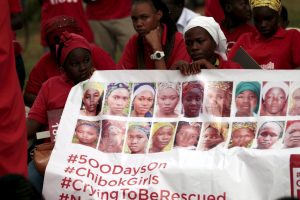
The mass kidnapping of children in Nigeria caught the world’s attention over a decade ago when 276 high-school students were abducted from Chibok, sparking the #BringBackOurGirls campaign on social media. The phenomenon returned to the limelight this month with another mass abduction and President Trump’s threats to intervene over what he said was the persecution of Christians in one of Africa’s most strategic nations.
The reality is, the kidnappings never really abated.
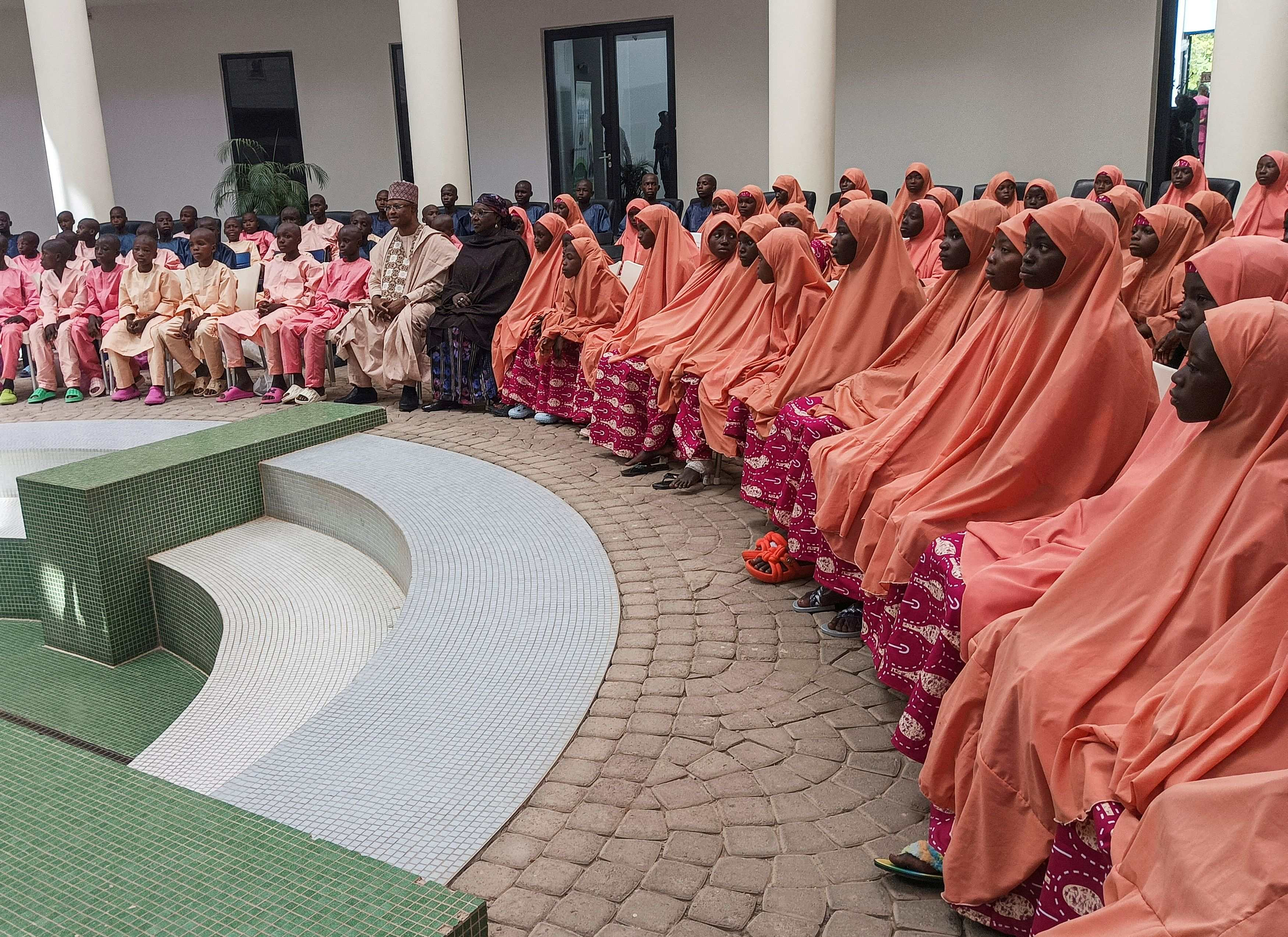
Last week, gunmen attacked St. Mary’s Catholic School in central Niger State, spraying bullets into the air and then forcing 303 students and 12 teachers and staff into the nearby forest at gunpoint. By Sunday, 50 students had escaped and been reunited with their parents, according to a statement from Bishop Bulus Dauwa Yohanna, the Niger State chairman of the Christian Association of Nigeria. Of the children that remain missing, 39 are nursery-school students, according to a list published by the Catholic Diocese of Kontagora.
No group has claimed responsibility for the kidnapping of the St. Mary’s students.
Even for Nigeria, Africa’s most populous nation, the St. Mary’s abduction was large. But it has become all too familiar. In March last year, more than 280 schoolchildren were abducted in the town of Kuriga. In 2021, gunmen kidnapped 317 girls from a boarding school in Jangebe. At the end of 2020, 344 boys were taken from a school in Katsina. Since 2014, there have been at least 17 cases of mass abductions in which at least 1,700 children were seized from their schools by gunmen, according to Amnesty International, in many instances fueling a lucrative kidnapping-for-ransom industry.
Trump threatened to send the U.S. military into Nigeria, “guns-a-blazing,” in response to what he characterized as the mass slaughters of Christians, again turning international attention to the seemingly endless barrage of abductions and sending the Nigerian government scrambling to explain the situation.
But it isn’t just Christians being targeted. Earlier last week, attackers abducted 25 students—largely Muslims—from a school in Kebbi State, according to police.
Nigeria is home to about 240 million people, around half of them Muslims, concentrated in the north, and half of them Christians, generally in the south. About 105 million Nigerians are children, according to Unicef, the United Nations children’s agency. Sometimes attacks are carried out by extremist groups such as Boko Haram, whose name translates as Western education is forbidden, and is concentrated in the country’s northeast. In the northwest, culprits are often bandits who abduct children in exchange for ransom payments.
In the country’s central region, Christian farmers have been battling with a tribe of largely Muslim cattle herdsmen for years over dwindling natural resources. More than 12,000 Nigerians have died since 2010 in clashes between the nomadic cattle-herders and settled farmers over lands that both groups claim as their own, according to ACLED, a conflict-monitoring group.
The end result of all these parallel conflicts is the widespread killing and abduction of both Christian and Muslim civilians.
Nigeria’s best-known battle is against Boko Haram, the jihadist group that captured global attention in 2014 when it abducted 276 students from Chibok’s Government Secondary School. Many of those students were Christians, and forced by their captors to convert to Islam. But Boko Haram has since splintered and been largely confined to the Muslim-dominated villages of the far northeast, where few Christians remain.
Nigerian authorities are trying to persuade Trump that they are doing everything possible to protect Christians. Nigerian President Bola Tinubu postponed a trip to the Group of 20 summit in South Africa last weekend to address the kidnapping and security crises, according to his office.
Last week, Nigeria’s national security adviser and other high-ranking officials met with U.S. officials from Congress, the White House, the State Department, the National Security Council and the Defense Department in Washington, according to a statement from Bayo Onanuga, special adviser to Tinubu.
“The Nigerian delegation refuted allegations of genocide in Nigeria, emphasizing that violent attacks affect families and communities across religious and ethnic lines,” Onanuga said. The U.S. “affirmed its readiness to deepen security cooperation with Nigeria.”
But after more than a decade of mass abductions and various factions murdering each other over land, religion and money, many Nigerians are frustrated with the government’s lack of progress. Overall, more than 100,000 Nigerians have died in political and religious violence since 2011, according to the Council on Foreign Relations.
The number of children out of school in Nigeria has risen to around 18.3 million, according to Unicef, with fears of attacks stopping many children from attending, according to aid groups.
“What is happening in Nigeria is that Christians are being killed, but other non-Christians are being killed as well,” said Adewole Adebayo, a former Nigerian presidential candidate who plans to run for the top office again in 2027. “The government has a problem of general incompetence across the board.”