WASHINGTON—The Senate voted Thursday to advance a motion blocking President Trump from taking further military action in Venezuela without explicit congressional approval, marking a rare bipartisan rebuke of the White House and underscoring growing unease over the administration’s use of war powers.
The 52-47 vote on the motion came less than a week after the U.S. seized Venezuelan strongman Nicolás Maduro and his wife in a nighttime raid. Members of the Democratic caucus were joined by five Republicans in advancing the measure.
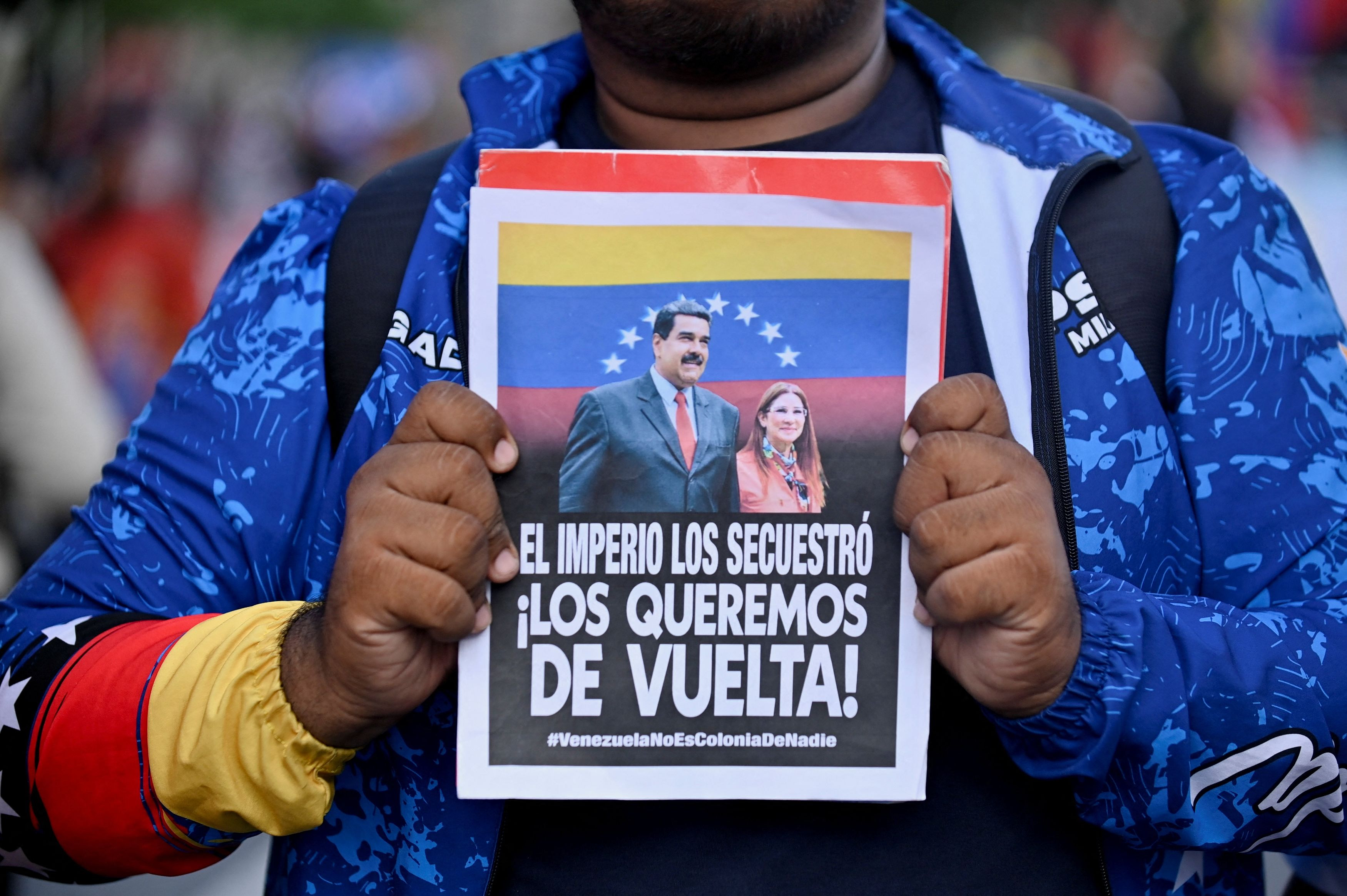
A supporter holds a sign reading “The empire took them. We want them back!” during a march calling for the release of Venezuela’s ousted President Nicolas Maduro, days after he and his wife, Cilia Flores, were captured by U.S. forces following U.S. strikes on Venezuela, in Caracas, Venezuela, January 8, 2026. REUTERS/Maxwell Briceno
Proponents said the measure was needed to rein in further actions by Trump, who has piled pressure on other regimes in the Western Hemisphere, including in Cuba and Colombia in recent days, while also openly talking about acquiring Greenland.
“Meaningful checks and balances require the president’s party to stand up to and resist unconstitutional usurpations of power,” said Sen. Rand Paul (R., Ky.), the Republican co-sponsor of the legislation. He said Republicans had given too much ground to the president, abandoning “all pretense of responsibility and any semblance of duty.”
Paul was joined by GOP Sens. Lisa Murkowski of Alaska, Susan Collins of Maine, Todd Young of Indiana and Josh Hawley of Missouri in supporting the resolution. Sen. Steve Daines (R., Mont.) didn’t vote.
Democrats have questioned the legality of Trump’s actions and warned the U.S. could get drawn into another expensive and deadly foreign war.

U.S. Senator Tim Kaine (D-VA) looks on as U.S. Senate Minority Leader Chuck Schumer (D-NY) gestures toward a placard during a news conference about Venezuela on Capitol Hill in Washington, D.C., U.S., January 8, 2026. REUTERS/Evelyn Hockstein
“Even in an instance where military action might be a good idea…it should not be done on a presidential say-so without a vote of Congress,” said Sen. Tim Kaine (D., Va.), who also sponsored the legislation, on the Senate floor.
Many Republicans defended the president’s actions., arguing that the administration’s moves were a limited operation rather than an act of war requiring congressional authorization.
“President Trump has all the constitutional authority he needs,” Sen. Lindsey Graham (R., S.C.) said on the Senate floor. “If you think he’s doing something unlawful, under international law, you can impeach him.”
The measure still requires a final vote in the Senate and would also need to be approved by the House. Even if it did clear Congress, Trump would almost certainly veto it, and a congressional override would require a two-thirds vote in each chamber.
Senior officials have said they have a three-pronged Venezuela strategy: stabilize and rebuild the country, take the nation’s oil, and begin the transition process to a new government. Trump told the New York Times in an interview Wednesday evening that the U.S. could oversee policy in the country for many years.
That statement made some lawmakers hesitant. “I believe invoking the War Powers Act at this moment is necessary, given the president’s comments about the possibility of ‘boots on the ground’ and a sustained engagement ‘running’ Venezuela, with which I do not agree,” Collins said
Trump administration officials have characterized the raid to seize Maduro as a law- enforcement action. Senior administration officials told lawmakers this week that the Justice Department had drawn up a new legal opinion to justify the operation. Most Republican lawmakers were persuaded.
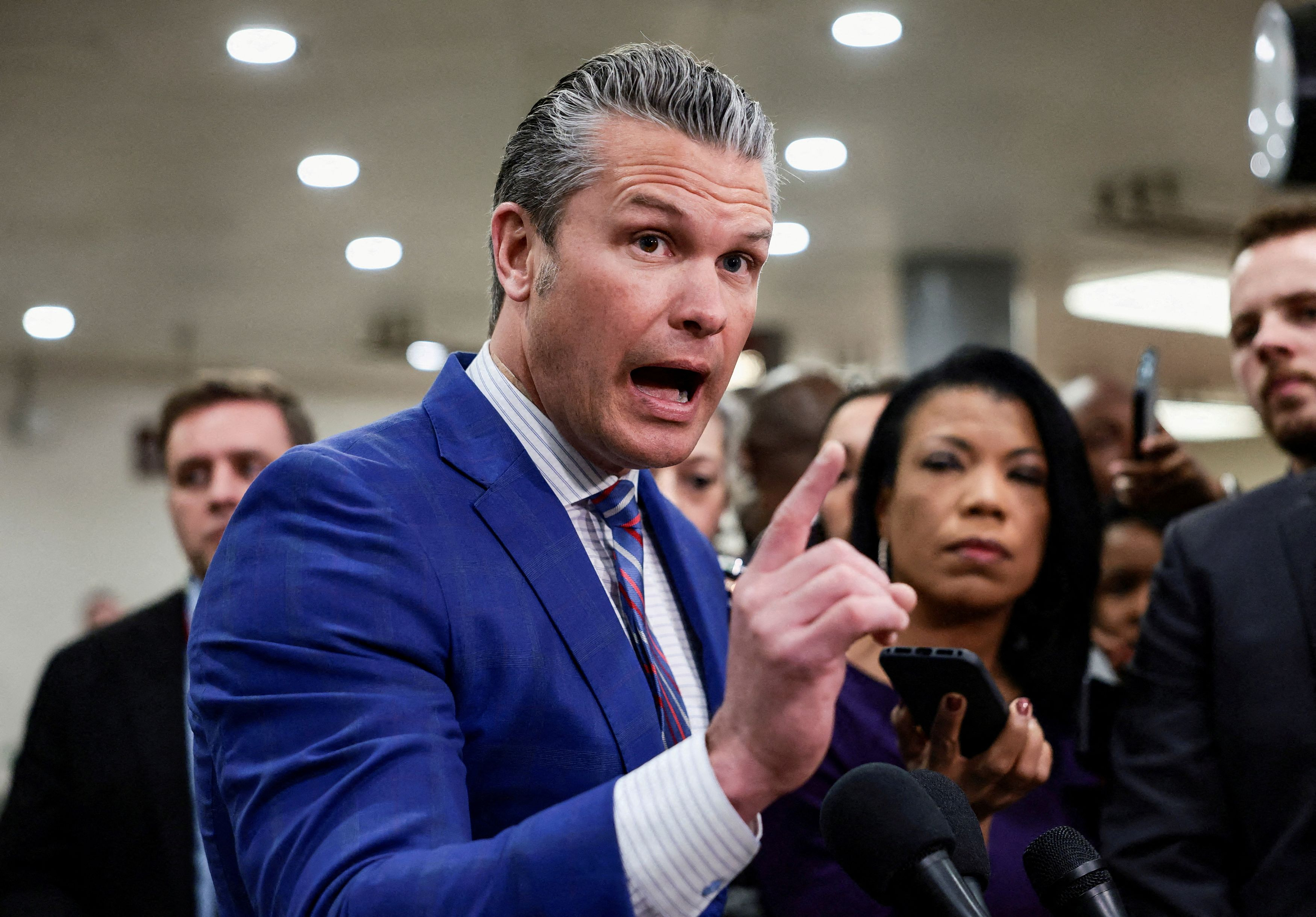
FILE PHOTO: U.S. Defense Secretary Pete Hegseth gestures as he speaks to the media on the day of a briefing for the House of Representatives on the situation in Venezuela, on Capitol Hill in Washington, D.C., U.S., January 7, 2026. REUTERS/Evelyn Hockstein/File Photo
“It was a law enforcement action,” Sen. Jim Risch (R., Idaho), the chair of the Senate Foreign Relations Committee, told reporters. “It is not an act of war, not even close.”
Most Republicans still maintained a red line at having U.S. troops on the ground, a scenario they insisted wasn’t imminent.
“I think there’s a way to get Venezuela where it needs to be without boots on the ground,” Sen. Thom Tillis (R., N.C.) told reporters. “I don’t think there’s a need for that,” echoed Sen. Mike Rounds (R., S.D.).
A similar war powers motion is set to come to the House floor. House Speaker Mike Johnson (R., La.) has dismissed claims that Congress’s powers have been stepped on.
“Under the War Powers Act, there is no requirement for prior congressional approval or prior notification,” Johnson said. “Congress retains full oversight authority, and the administration is acting consistent with the law.”
Democrats, meanwhile, said they long ago gave up any expectation that Republicans will break with Trump. “Republicans are never, ever, ever, ever going to stand up to him,” said Sen. Chris Murphy (D., Conn.). “The party is operating like a cult.”
Write to Anvee Bhutani at anvee.bhutani@wsj.com