The U.S. and Iran are entering a risky new phase of conflict in which both sides are attempting to maintain pressure and respond to provocations without returning to all-out war, but with an ever-present danger of stumbling across each other’s red lines and triggering a dangerous escalation.
Recent days of hostilities showed how close the two foes have come to the edge even while trying to keep their military actions measured. Iran struck directly at Israel, triggering an escalatory spiral that President Trump struggled to rein in. An Iranian drone then brought down an American Apache helicopter prompting several hours of U.S. retaliatory strikes. Iranian officials tried to portray the downing as an accident, then launched missile and drone strikes on U.S. allies in the Gulf and Jordan in response to the American attacks.
The three days of fighting marked the most serious escalation in the conflict since Trump declared a ceasefire in the U.S. and Israeli bombing campaign against Iran in April, ending nearly 40 days of strikes that began on Feb. 28. It followed a series of skirmishes centered on U.S. efforts to enforce its blockade of Iranian ports and Tehran’s actions to keep shipping through the Strait of Hormuz bottled up.
The military standoff around the strategic waterway—typically the transit point for much of the world’s oil and a key lifeline for Gulf Arab states—has brought U.S. military aircraft flying near Iranian drones and speedboats, creating a high risk of conflict.
“They’re managing the war, but they’re also trying to set the parameters of the ceasefire and win additional leverage through kinetic strikes,” said Dina Esfandiary, a longtime Iran analyst at Bloomberg Economics. “Despite the fact that neither side wants to continue it, I think both sides are prepared to continue it.”
Talks toward a diplomatic end to the war haven’t made progress despite weeks of comments by Trump that a deal is close. The president expressed frustration over the lack of progress on social media Wednesday: “They’ve taken too long to negotiate a deal that would have been great for them, now they will have to pay the price.”
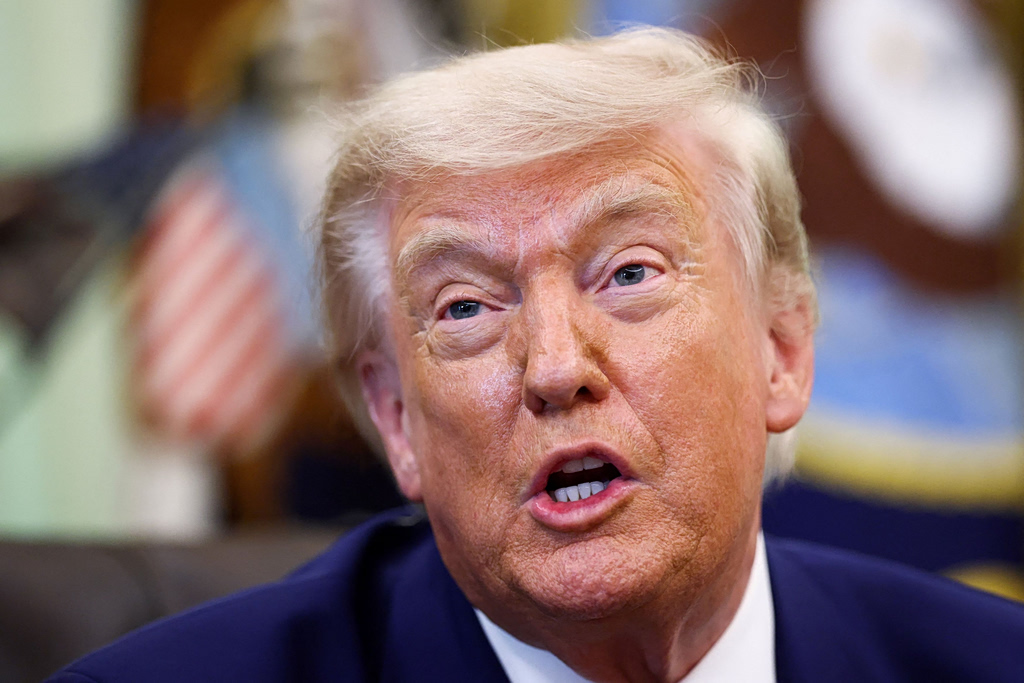
President Trump has said he would consider ending the ceasefire if Iran killed American troops.
Photo by REUTERS/Kevin Lamarque
While threatening force, the U.S. has focused on economic pressure. The military is enforcing a blockade of Iran’s ports, while Iran is using the threat of drone strikes and fast boat attacks to enact its closure of the Strait of Hormuz to most commercial shipping traffic. The U.S. is also working to counter those threats and help free up civilian shipping.
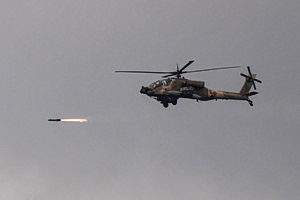
The U.S. Apache helicopter that crashed while on patrol off the coast of Oman on Monday evening was likely hit by an Iranian drone, U.S. officials said. Iranian officials said Tehran didn’t deliberately target the helicopter, though it has been firing drones at commercial vessels that are coordinating with the U.S. to transit the waterway.
Security analysts said the incident could point to the risks of Iran’s defense doctrine in which the Islamic Revolutionary Guard Corps, the paramilitary group responsible for protecting the Iranian regime and enforcing the chokehold on the strait, delegates a high degree of freedom of action to commanders on the ground who can then operate without orders from Tehran in an approach known as the “Mosaic” defense strategy.
The incident came very close to the threshold for escalation articulated by Trump in private conversations with aides, in which he said he would consider ending the ceasefire with Iran if Tehran kills American troops. In the end, the helicopter’s two crew members were rescued by a sea drone, after hours in the water, a first-of-its-kind mission.
Iran’s regime emerged from the initial war militarily and economically battered but with a new source of leverage over its adversaries resulting from its hold on the strait and ability to hold Gulf energy facilities at risk.
Tehran’s desire to reassert deterrence with the U.S. and Israel , along with calls from hard-line leaders within Iran’s political power structure, have pushed the country into a riskier military posture of responding aggressively to perceived threats while hoping not to trigger a return to full-scale war.
“It is a very fragile situation. This equilibrium is not stable because of the risk of miscalculation and unwanted escalation,” said Hamidreza Azizi, a visiting fellow at the German Institute for International and Security Affairs. “The pattern on the Iranian side has been to keep the escalation below a certain threshold, and that threshold has been killing American soldiers and personnel during the ceasefire.”
Iran’s economy and military have been battered by the war.
Iran revealed some limits in the past few days. It was first to publicly announce an end to the exchange with Israel and avoided crowing about the downing of the Apache as it had when other American aircraft were shot down. It also has avoided highly sensitive targets like Israeli population centers and Saudi Arabia, and has used relatively limited volleys of missiles and drones to make its point.
Iran’s missile attack on Israel appeared calibrated to avoid a wider escalation in the conflict, said Raz Zimmt, director of the Iran research program at Israel’s Institute for National Security Studies.
“I think that, yes, there was a kind of risk taken by the Iranians, but it doesn’t seem that Iran really wanted to be engaged in a full-scale confrontation with Israel,” he said.
Mediators say diplomatic efforts to negotiate a deal between the U.S. and Iran to end the war have yet to bear fruit, with the two sides still hammering out key issues of how soon Iran can expect financial relief and how specifically restrictions on its nuclear program will be addressed. The goal is minimal, a memorandum of understanding to stop the fighting, open the strait and set up talks on more difficult issues.
The lack of progress means the U.S. and Iran remain locked in a low-level conflict in which neither side wants to be seen as retreating by accepting an unfavorable deal.
“The system absorbed the decapitation, consolidated around its new leadership, and now treats the confrontation as existential,” said Oral Toğa, a researcher at IRAM Center for Iranian Studies, a think tank in Ankara. “Both sides need a narrative that allows them to de-escalate without looking as if they capitulated.”