 Μake us preferred on Google
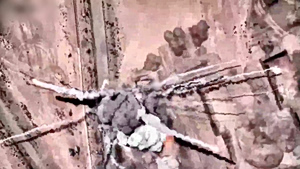
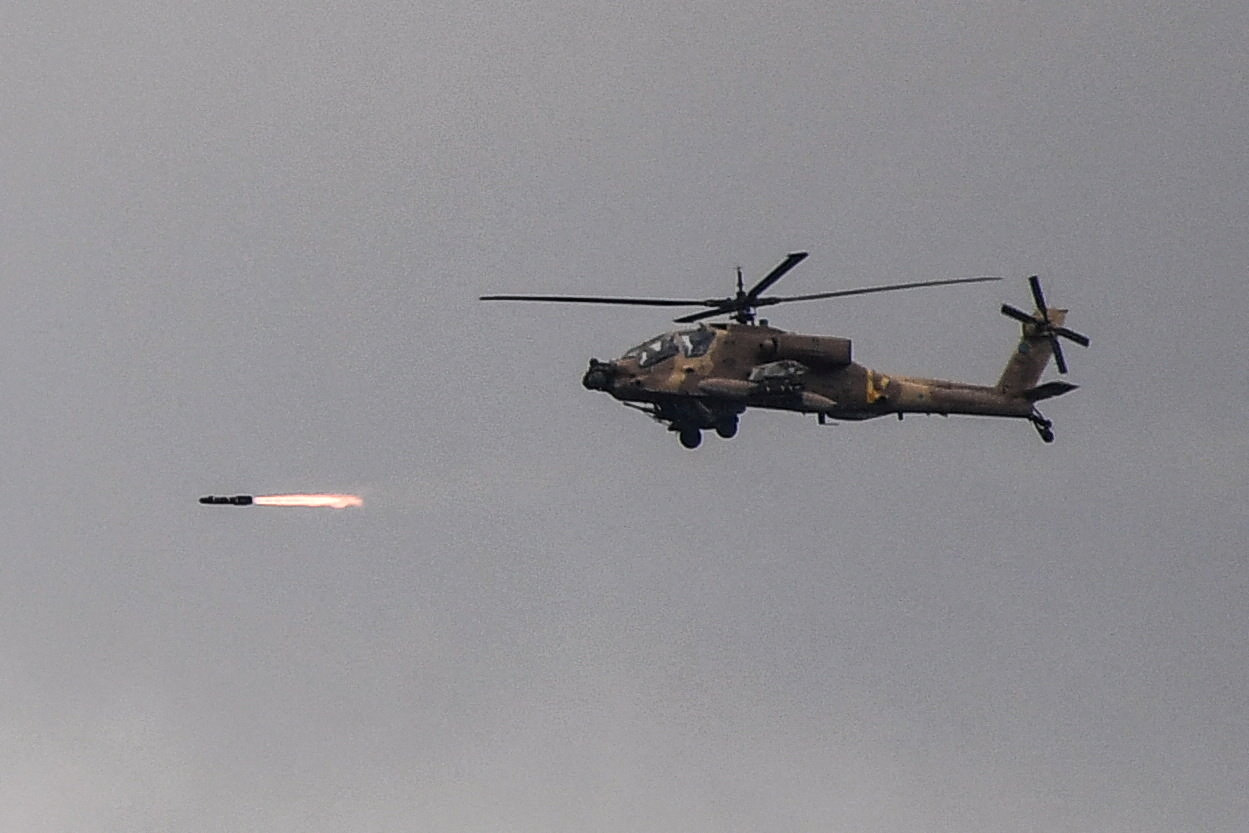
 President Trump on Tuesday accused Iran of shooting down a U.S. Apache helicopter near the Strait of Hormuz and said the U.S. must respond to the attack.
The downing of the helicopter late Monday set off a race to find two American crew members before Iranian forces could close in on them. They eventually were rescued by a drone boat in a first-of-its-kind operation at sea, the military said.
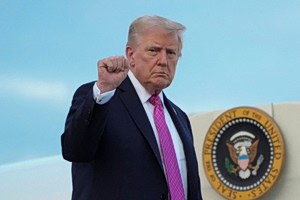
“I have just been informed by our Great Military that last night the Iranians shot down one of our highly sophisticated Apache Helicopters while patrolling over the Strait of Hormuz,” Trump said on Truth Social. “There were two pilots involved, both are safe and uninjured. Nevertheless, the United States must, of necessity, respond to this attack.”
The development threatens to shatter a fragile ceasefire that has been marked by skirmishes in and around the strait. The president has previously told aides he would consider restarting the war with Iran if American servicemembers are killed by Iran, The Wall Street Journal has reported.

Iran’s foreign minister, Abbas Araghchi, didn’t deny that Tehran’s forces had brought down the helicopter, but he indicated the incident was unintentional. “Foreign forces in proximity to our territory are at constant risk on account of their own human errors, plain accidents, or potentially being caught in crossfire,” he said in a post on X after Trump’s statement.
“To reduce risk, best solution is for them to leave,” Araghchi said. “We prefer language of diplomacy but speak other languages too.”
The unmanned surface vessel, a Saronic Corsair, located the crew—who had spent two hours in the waters off the coast of Oman—and brought them to shore, said Capt. Tim Hawkins , spokesman for U.S. Central Command.
The rescue marks an operational first for the vessels, which are part of the U.S. Navy’s artificial-intelligence and drone task force that is designed to widen U.S. military capabilities in the Middle East . The mission also demonstrates the dangers of operating in the region, where Iran has shot down U.S. drones and targeted American aircraft throughout the war and subsequent ceasefire.
Earlier, Trump had sought to play down the incident. In a phone call with the Journal, Trump said that it “wasn’t a big deal,” stressing that “the pilot is fine.” Trump said on the call that he had the details on the incident and that “it was much different than you think.” The president added that the U.S. blockade of the strait is making Iran “very poor” and that he will keep it in place “as long as necessary.”
Hawkins said the crew was receiving medical care and in stable condition after receiving follow-on support from American forces on land.
Elite troops from the 82nd Airborne Division, which arrived in the region after the start of the war with Iran in February, contributed to the rescue mission, Centcom said.
The drone boat involved falls under Task Force 59, which harnesses uncrewed boats and other drones powered by AI. “When it comes to search and rescue, you utilize the best asset that is the closest and the quickest, and that was the case in this instance,” Hawkins said.
U.S. forces have rehearsed similar missions in the past, including using a sea drone to move injured personnel from a ship to shore.
“We’ve practiced this scenario in exercises, but not quite necessarily like this,” Hawkins said. He declined to comment further on the helicopter’s mission at the time of the crash or on the continuing investigation.
The U.S. and other military forces increasingly use such vessels, more commonly known as sea drones, for military operations. American forces have recently deployed underwater sea drones to check the strait for mines.
In Ukraine, the country’s military has dispatched the vessels to target Russia’s Black Sea Fleet. Kyiv also recently began to use land drones to extract injured soldiers from the front line, where the proliferation of aerial drones makes it deadly for human rescue teams.
The crash near the strait also illustrates the risks of the simmering conflict with Iran, in which U.S. and Iranian forces have skirmished multiple times in recent weeks. The U.S. is also enforcing a naval blockade of Iranian ports and conducting patrols to counter threats to shipping in the crucial waterway.
Israel and Iran also exchanged direct strikes this week for the first time since Trump declared a ceasefire in the bombing campaign in April.
Apache helicopters have played a key role in the conflict , including the standoff with Iran at sea. In May, the military used them to sink Iranian fast boats during an operation to guide commercial ships through the strait.
The loss of the helicopter lengthens the list of U.S. aircraft destroyed by accidents and enemy fire during the war with Iran, including four F-15E Strike Eagle jet fighters, three of which were downed by friendly fire over Kuwait . One that was downed in Iran resulted in a dramatic rescue mission of its two pilots.
An A-10 Thunderbolt II ground-attack aircraft also crashed during the mission to extract them, Chairman of the Joint Chiefs of Staff Gen. Dan Caine later said.
Separately, two KC-135 Stratotankers collided in Iraq in March, killing six crew members. Five other KC-135s were struck and damaged while parked at a base in Saudi Arabia, the Journal previously reported.
A report in May from the Congressional Research Service listed 42 fixed-wing or rotary-wing aircraft, including drones, that were reportedly lost or damaged in the Iran war that began in late February. Many of the drones have been shot down by Iranian forces, which have continued to target U.S. aircraft during the ceasefire.
The Pentagon’s acting comptroller testified to members of Congress in May that the cost of military operations in the war had risen to almost $29 billion.
Write to Jared Malsin at jared.malsin@wsj.com , Shelby Holliday at shelby.holliday@wsj.com and Annie Linskey at annie.linskey@wsj.com