
Immigration and Customs Enforcement officers will begin trying to ease bottlenecks at airports on Monday, as the Trump administration scrambles to develop a plan to end hourslong security lines amid a partial government shutdown.
President Trump said in several social-media posts over the weekend that ICE agents would help at airports if a deal wasn’t reached by Congress to fund the Department of Homeland Security. His first post Saturday came as a surprise to officials inside ICE and at DHS, who have spent the weekend trying to figure out how it could work, according to three people familiar with the matter.
White House border czar Tom Homan said in an interview with CNN on Sunday that ICE officials could monitor exit lanes to make sure people don’t enter through them, or check identification before passengers enter the screening area to free up officers to move customers through the lines with body scans and X-rays.
“We’re trying to release TSA resources to get to positions that they really need expertise in, like the X-ray screening,” Homan told “Fox News Sunday.” The White House noted that Homan said that the plan was a work in progress and would be hashed out by the end of the day on Sunday.
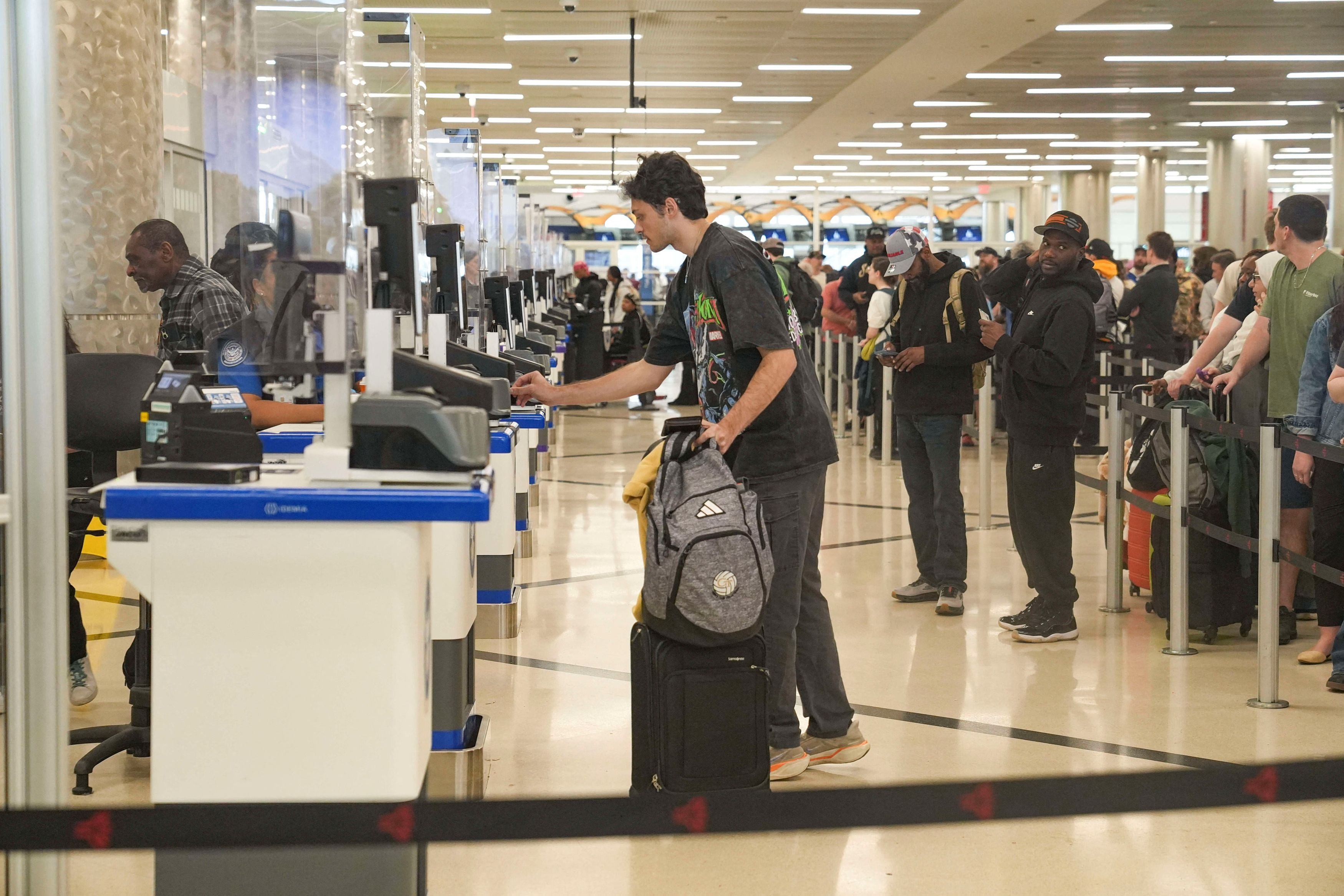
Travelers on social media reported hourslong waits over the weekend to get through Transportation Security Administration checkpoints at airports serving New York City, Atlanta and Houston.
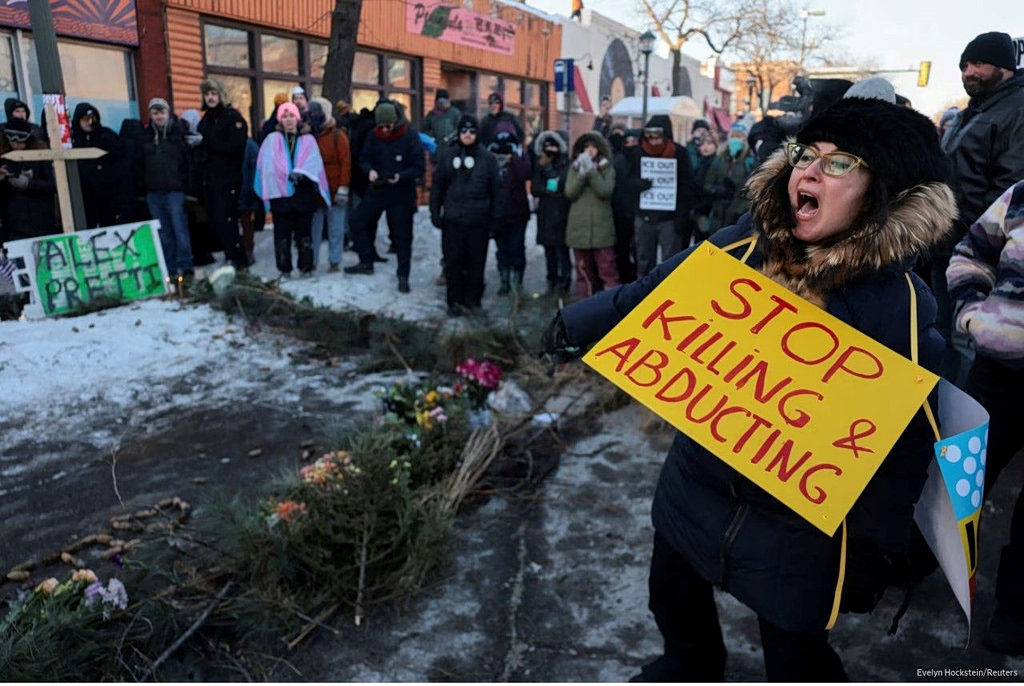
The issue stems from an impasse in Congress over funding the Department of Homeland Security, which oversees immigration enforcement in addition to the TSA. Democrats have been holding up funding in exchange for new limits on the power of ICE officers, including requiring them to wear proper identification and banning masks .
It remains unclear exactly what ICE’s presence at airports will look like Monday. Government officials declined to name the airports at which ICE agents will be stationed, but Atlanta Mayor Andre Dickens said he was expecting them to be present at Hartsfield-Jackson Atlanta International Airport. ICE agents are expected to assist with managing security lines and TSA will continue to conduct passenger screenings, according to airline industry officials.
Officials at ICE and DHS expressed frustration with the plan, saying it will distract from Trump’s core goal of deporting as many people in the country illegally as possible. They also said the move could take away from Republicans’ leverage in the funding fight should Trump’s plan succeed in reducing airport security times without Democrats giving in.
Homan said Sunday that Trump had called him about the idea. “The president made it clear that, you know, we’re not going to wait,” he said.
Transportation Secretary Sean Duffy , asked about the plan on ABC News on Sunday, seemed to suggest ICE officers could perform different roles than those articulated by Homan, saying they would be useful to help with the lines and are trained to use X-rays. He said the president is “looking around every corner to make sure the American people don’t suffer during the shutdown.”
“To manage the through flow of people and even administratively they’ll be helpful. But again, we have ICE agents who are trained and can provide assistance to agents,” Duffy said.
It also isn’t clear whether airport operators and airlines are on board with the plan. Before the Sept. 11, 2001, terrorist attacks, private-sector contractors handled most airport-security screenings. Those responsibilities were largely brought under federal oversight after the TSA was established in 2001.
ICE officers aren’t trained in aviation security and putting untrained officers at checkpoints creates a security gap rather than filling one, said Everett Kelley , national president of the American Federation of Government Employees in a statement issued Sunday. TSA officers “deserve to be paid, not replaced by untrained, armed agents who have shown how dangerous they can be,” Kelley said.
The administration has attempted to decertify the TSA union multiple times. About a year ago, DHS said it would no longer honor a bargaining agreement with the union, which challenged the move in court. In September, Secretary Kristi Noem issued a new directive meant to terminate the contract, which the union also challenged.
The legal case is ongoing, but the union continues to represent thousands of transportation security officers.
Sen. Lisa Murkowski (R., Alaska) told reporters it wasn’t ICE’s mission to serve in roles typically performed by TSA at airports and hoped lawmakers could resolve the funding impasse for TSA. Asked of the president’s plan to dispatch ICE agents to airports Monday, she said, “Not a fan of that.”
Senate Majority Leader John Thune (R., S.D.) huddled Sunday behind closed doors with a small group including the White House legislative liaison, James Braid ; Senate Appropriations Chair Susan Collins (R., Maine) and Sen. Katie Britt (R., Ala.), the chair of the appropriations panel that funds the Homeland Security Department.
But there was no obvious path forward on funding DHS. “There are lots of ideas swirling right now,” Thune said when asked about ideas floated by some Republicans to separate out funding for ICE—the most contentious part of the spending bill—so that funding could pass for TSA and other agencies under the DHS umbrella. “The good news in all that is people realizing this has to get fixed,” he said. “But the best way” is “getting Democrats to support funding the entire Department of Homeland Security, not picking and choosing.”
Top Democratic and Republican senators were seeking to meet again Monday morning, possibly with Homan.
Write to Erin Mulvaney at erin.mulvaney@wsj.com , Michelle Hackman at michelle.hackman@wsj.com , Siobhan Hughes at Siobhan.hughes@wsj.com and Allison Pohle at allison.pohle@wsj.com