Tulsi Gabbard resigned Friday as director of national intelligence, capping a tumultuous tenure in which she was largely sidelined from President Trump’s national-security operations, including in Venezuela and Iran.
In a letter Friday to Trump later posted on social media, Gabbard says she is resigning because her husband, Abraham Williams, “has recently been diagnosed with an extremely rare form of bone cancer.”
“I must step away from public service to be by his side and fully support him through this battle,” Gabbard wrote. Gabbard said her last day would be June 30, staying on temporarily to help ensure “no disruption in leadership or momentum.”
Trump, in a social-media post, said, “Tulsi has done an incredible job, and we will miss her.” He noted that Aaron Lukas, Gabbard’s deputy, would serve as the acting director.
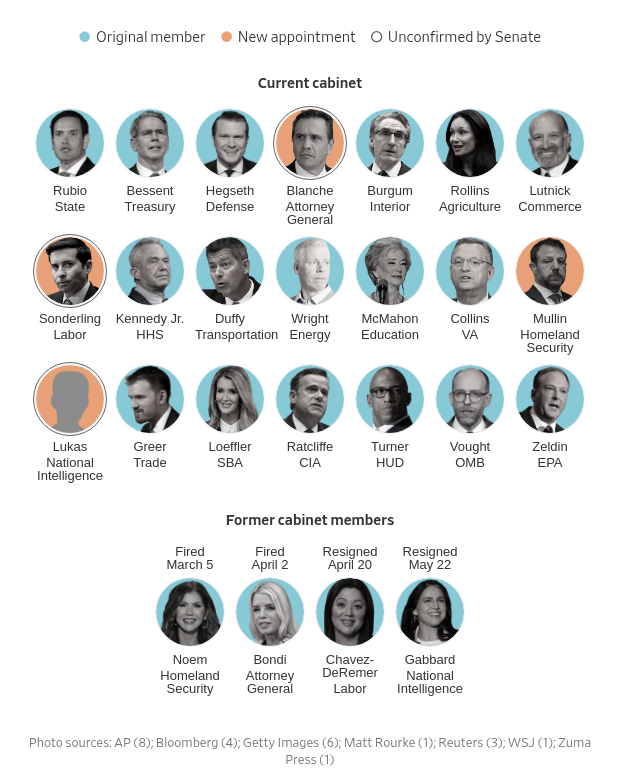
Trump’s second-term cabinet has had more staying power than his first term, when ousters were common. He cycled through five directors or acting directors of national intelligence in four years. Since the beginning of this year, Trump has pushed out several top officials he felt weren’t moving swiftly enough to pursue his priorities, including Attorney General Pam Bondi , and Food and Drug Administration Commissioner Dr. Marty Makary.
Gabbard’s departure comes as Trump is considering fresh strikes on Iran if mediators don’t reach a deal to end Tehran’s nuclear work, or at least extend the cease-fire to hold more discussions. Trump’s national security team has faced upheaval as he has relied on a small circle of aides to prosecute the unpopular war.
The deputy director of the Central Intelligence Agency, Michael Ellis, is a front-runner for the job to permanently replace Gabbard, two people familiar with the matter said. Others are still being considered, one of the people said, noting Trump will make the final pick. Becoming director of national intelligence requires Senate confirmation. Among the other names Trump allies publicly floated for the post was Rep. Elise Stefanik (R., N.Y.).
Gabbard wasn’t a significant part of conversations about the Iran war before it began in February, officials previously told The Wall Street Journal. She often diverged from administration talking points about the war, saying the U.S. and Israel had differing objectives and that Tehran made no efforts to rebuild its nuclear program since American attacks on three nuclear sites last year.
In recent months, Gabbard has spent time pursuing theories of voter fraud in the 2020 election at Trump’s behest, according to administration officials; she showed up at a Fulton County, Ga., election center where Federal Bureau of Investigation agents seized voting machines earlier this year . (Audits and recounts commissioned by state and local officials in the aftermath of the 2020 contest found no evidence of widespread tampering or fraud.)
“I thank Tulsi Gabbard for her service in this administration and in uniform, and I wish her the very best as she supports her husband Abe in his battle with cancer. Please join me in sending them prayers for a full and fast recovery,” Sen. Tom Cotton (R., Ark.), the Senate Intelligence Committee chair, wrote in a statement.
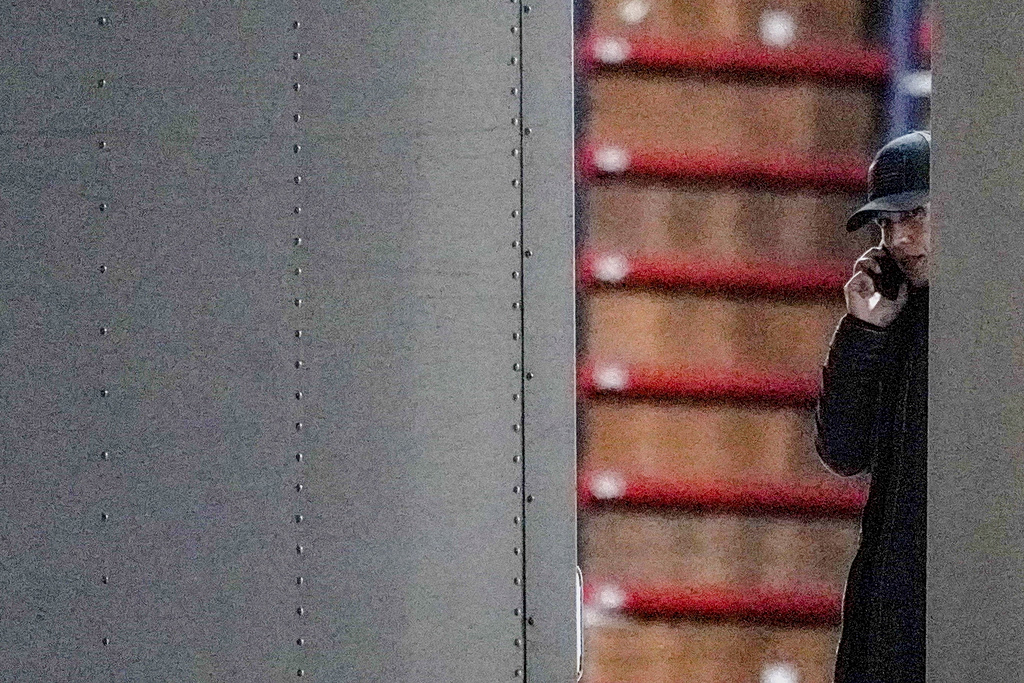
FILE PHOTO: Gabbard was on the scene in January when federal agents searched an election-operation center in Georgia. REUTERS/Elijah Nouvelage/File Photo
For years, Gabbard, an Army Reserve lieutenant colonel who served in Iraq, had been an outspoken critic of foreign interventions in the Middle East and elsewhere, and she had accused Trump during his first administration of bowing to neoconservatives.
A former Democratic congresswoman from Hawaii, Gabbard ran for president in 2020. She endorsed Trump in the 2024 election and has been a popular figure in his MAGA base. Trump nominated her to run the office of national intelligence, which oversees 18 U.S. spy agencies, and she was confirmed by the Senate in February 2025.
While head of the Office of the Director of National Intelligence, Gabbard worked to reshape the intelligence community through staffing cuts and restructuring, and a focus on border security and counterterrorism. She launched “ONDI 2.0” to overhaul the agency, and tried to root out leaks and investigate what she claimed was the politicization of the organization. She faced criticism that her changes weakened the agency.
As Trump’s national-security team huddled at the end of last year to make final preparations for the operation to snatch Venezuelan strongman Nicolás Maduro, Gabbard was posting social-media photos of herself on a beach in Hawaii, where she grew up, ignorant of the operation’s details.
She has fallen in and out of favor with Trump, who instead has relied on CIA Director John Ratcliffe for important intelligence consultations.
One of her close allies, Joe Kent, stepped down in March from his post as the top U.S. counterterrorism official, over his concerns with the war in Iran.
Gabbard’s pending exit follows other recent high-profile departures from Trump’s cabinet. Homeland Security Secretary Kristi Noem and Labor Secretary Lori Chavez-DeRemer also left their roles this year.
Write to Meridith McGraw at Meridith.McGraw@WSJ.com , Josh Dawsey at Joshua.Dawsey@WSJ.com , Brian Schwartz at brian.schwartz@wsj.com and Alexander Ward at alex.ward@wsj.com