 Μake us preferred on Google
 President Trump’s plan to sell insurance for ships in the Gulf, a way of easing the war-induced crunch in oil supplies, is proving easier said than done.
The effort was designed to help “ensure the free flow of energy to the world,” Trump said in a social-media post last week. The U.S. would provide, at a very reasonable price, political risk insurance for all shipping, backed if necessary by U.S. Navy escorts, he said.
The U.S. Development Finance Corp., part of the federal government, was tasked with implementing the $20 billion plan, an “America First”-style insurance program, led by American insurers.
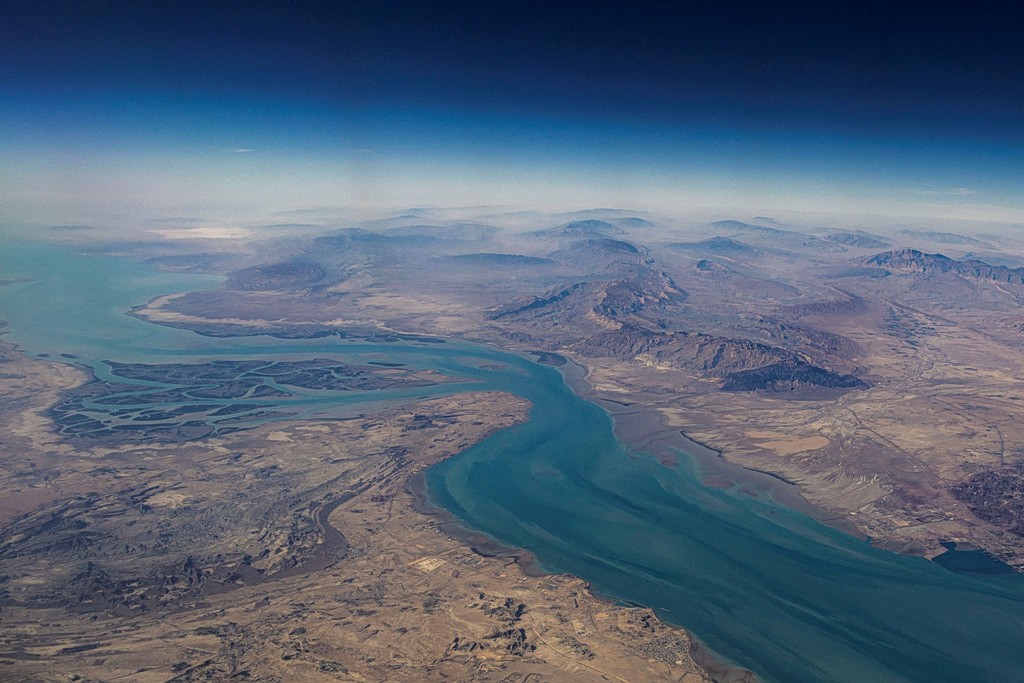
FILE PHOTO: An aerial view of the island of Qeshm, separated from the Iranian mainland by the Clarence Strait, in the Strait of Hormuz, December 10, 2023. REUTERS/Stringer/File Photo
This U.S.-centric idea ran counter to the market realities, according to industry executives.
Maritime war risks policies are sold mostly out of Lloyd’s of London, with foreign insurers covering foreign ships and cargo.
“There’s a whole ecosystem around war risks,” said David Smith, head of marine with broker McGill and Partners. “It’s very rare that U.S. insurers position themselves anywhere near that particular ecosystem.”
U.S. officials called London insurers and brokers, trying to figure out how the market operates, industry insiders said. Some have received calls asking for confidential data on the Lloyd’s market that participants have been reluctant to share.
The administration adapted its plan on Friday after shipowners and insurers questioned its practicality. The DFC pivoted to proposing using the $20 billion as reinsurance, or coverage insurers can buy to offset certain risks.
This government-funded backstop will be fronted by Chubb, which will work with other American insurers, the DFC said Wednesday. Selling reinsurance helps get around the lack of U.S. insurers underwriting such risks directly.
“The structure reflects extensive conversations with insurers…and aligns with the current needs of the market,” a DFC official said.
Trump’s commitment to cover all maritime trade in the Gulf is also being rowed back. The federal reinsurance will be limited to ships that meet certain—as yet unspecified—criteria, a DFC official said.
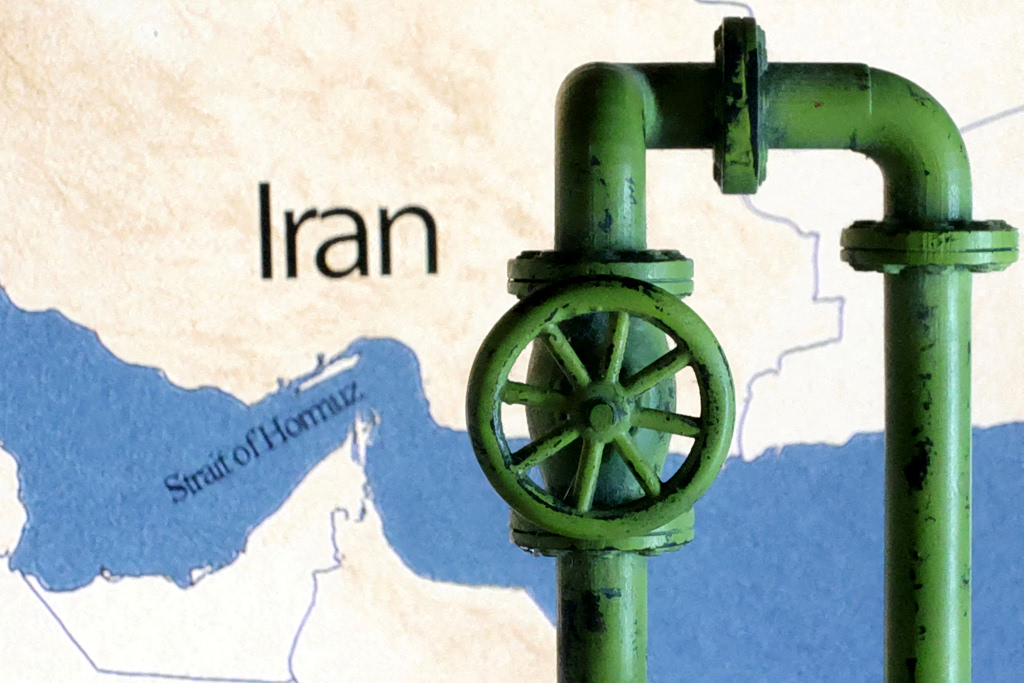
FILE PHOTO: A map showing the Strait of Hormuz and Iran is seen behind a 3D printed oil pipeline in this illustration taken June 22, 2025. REUTERS/Dado Ruvic/Illustration/File Photo
“There’s very little tangible information about any of the practicalities of who it would apply to and there’s a little bit of conflicting messaging,” said McGill’s Smith.
The financial safety net was meant to encourage ships to start sailing again through the Strait of Hormuz, a critical waterway for global oil and gas supplies.
A backlog of more than 1,000 ships unwilling to risk Iranian attacks by crossing the strait has sent the price of oil soaring, with far-reaching effects on consumer prices and stock markets across the world.
A few ships made the crossing in recent days, some of them associated with Iranian oil. Most shipowners remain too wary to risk the passage.
Another reality is that the insurance safety net doesn’t address the core reason ships aren’t sailing, according to shipowners and insurance brokers.
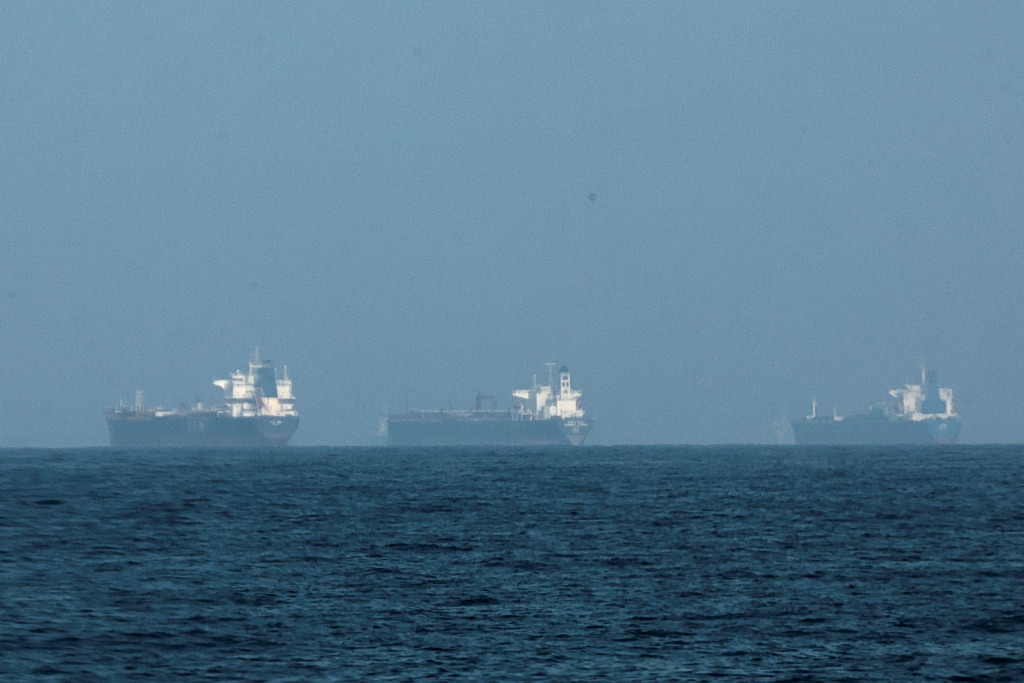
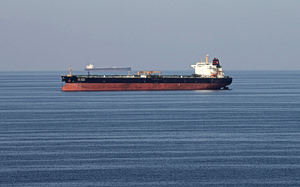
Tankers are seen off the coast of the Fujairah, as Iran vows to close the Strait of Hormuz, amid the U.S.-Israel conflict with Iran, in Fujairah, United Arab Emirates, March 3, 2026. REUTERS/Amr Alfiky
“It’s more about the safety of the crews rather than taking on insurance for damages,” said Jerry Kalogiratos, Chief Executive of Capital Clean Energy Carriers, which runs more than 20 LNG carriers.
Insurance for ships in the region is readily available, with offers being made but not taken up, according to brokers. “Lloyd’s is open for business,” said Marcus Baker, global head of marine and cargo at insurance broker Marsh.
The federal insurance safety net will likely need to be accompanied by convoys to kick-start traffic through the strait, unless Iran ceases hostilities, according to insurance brokers.
“I suspect that anything that happens with a DFC will also require some kind of naval support,” said Baker. “And that in itself is not without its challenges.”
It isn’t clear what shipping the convoys suggested by Trump would cover, or when that protection will be offered.
The plan could help get ships going again, once the physical dangers are reduced to a level that shipowners can accept, insurance brokers said. The federal program could help cap prices in the market.
The conflict has sent rates soaring. It typically now costs 1% to 2% of the ship’s value to insure a vessel in the Gulf—with any vessels linked to the U.S. or Israel at the top end of the range—brokers said. That compares with around 0.25% in peacetime.