
 Μake us preferred on Google
 Leonard Nones had a long, successful career as a photographer, shooting covers for GQ of legends Mickey Mantle, Neil Simon and Robert Goulet. His March 1966 cover featured President Lyndon B. Johnson.
In the late 1980s, he fell and broke his neck, becoming temporarily paralyzed. “I was a wreck,” says Nones. He stopped working, sold his equipment, traveled with his wife and enjoyed his grandchildren.
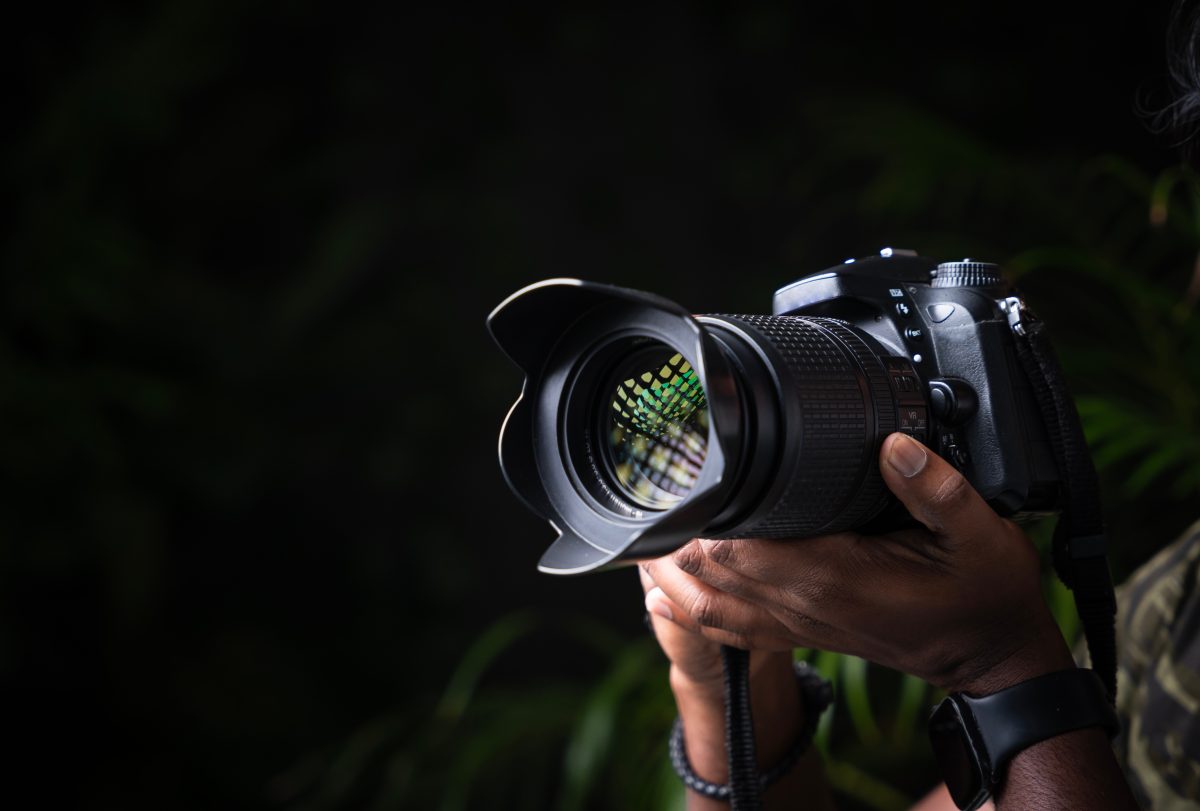
About three years ago, Nones, who is 95, began shooting portraits of people who live and work in his community. He had his first public show and compiled his photos in a book.
Many people give up on their life’s work because they feel it’s time . They’ve worked hard and want to relax. An accident or illness makes work impossible or irrelevant. But some people retain a desire to pursue their passion into their later years . The question is how to rekindle it.
Returning to a talent or skill late in life depends on internal factors: your drive, ability and willingness to pick something back up. External factors play a role, as well.
New surroundings can rekindle creativity, while embracing new technology can make some physical tasks easier. An invitation can spark embers. A friend, new acquaintance or former colleague hears about your skills and requests them.
Nones had both a changed venue and an invitation.
Before his accident, Nones was a freelance photographer who excelled because he pushed himself, doing whatever it took to get the right shot. He traveled extensively, posing models in markets of Ecuador, harbors in Portugal and among ruins in Greece.
One time, he stood at the open door of a DC-3 plane to capture a case of whisky being dropped on the peak of Mount Kilimanjaro for a Canadian Club ad . He hired a helicopter pilot to get close-ups of the Statue of Liberty.
He was talented but always worried about getting the next assignment, an apprehension that loomed larger as he aged. He remembers working with two art directors, who were in their 20s, shortly before his accident. “I was 58,” he says. “We were talking a different language. I felt like an old man.”
After the accident, Nones felt even older. He spent two months in the hospital and several months afterward in physical therapy. As soon as he felt able, he took a couple of assignments that weren’t physically demanding, but then gave up. He lost his confidence.
“I was scared,” he says. “Did I satisfy the requirements of the agency or magazine? I wasn’t sure what I was capable of doing.”
Nones went on disability at 61. After his wife died in 2020, he moved into an apartment at RiverSpring Living, a senior-living community in New York. He made friends, swam twice a week and saw his daughters and grandchildren often.
The new environment proved to be fertile ground to rediscover his creativity, something that isn’t uncommon.
“Interest and ability could be revived in a changed venue with new subject matter,” says Dean Keith Simonton , a distinguished professor emeritus at the University of California, Davis, who has written books on creativity and innovation.
He adds that unfortunate events or unexpected injuries can undermine motivation but don’t have to cut a creative life short.
One afternoon, Nones met Emiye Alene , a neighbor’s home-care aide. They talked. She asked what he did for a living. He said he was a photographer. Alene, who is Ethiopian, had a cultural gown and asked Nones if he would take a photo of her wearing it.
He did. She was happy. “My mother said I looked like the Queen of Sheba,” says Alene.
That simple request was the invitation Nones needed to return to the work he loved. “It takes someone to ask,” says Ruth Finkelstein , executive director of the Brookdale Center for Healthy Aging at Hunter College in New York. Asking sends a message that people value your talents .
Unfortunately, she says, such invitations can become rare with age. People assume you no longer have that same desire or ability, even though creativity doesn’t necessarily diminish with time. In some cases, it actually deepens because people have more emotional depth to draw from and are less concerned about what others think.
“He saw the opportunity to become creative again,” says his daughter Margot Nones . Although the accident impaired her dad physically, he never lost his critical eye for detail, she says.
Inspired, Nones began photographing RiverSpring workers, from nurses to housekeepers, inviting them into a makeshift studio in the dining room. He asked them to bring their “tools”—broom, stethoscope, an oxygen tank—and posed them against a lightly wrinkled cloth backdrop with natural light. The series was displayed in a museum on the RiverSpring grounds.
Bill Hunt , a collector and curator of photography and longtime friend of Nones, described the debut as a “seeming burst of energy and clarity” from Nones.
On a recent morning, Nones took photos for a cookbook, shooting portraits of residents who submitted recipes for Romanian stuffed cabbage and gumbo, coaching them from his chair. “Lift your chin. Turn your nose just a little. Look at me. Smile. Good. Relax. That’s it.”
Afterward, he returned to his apartment and edited images on his computer, adjusting light and skin tone. “I wouldn’t be able to do this without digital photography,” he says. He bought a new inkjet printer and consulted ChatGPT for ideas on what to name a series of residents’ photos: “Portraits of Resilience.”
Flora Rosefsky loves the pictures of her husband, Bernie. “He captured a certain sweetness about him,” she says. That, says Nones, is gratifying.
His daughter Karen London says her dad has new energy. He uses Uber to go to concerts and museums and took one to the hospital to see his first great-grandchild. “He’s more engaged,” says London.
Nones never envisioned returning to serious photography. “I thought that was over,” he says.
Write to Clare Ansberry at clare.ansberry@wsj.com