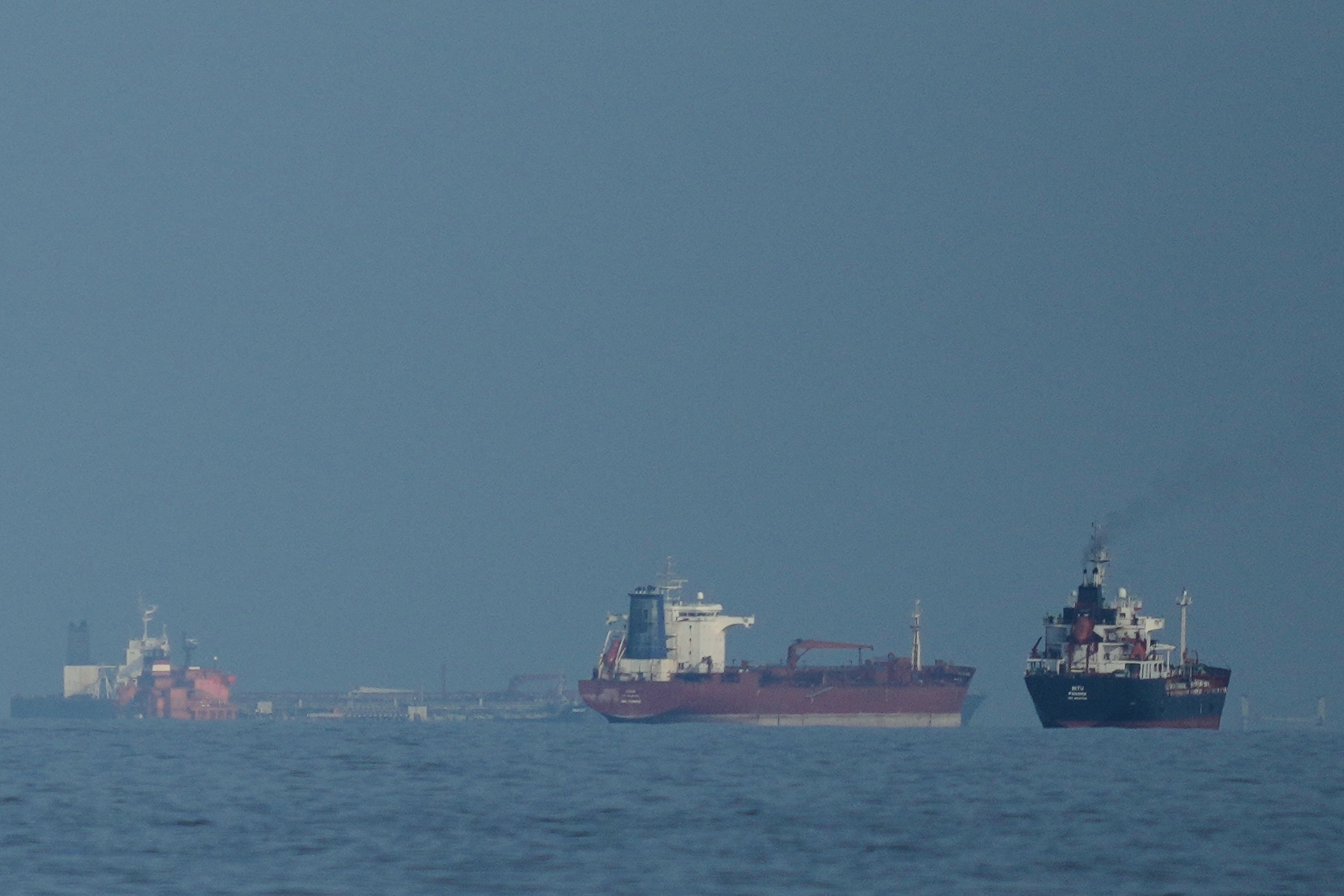
President Trump is pressing aides and allies to find ways to reopen the Strait of Hormuz as gas prices rise. His best bet might be the U.S. Marine Corps.
The Pentagon has deployed the 31st Marine Expeditionary Unit, a rapid-response force of about 2,200 Marines, to the Middle East, The Wall Street Journal reported . The U.S. could use the unit to seize one or more of the islands off the southern coast of Iran to use as leverage or as a base to counter Iranian attacks on commercial shipping, according to former and current U.S. officials. The unit, aboard the amphibious assault ship USS Tripoli, is slated to arrive in the Middle East from Japan in just over a week.
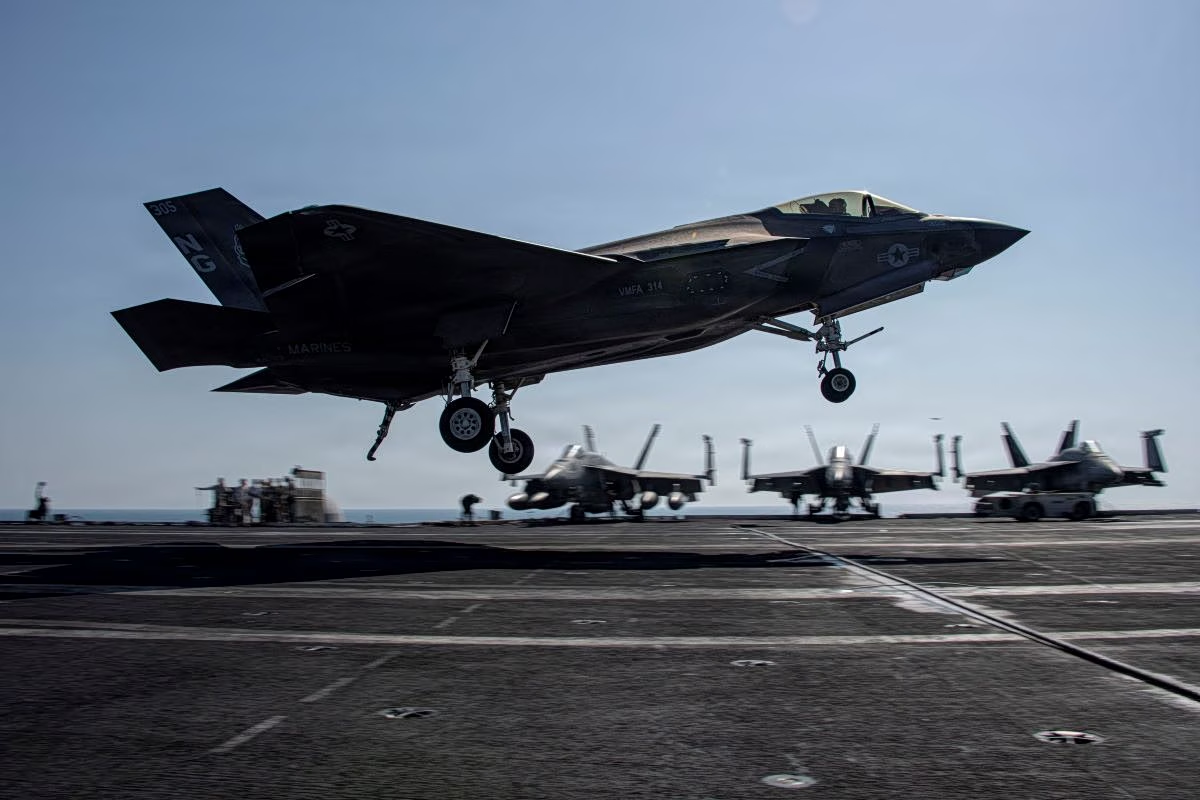
A Marine Expeditionary Unit is a self-sustained unit that operates off ships, using them as a mobile base. It is composed of four elements: a ground combat unit of Marine infantry, equipped with armored vehicles and artillery; an aviation unit of MV-22 Osprey tilt-rotor aircraft, helicopters and jet fighters such as the F-35B; a command team that coordinates the unit’s movements; and a logistics battalion that provides essential support, supply and equipment maintenance. It specializes in conducting raids by sea and by air.
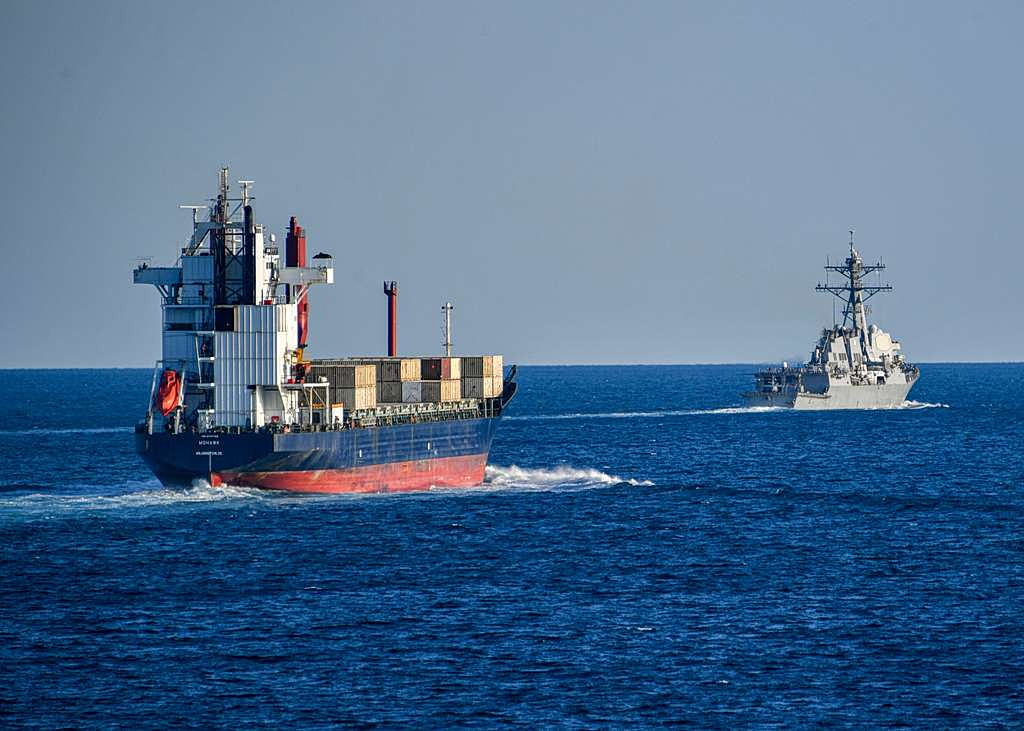
Iran has essentially closed the Strait of Hormuz, a narrow waterway through which about 20% of the world’s oil flows, with attacks on commercial traffic. The move has wreaked havoc on the global economy, driving up gas prices in the U.S. and elsewhere and posing a military and political problem for Trump .
U.S. forces are attempting to reopen the strait by targeting Tehran’s ability to threaten the chokepoint: its launch sites, production capability and warehouses of missiles, drones and sea mines. On Tuesday, the U.S. military dropped 5,000-pound, deep-penetrator munitions on hardened Iranian sites along the coastline that are used to house antiship cruise missiles, according to U.S. Central Command, which is responsible for U.S. forces in the Middle East.
Despite nearly three weeks of U.S. and Israeli strikes, Iran continues to target American forces and allies in the Middle East.
“The U.S. has flown thousands and thousands of sorties and yet we are not yet confident that all of these capabilities have been destroyed,” said Caitlin Talmadge , a nonresident senior fellow at the Brookings Institution and a professor at the Massachusetts Institute of Technology. “That does raise questions about whether they will ever be destroyed.”
The addition of a Marine Expeditionary Unit provides Trump with additional options to pressure Tehran, according to the former and current U.S. officials.
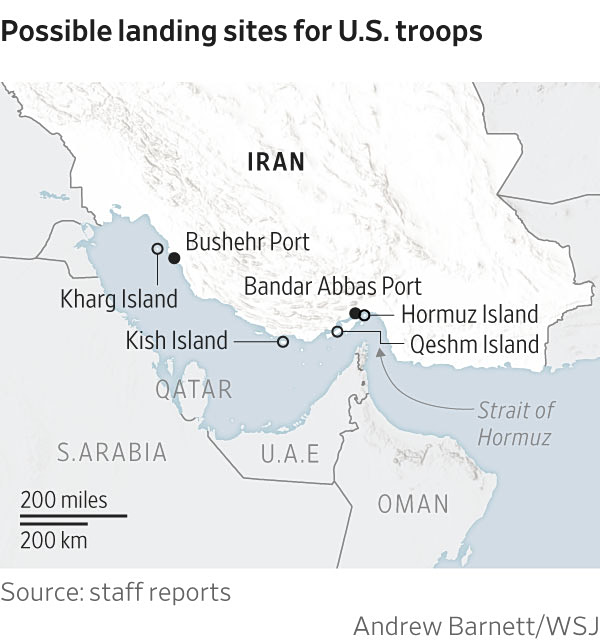
Iran controls a number of small islands off its southern coast, which the regime uses to host oil infrastructure, base missiles and conceal boats in caves. The most economically significant of those is Kharg Island, positioned at the northern end of the Gulf roughly 300 miles from the strait that serves as Iran’s main oil export hub. Trump threatened Monday to strike the island’s oil pipelines, after a U.S. military attack last week destroyed key military facilities there.
Instead of destroying Kharg’s oil infrastructure, the Marines could seize the island so the U.S. could use it as leverage to reopen the strai t , according to experts and former officials.
“Kharg Island, 90% of their oil comes through there. So you’ve got really two choices,” said retired Gen. Frank McKenzie , the former commander of U.S. Central Command. “You can destroy the oil infrastructure, which would give irrevocable damage to the Iranian economy and the global economy, or you could seize it to use as a bargaining chip, which doesn’t then permanently degrade the world economy.”
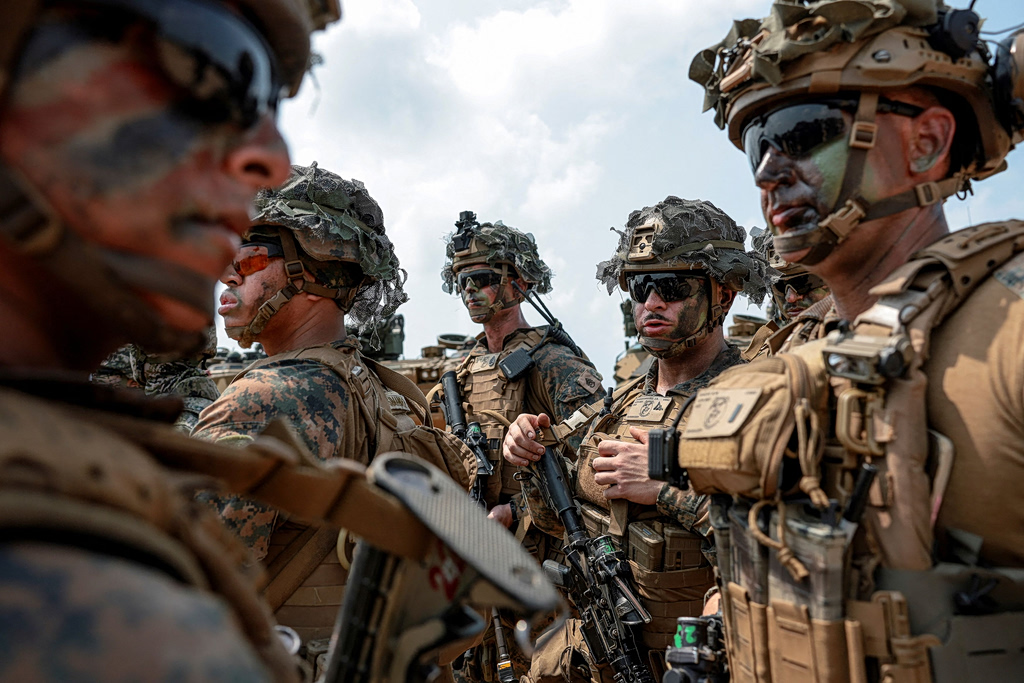
U.S. marines participate in an amphibious assault exercise as part of the “Cobra Gold 2026” (CG26) joint military exercise at a military base in Chonburi province, Thailand, February 26, 2026. REUTERS/Chalinee Thirasupa
Such a raid could be accomplished by sea, an operation that would involve the USS Tripoli launching ship-to-shore vessels carrying Marines and equipment that can land directly on the shore. Or it could be done primarily by air, using Marines aboard F-35Bs and helicopters designed to land without a runway. The aircraft could be launched from the ships or from nearby Gulf countries, if those partners provide overflight and basing rights.
The Marines might also be deployed to seize any of the other islands inside the strait itself. From there, U.S. forces would be strategically positioned to interdict Iranian fast boats and shoot down missiles threatening traffic through the strait, said retired Vice Adm. John Miller , who formerly commanded U.S. Naval Forces Central.
One strategic target could be Qeshm Island. Large and arrow-shaped, it sits at the mouth of the strait and hosts Iranian naval vessels and missiles in underground tunnels. It is also home to a large desalination plant, which Iran accused the U.S. of attacking. Its size and location allows Tehran to control the flow of ships in and out of the strait.
The Marines could also potentially be sent to seize Kish Island, a tiny economic hub west of Qeshm that hosts an airport, or rocky Hormuz Island, east of Qeshm, where Tehran docks small attack ships.
“A lot of these have some military presence that are highly fortified, or some of them are just empty former places they used to have during the Shah era,” said Nicole Grajewski, an assistant professor at Sciences Po’s Center for International Research and a nonresident scholar in the Nuclear Policy Program at the Carnegie Endowment for International Peace.
Positioning Marines on islands off Iran’s coast, rather than inside Iran itself, could be a loophole that would allow Trump to claim he has kept his promise not to put American boots on the ground in Iran.
“I don’t see them in Iran proper,” Miller said. “I think if you’re going to put them anywhere, the place where it would be on some of the islands that are around Iran, in the Gulf, that might give you some advantage from a tactical sense for a period of time.”
Write to Lara Seligman at lara.seligman@wsj.com