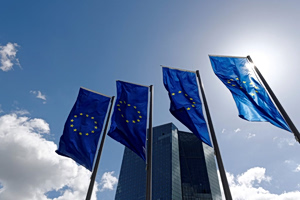
We are privileged because of living in a society like Europe. But our daily world, with its familiar framework is changing and so the European Union has to adopt to these changes.
At first glance, the EU does not play a dominant role in our everyday lives. But if we step a little closer and take a proper look at the EU as an institution and association, we quickly realize that this is actually not the case. Although each member state decides how directives are adhered to exactly and how recommendations are implemented precisely, the European Commission and the Parliament provide the framework for national legislation; whether it’s trade, climate, or immigration policy. The fact is: the EU provides us with support, so to speak, for peaceful coexistence based on similar values. A union that works for and with each other. And why do I know all this? Because I have taken a closer look at the European Union, on my own initiative.
Because, let’s be honest: which teenager could say exactly what the goals of the European Union are without prior information or research? Probably hardly any. And this is where the core problem lies: in the field of EU awareness and thus democracy in Europe.
Even though democracy promises clarification and also participation for everyone, not all citizens are equally heard and included. I realize that, especially in such a large institution as the EU, it is not possible to listen to every single voice and that not every single opinion can be implemented. Everyone tries to find the greatest common compromise, which is, after all, the principle of democracy. But in my opinion, it’s a little different when it comes to young people.
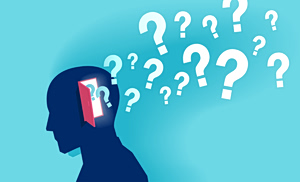
I often feel that many young people in Europe lack a connection to Europe, to the European Union. They seem to feel distant from political decision-making, even though many of the decisions made today will shape our future. Many young people have no idea what the EU actually does or what the goals of European policy are. Places like Brussels and Strasbourg are too far away to really establish in the minds of young Europeans, and debates seem too remote from reality to be taken serious. Decisions are too sterile and technical to really grasp the impact they may have on future generations.
But how can we change this? I think we all agree that we need to change something. For the EU to remain a democratic union in ten, fifteen, or fifty years’ time, we need to include young people. We must not only enable them to vote from the age of 16, as is already the case in the elections of the European Parliament, but we must also start informing the young generation about the EU in connection with this comparatively early voting age. We need to clarify the advantages, the democratic importance, and the opportunities, but also about the weaknesses and areas for improvement. And it is not enough to suddenly promote a parties European ideas in an election year.
The EU must evolve towards a more modern and forward-looking Union in order to be fit for the future. In my opinion, social media could be a great opportunity here. The rapid changes of recent years—and social media is definitely one of these changes—are not necessarily bad; rather, they can offer an opportunity to change existing systems and processes. Whether it’s TikTok, Snapchat, or Instagram, young people today increasingly make up their minds based on all these channels, using social media as their main source of information. So, in order to be part of this cosmos, part of the news world, and above all part of the cognitive and conscious memory of young people in Europe, social media and an increased social media presence are almost indispensable to settle an European awareness. To appeal to young people in a meaningful way, it is simply necessary to use social media in addition to traditional media.
Our world is changing in many ways, and the shift in understanding of the EU is just one of many examples. While my parents slowly but surely grew to embrace the project of a shared democracy, I am growing up with an incomparable sense of democratic values. For me, it is normal that institutions such as the EU exist; I hardly notice them in my everyday life. This is because our view of Europe is changing. Away from “Wow, this EU institution is unique, what advantages does it bring us?” to “EU, what is it actually and do we even need something like that?” It is important to recognize this change, to make sure that European values are not taken for granted and that indifference not to take hold.
It is important to think about the future and educate young people about Europe in the best possible way, to create a shared “feeling of being European”. This will secure Europe’s future so that the European Union can continue to function as a common and, above all, democratic institution in the future.