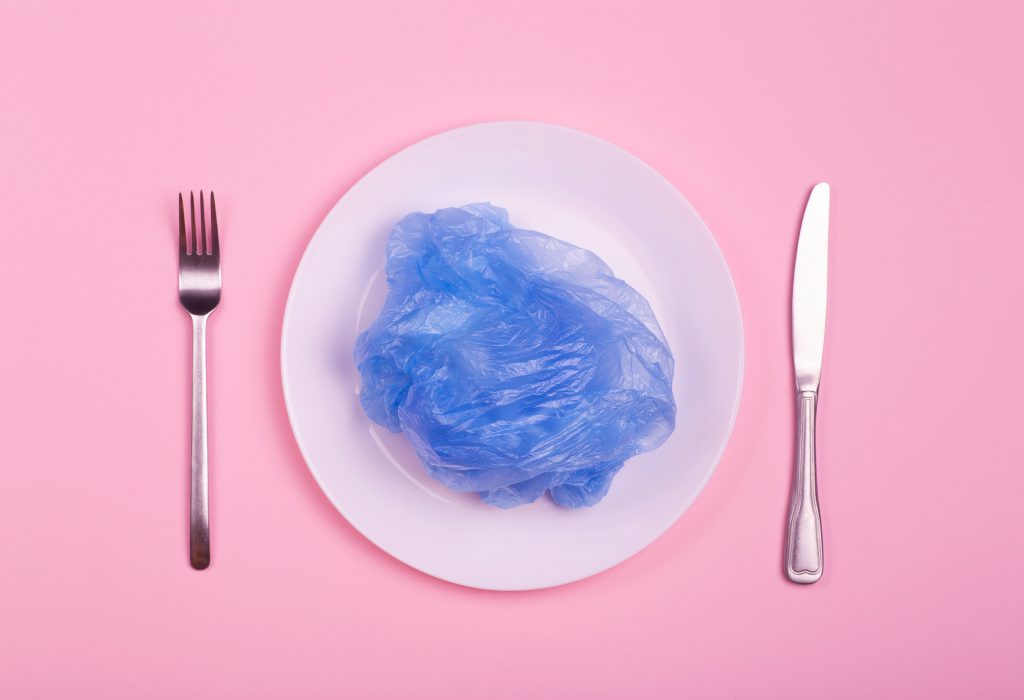

Can we live without plastic? Packaging for our food, milk, water, toothbrushes and liquid soap; our cosmetics, the coffee we drink and, of course, our plastic straws (which are making a tentative comeback). Our mobile phone case, our home phone, our personal computer, our shopping bag, even the material out of which most of our clothes and shoes are made.
Listening to the endless everyday use of plastic can cause anything from a headache to a full-blown panic attack. And as the scientific literature focuses on the damage microplastics could potentially do to the human body and the harm all the different forms of plastic use definitely do to the environment, we come up against a worrying realization:
Plastic is not only all around us; it is seemingly impossible to avoid!
Unfortunately, despite plastic pollution being one of the biggest environmental problems of our time, far from decreasing, our dependence on plastics is increasing exponentially. Apart from plastics now being found inside the human body, with consequences that have yet to be fully evaluated medically and scientifically, most of the plastics we use are still not recycled, resulting in mountains of toxic garbage at best, and poisonous waste leaking into the environment with devastating consequences at worst.
Some discouraging facts
The evidence from the latest surveys is discouraging. We have created more plastic in the last decade than we did in the entire 20th century. 50% of the plastic that passes through our hands is used only once and then discarded. The amount of plastic thrown into the trash each year could cover the entire surface of the earth… four times over. Every year, around 500 billion plastic bags are used worldwide. That’s more than a million every minute.
As Achilleas Pletharas, Head of Footprint Reduction Programs at WWF Hellas, told TO BHMA, “Plastic pollution is an enormous problem. It is estimated that almost 11,500 tonnes of plastic waste is released into the environment every year in Greece. We have also estimated that every person in Greece produces around 68 kg of plastic waste every year. The bulk of this waste is plastic packaging, which accounts for about 30-35 kg per inhabitant. It includes everything, from food packaging and product packaging to plastic cups and bottles… plastics are everywhere we look.”
Plastic bags
The use of plastic packaging is so widespread, even those who are ecologically aware find it very hard to avoid its use.
According to Greenpeace, 4.3 billion plastic bags, 2 billion plastic bottles for water and soft drinks, and 300 billion plastic coffee cups are used in Greece every year. Up to 300,000 tonnes of plastic packaging is also produced, but only a small percentage of that is recycled.
The mass production of plastics began in the 1940s. Made from the chemical by-products of hydrocarbon refining, plastic has two main advantages: it is scandalously cheap to produce, and it is extremely convenient to use. Unfortunately, plastic also comes with an unsustainable environmental cost, amounting to nothing short of a planetary time bomb in which objects used for seconds require little short of eons to degrade. Whether it’s a garden chair or a takeaway box, the fate of the 9 billion tonnes of plastic that humans have discarded since 1950 is roughly the same: it all still exists somewhere, in some form.
Microplastics
In the 1980s, the world began to grow increasingly aware of the problems caused by plastic disposal. Microplastics – a term that came into use in 2004 – were discovered in the stomachs of newborn albatross chicks off the coast of Hawaii, in the sea off Long Island, and in the digestive systems of fish.

Women clean up the sand of Vilar beach after millions of plastic pellets washed up on the Spanish northwestern Galicia region, triggering environmental concerns and a political blame game in Ribeira, Spain, January 8, 2024. REUTERS/Miguel Vidal
Which begged the question: what really happened to all the plastic we’d thrown away? In that decade, the petrochemical industry came up with a plan to counter the growing criticism against plastics by promoting recycling as a solution. But the idea that the majority of plastics could ever be effectively recycled has largely proved a pipe dream, as no efficient and cost-effective way has been found to convert most old plastics into new ones.
The most obvious difficulty stems from the material itself. Because ‘plastic’ is an all-encompassing term for thousands of different combinations of synthetic polymers that vary in their chemical profile and additives. One recycling expert likened plastics to cheese: just as you can’t melt mozzarella and hope to produce parmesan, so it’s impossible to cut up and reduce polyethylene and produce polystyrene, polypropylene, or polyvinyl chloride.
Three critical axes
As Pletharas points out, the actions to tackle plastic dependence are structured around two primary axes: “The first relates to policy-making, and the second to what citizens themselves can do.”
“In policy terms, Greek Law 736 from 2020 addresses the reduction of plastic pollution. Sadly, we note with regret that five years on, the law is becoming increasingly ineffective. It was better implemented in the first year than in those that followed, and it now seems to have lost its momentum altogether. And without any progress being made on a number of key measures, such as the banning of certain items like plastic cutlery and plastic straws.”
The second axis is what we ourselves can do to reduce our dependence on plastic. “There are few surprises here. What we tell people is that they can start with the really simple things: a thermos to put their coffee in, taking their own multi-purpose bag when they go to the supermarket, and preferring fresh produce to over-processed foodstuffs, which almost always come in plastic packaging. We also advice people to shop mindfully. To say no to fast fashion more often, as a very large proportion of clothing today is made of polyester, which is plastic and releases large quantities of microplastics into the environment every time it’s washed,” he notes.
Let’s end with a statement rather than a conclusion: Scientists estimate that by 2050, the seas will contain more plastic waste than fish…