The world’s oceans absorbed a record amount of heat in 2025, adding to changes in sea level, water chemistry and marine ecosystems, according to the latest assessment from the EU’s Copernicus Marine Service.
The 10th Copernicus Ocean State Report, published Sept. 30, estimates that the oceans gained approximately 23 zettajoules of heat during 2025. That is nearly 40 times the total amount of energy used by humanity during the year.
The figure measures heat stored in the ocean, not surface temperature alone. Oceans absorb approximately 90% of the excess heat trapped in the Earth’s climate system by greenhouse gases, making ocean heat one of the clearest indicators of long-term climate change.
“The ocean is transforming before our eyes,” said Pierre Bahurel, director general of Mercator Ocean International in the report, which implements the Copernicus Marine Service. “Warming, rising seas and ecosystem degradation are interconnected signs of significant and long-term change.”
Seas Are Rising Faster
Global mean sea level rose at an average rate of approximately 3.8 millimeters a year between 1999 and 2025, according to the report. The rate increased to 4.2 millimeters a year during the more recent 2012-2025 period.
The acceleration increases the exposure of coastal communities to flooding, erosion and storm surges. Its local effects vary because of currents, winds and the rising or sinking of individual coastlines.

Kosim Uddin, 50, looks toward the site of his vanished home as he poses for a picture on an island in the Brahmaputra River, where he recently relocated due to erosion, in Kurigram, Bangladesh, October 29, 2025. REUTERS/Mohammad Ponir Hossain TPX IMAGES OF THE DAY
The report also found that the ocean became approximately 17% more acidic between 1985 and 2025. Acidification occurs as seawater absorbs carbon dioxide, altering ocean chemistry and making it more difficult for corals, shellfish and some plankton to build and maintain shells or skeletons.
Naturally salty areas, including much of the Atlantic and parts of the Pacific, have generally become saltier, while less saline regions have become fresher. The widening contrast is evidence of an intensifying global water cycle.
Record Mediterranean Heat
The Mediterranean experienced more marine heatwave days in 2024 than in any other year during the previous two decades. The report estimates that the sea as a whole is warming by approximately 0.32 degrees Celsius per decade.
Marine heatwaves can persist below the surface, extending their effects beyond the temperatures experienced by swimmers. They can disrupt fisheries, damage seagrass and coral habitats, encourage the spread of heat-tolerant species and intensify nighttime heat in nearby coastal communities.
The report found that sea-level rise is accelerating in the western Mediterranean, while changes in its eastern waters remain more uneven.
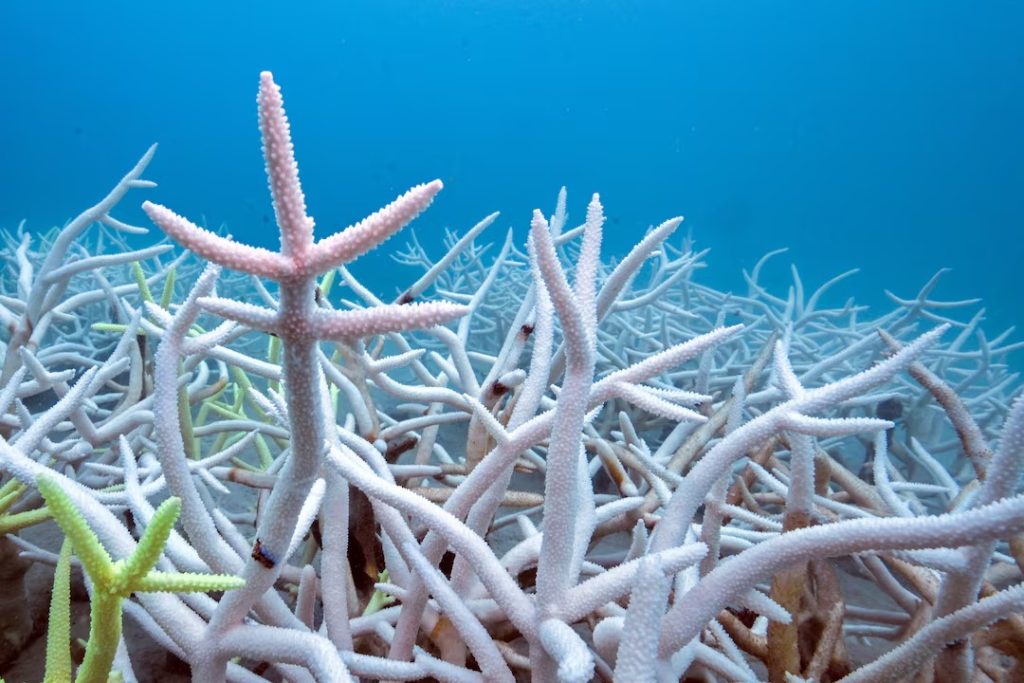
Image of coral bleaching. Credits: Reuters
Ecosystems Under Pressure
The assessment documents ecological consequences extending well beyond Europe. Between January 2023 and September 2025, 84% of the world’s coral reefs experienced heat stress at levels capable of causing bleaching.
Nearly 5% of the global ocean has also experienced persistent changes in phytoplankton growth patterns during the past 30 years. Phytoplankton form the base of marine food webs and play an important role in the exchange of carbon between the atmosphere and ocean.
The phytoplankton analysis was described as a new monitoring approach, however, and its authors acknowledged limitations. Satellite observations become sparse at high latitudes, and the study excluded polar and subpolar waters from its classification.
The Ocean State Report brings together satellite observations, measurements taken at sea, ocean reanalyses and peer-reviewed contributions from more than 120 scientists.