
 Μake us preferred on Google
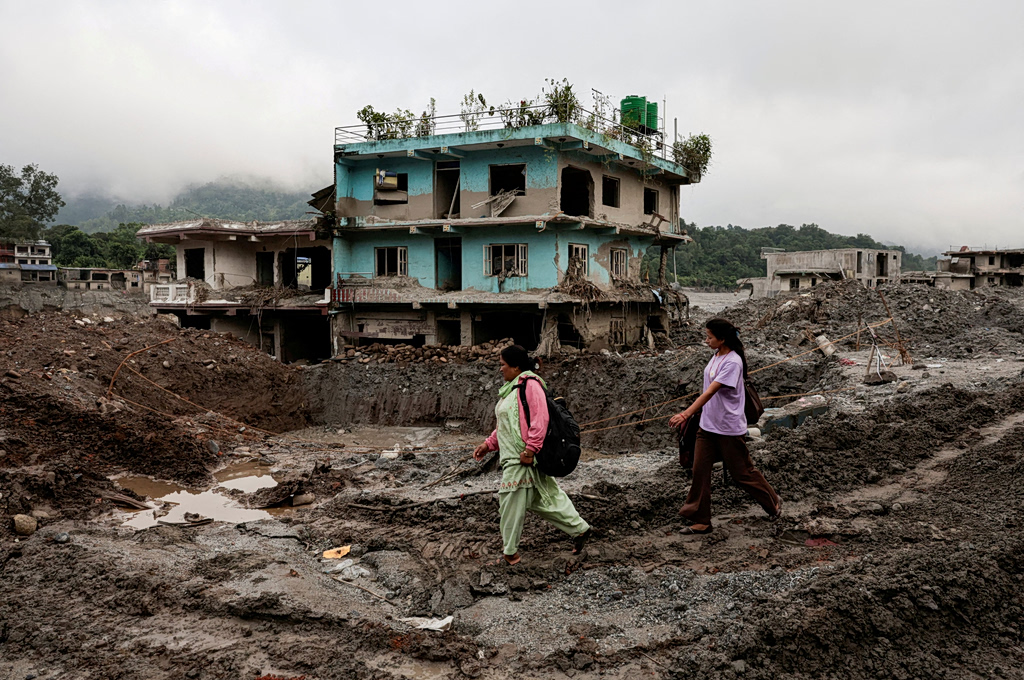
Against a backdrop of increasingly severe environmental and economic impacts from the climate crisis, and with international commitments still falling short of what is needed to curb global warming, the 31st United Nations Climate Change Conference (COP31) opens today, November 9, in Antalya, Türkiye.
Until November 20, representatives from more than 190 countries, government officials, scientists, businesses and environmental organizations will attempt to shape the next phase of global climate policy.
Alarm Bells for Natural Ecosystems
This year’s summit takes place ten years after the adoption of the Paris Agreement, which established limiting global temperature increases to 1.5°C above pre-industrial levels as a central objective.
However, greenhouse gas emissions trends and successive temperature records illustrate the continuing gap between political declarations and actual results.
Scientists now warn that a temporary breach of the 1.5°C threshold is extremely likely. This does not, however, mean that efforts to limit warming have lost their significance. The smaller and shorter any overshoot, the lower the risks to societies, economies and natural ecosystems.
Turning Climate Promises Into Action
The central objective of COP31 is to move the international community beyond new promises and toward implementing commitments already made.
The Turkish presidency aims to make this an “implementation COP,” emphasizing clean energy, electrification, methane emissions reductions, urban resilience and financing for climate adaptation.
The Unusual Türkiye-Australia Compromise
One distinctive feature of this year’s conference is the division of responsibilities between Türkiye and Australia.
Türkiye is hosting the summit and holds its presidency under Environment Minister Murat Kurum, while Australia, represented by Climate Change and Energy Minister Chris Bowen, is responsible for the formal negotiation process.
The arrangement follows a prolonged dispute between the two countries over hosting COP31 and represents an unusual compromise in international climate diplomacy.
Türkiye will lead the Action Agenda, which includes voluntary initiatives by governments, businesses, banks and other stakeholders. Australia, meanwhile, will coordinate the formal discussions on issues under negotiation.
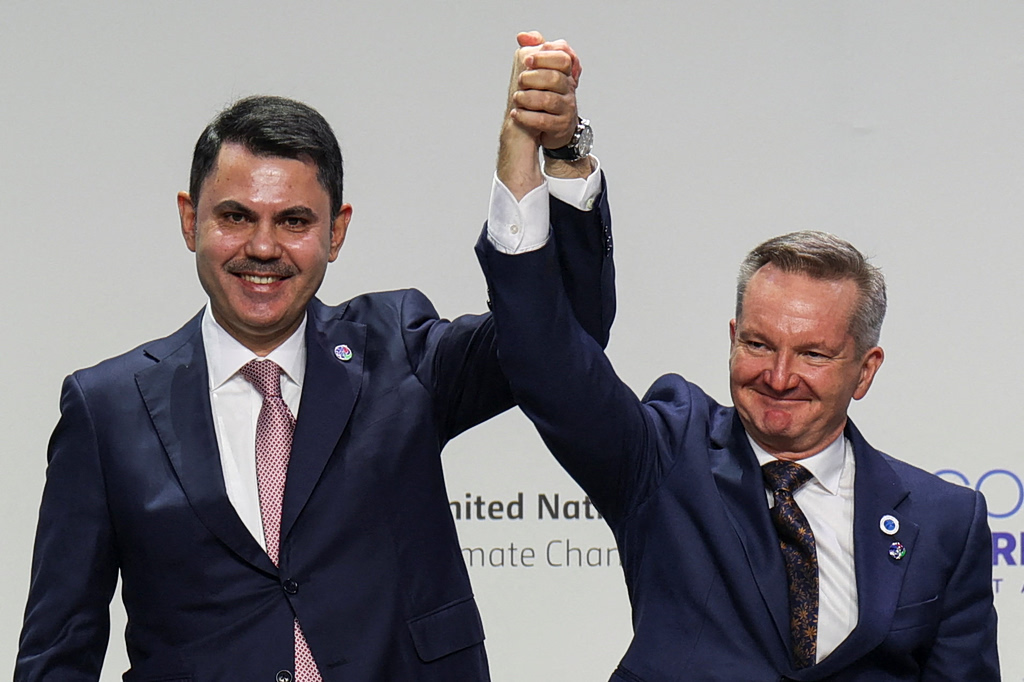
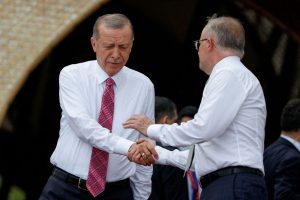
COP31 President Murat Kurum of Turkey celebrates with President of COP31 Negotiations Chris Bowen of Australia, on the day of the opening ceremony of the UN Climate Change Conference (COP31) in Antalya, Turkey, November 9, 2026. REUTERS/Murad Sezer
Amplifying the Voices of Pacific Island Nations
The compromise between Türkiye and Australia also provides for a stronger voice for Pacific island nations in climate negotiations.
These countries face particularly serious risks from climate change, as rising sea levels threaten coastlines, infrastructure and, in some cases, their very survival on their home territories.
The decision to hold preparatory meetings in these countries was intended to bring their concerns and needs to the forefront.
However, this division of responsibilities does not eliminate the contradictions. Both Türkiye and Australia have faced criticism over their dependence on coal, raising questions about whether countries aspiring to lead the climate transition are consistently implementing their own commitments.
The Absence of the United States
A significant factor shaping the conference is the absence of an official American delegation.
President Donald Trump’s administration has withdrawn the United States from the Paris Agreement and initiated the process of withdrawing from the United Nations Framework Convention on Climate Change.
The absence carries particular significance because the United States is the world’s second-largest economy and one of its largest greenhouse gas emitters.
The federal government’s withdrawal from international negotiations reduces opportunities for coordination and could influence the dynamics of future agreements.
This does not mean, however, that all American voices will be absent.
More than 100 representatives of state and local authorities, mayors, governors, scientists and organizations are expected to participate, seeking to maintain channels of cooperation with the international community.
Washington’s position also forms part of a broader debate over whether international climate cooperation can advance amid intense geopolitical tensions, energy insecurity and diverging priorities among major economies.
Protests and the People’s Climate Summit
Alongside the official COP31 proceedings, Antalya is preparing to host another summit, bringing together environmental organizations, trade unions and social movements.
The People’s Climate Summit will take place from November 14 to 18, attracting organizations and activists from around the world.
Protests are scheduled to begin on November 14, the Global Day of Action for Climate, with a march and large gathering in central Antalya.
The demonstration has been called by local labor and democracy groups, with trade unions, environmental organizations and human rights groups expected to participate.
According to the programme, participants will gather at 1 p.m. in Aydın Kanza Park before marching to Cumhuriyet Square, where a rally and concert are planned.
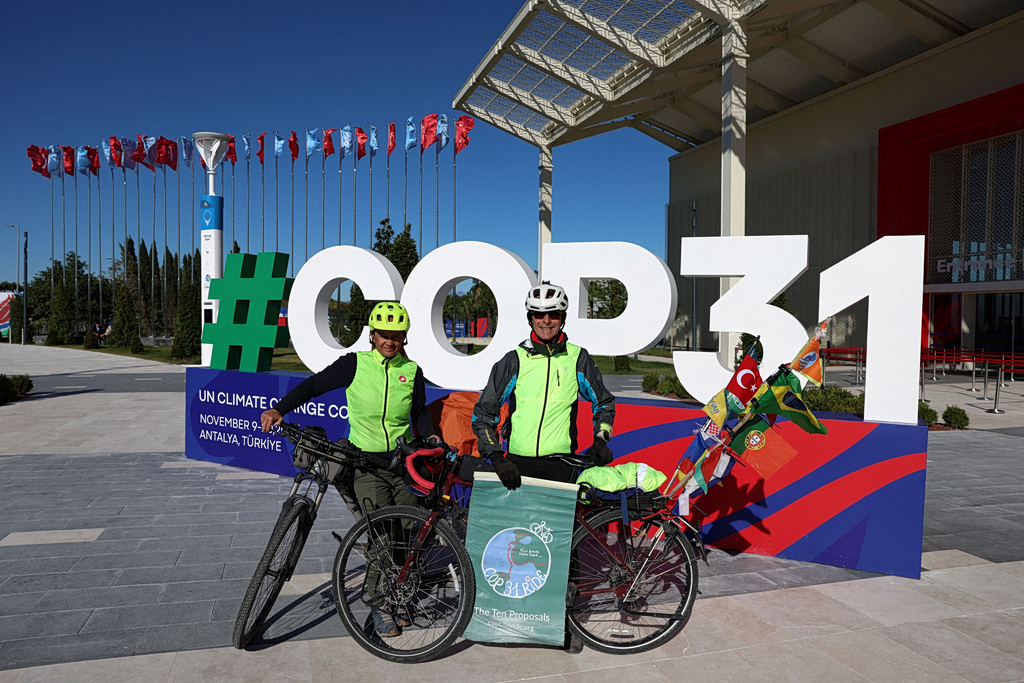
Environmental activists Christophe Bonneau of France and Ana Moreno of Brazil arrive on bicycles at the venue ahead of the United Nations climate change conference, known as COP31, in Antalya, Turkey, November 8, 2026. REUTERS/Murad Sezer
150 Events Aimed at Pressuring Governments
The parallel summit will feature approximately 150 events, discussions, workshops and cultural activities involving more than 130 organizations.
Its agenda includes phasing out fossil fuels, energy poverty, climate justice, protecting natural resources and financing vulnerable communities.
Peace, democracy, workers’ rights and protecting local communities will also feature prominently.
Organizers aim to pressure governments, arguing that international climate agreements must go beyond general commitments and include concrete measures and timelines.
Meetings are also planned to assess the official negotiations and determine whether the proposals being discussed can deliver meaningful change or are limited to public relations announcements.
However, holding these demonstrations in Türkiye has raised concerns about the freedom to protest.
According to Agence France-Presse (AFP), civil society organizations are concerned about restrictions imposed on public gatherings in recent years and the possibility of police intervention.
The arrests of thousands of people ahead of the NATO summit in Ankara last July have heightened these concerns.
The presence of social movements on Antalya’s streets is therefore expected to create another arena of confrontation alongside the official negotiations.
Organizers want to send the message that addressing the climate crisis cannot be the exclusive responsibility of governments and large corporations, but requires meaningful participation by citizens and communities experiencing its consequences.
The Major Sticking Point: Fossil Fuels
Moving away from coal, oil and natural gas remains one of the most difficult issues in international climate negotiations.
At COP28 in Dubai in 2023, countries agreed for the first time to include a reference to transitioning away from fossil fuels in a final agreement.
Since then, however, progress has been limited and disagreements remain intense.
In Antalya, the issue is expected to return through a nonbinding roadmap for transitioning toward low-emission economies.
The initiative builds on efforts launched in Brazil and the need to establish concrete steps toward reducing dependence on fossil fuels.
Türkiye’s “35 by 2035” Goal
Another focus is Türkiye’s proposed “35 by 2035” target.
The initiative aims to increase electricity’s share of total energy consumption to 35% by 2035, from approximately 23% today.
Achieving the target would require faster electrification of transportation, industry and other economic activities, alongside a substantial expansion of renewable energy.
Electrification alone, however, is insufficient.
If the additional electricity demand is met by fossil fuel power plants, the environmental benefits will be limited.
Experts therefore emphasize that electrification must be accompanied by cleaner electricity generation, investment in power grids and improvements in energy efficiency.
Particular attention is also being paid to reducing methane, a greenhouse gas with a much stronger warming effect than carbon dioxide over shorter periods.
Reducing leaks from oil and natural gas facilities, alongside improving waste management, represents an intervention capable of delivering relatively rapid results.
Who Will Pay for Adaptation?
One of the most contentious issues concerns financing for developing countries, which frequently face the most severe consequences of the climate crisis despite having contributed relatively little to historical global emissions.
Their needs extend beyond responding to disasters that have already occurred.
They also include building resilient infrastructure, protecting coastal areas, managing water resources and adapting agriculture to prolonged drought and extreme temperatures.
At COP29 in Baku, developed countries agreed to mobilize at least $300 billion annually by 2035 for developing economies, as part of a broader $1.3 trillion financing objective involving public and private funding.
At the following conference in Brazil, countries agreed to pursue a tripling of adaptation finance by 2035.
However, critical questions remain unresolved regarding the baseline used to calculate increases, funding sources and how the resources will be distributed.
The scale of the problem is also highlighted in a recent report by the United Nations Environment Programme.
Even tripling current international public adaptation finance would cover only 23% to 29% of developing countries’ needs.
Finding additional resources is therefore not merely an outstanding financial issue.
It is a prerequisite for countries on the front lines of climate impacts to protect their populations and economies.
Greece’s Participation and Cyprus
Greece is participating in COP31 under the leadership of Environment and Energy Minister Stavros Papastavrou.
The Greek delegation’s priorities center on European energy and climate policies, alongside the diplomatic dimension of the conference.
Athens’ intervention regarding the Republic of Cyprus’s participation in the conference’s preparatory proceedings is of particular interest.
According to a report by Greek outlet Energygame, Greece supported the position that all EU member states must participate on equal terms, objecting to Türkiye’s initial stance.
Coordinated pressure from Athens, Nicosia and European institutions eventually led to an invitation being extended to the president of the Republic of Cyprus, Nikos Christodoulides.
This development adds a diplomatic dimension to this year’s conference, illustrating how climate cooperation takes place in an environment where regional disputes and political balances continue to influence the functioning of international organizations.
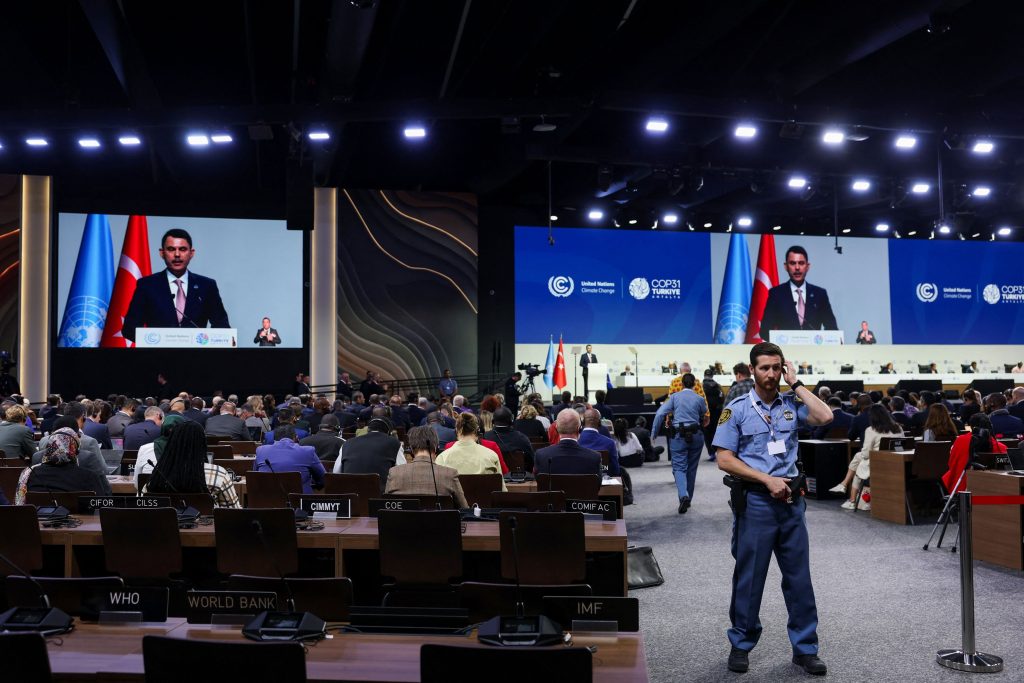
Members of the security team keep watch, as President of COP31 Murat Kurum of Turkey delivers a speech during the opening ceremony of the UN Climate Change Conference (COP31) in Antalya, Turkey, November 9, 2026. REUTERS/Murad Sezer
The Challenge of Implementation
Beyond the official negotiations, COP31 includes an extensive programme of initiatives covering clean energy, transportation, food security, resilient cities, industry and protecting natural ecosystems.
The aim is to connect government commitments with concrete initiatives undertaken by businesses, financial institutions, local authorities and civil society organizations.
Civil society is also expected to play an important role.
Alongside the conference proceedings, organizations and activists are planning events and demonstrations calling for clearer commitments to move away from fossil fuels and protect vulnerable populations.
The final outcome will depend on whether countries can agree on concrete steps, supported by timelines and sufficient resources.
COP31 is not being called upon to invent an entirely new global climate policy.
Its task is to demonstrate that agreements already signed can be translated into meaningful change.
That is Antalya’s central challenge: narrowing the gap between international declarations and the everyday reality of a warming planet whose consequences are becoming increasingly visible.