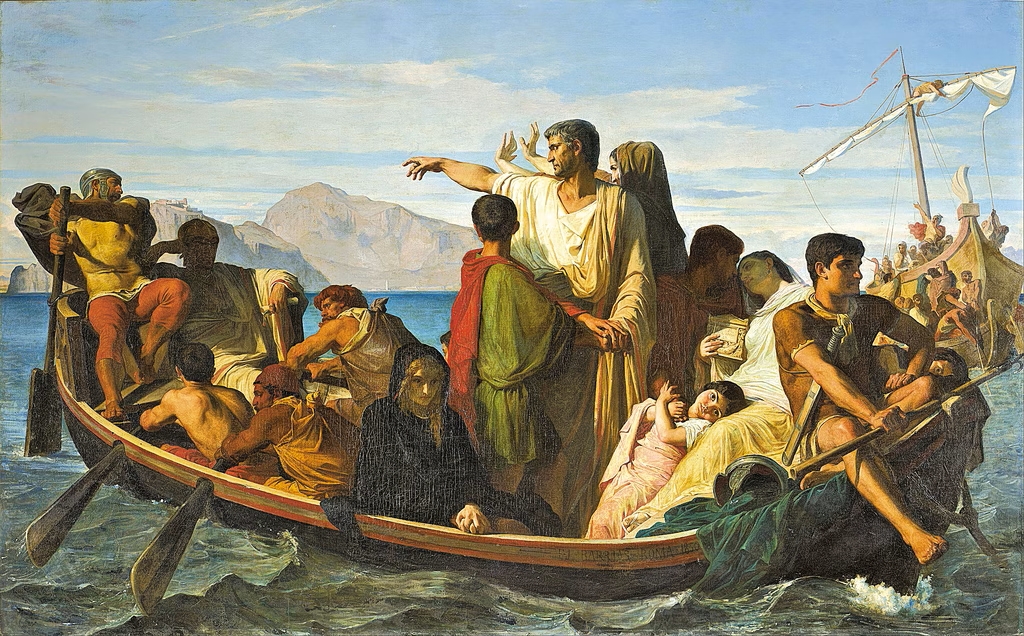
From the barren landscapes of Anafi and Gyaros to islands used for banishment under the Roman Empire, the Aegean Sea has long been more than a small archipelago of island communities. The sea’s geography has often rendered many of its islands and islets and ideal locations for forced displacement.
The Aegean’s more than two millennia of “exile history” is the subject of the conference “πλήρεις δ’ αἱ νῆσοι φυγάδων” — “The Islands Are Full of Fugitives — Exile, Flight and Deportation in the Aegean Islands”, which opens Friday in Ermoupoli, the vibrant city-like capital of Syros and administrative center of the Cyclades islands. The conference runs through Sunday.
Jointly organized by the National Bank of Greece’s Cultural Foundation, the Institute of Historical Research of the National Hellenic Research Foundation and the Cyclades Ephorate of Antiquities, the interdisciplinary conference brings together historians, anthropologists, archaeologists, architects and musicologists. It examines the use of the Aegean islands as places of isolation, exile and deportation, from antiquity through the Byzantine and Ottoman periods and into modern Greek history.
The conference also explores the apparent paradox of the Aegean as both an archipelago of isolated locations and a highly connected maritime network. The conference’s sessions will examine the legal and political conditions that produced island exile, the institutions involved in deportation and confinement and the ways exiles and host communities experienced and remembered the practice.
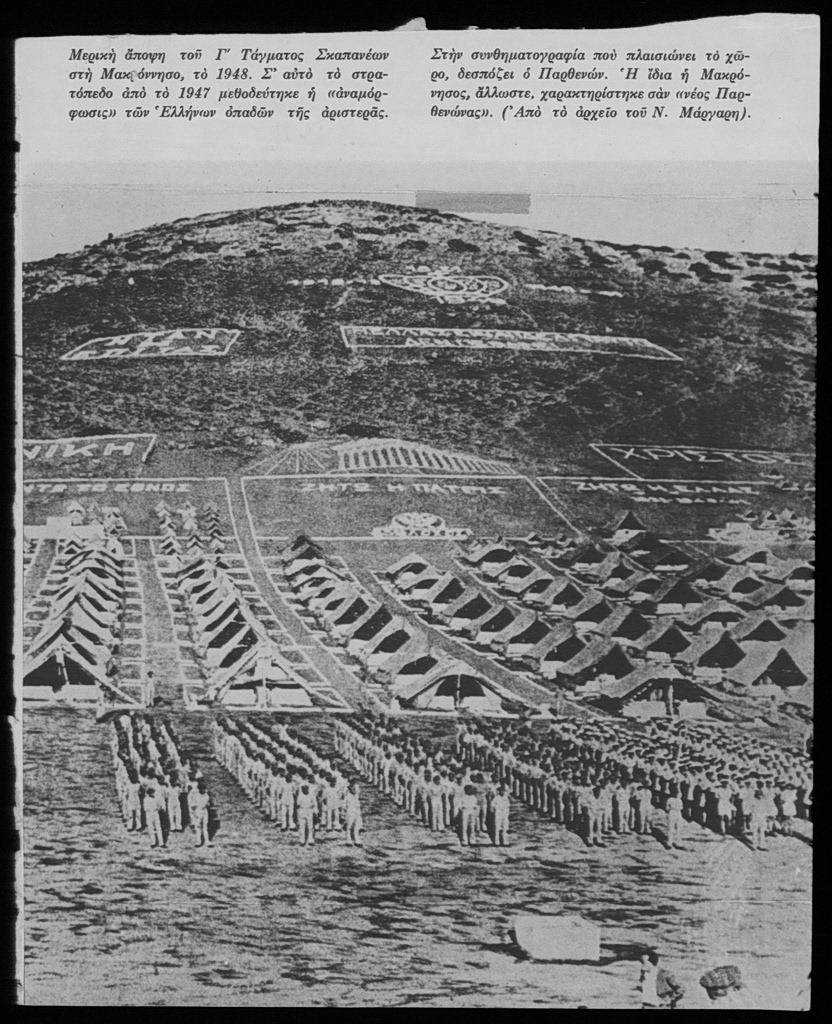
A black-and-white photograph, dated 1948, shows displaced military conscripts on the barren isle of Makronissos, off Cape Sounion, southeast of Athens.
Exile is particularly associated with modern Greek history, as the Aegean islands were repeatedly used as places of political displacement during the 20th century, particularly after the introduction of a landmark law in 1929, which criminalized certain forms of political activity and provided a legal basis for the prosecution and deportation of political opponents. Political exile continued through the Metaxas dictatorship, the German occupation and the post-Civil War period, and became a major instrument of repression during the military dictatorship of 1967-74.
However, island exile has much older roots.
In the Roman period, the system known as deportatio in insulam was used to banish individuals to designated islands. The Byzantine period likewise produced numerous examples of island exile involving political figures, state officials and members of the clergy considered opponents of imperial or ecclesiastical authority. Major Aegean islands such as Rhodes, Patmos and Chios became associated at different times with the displacement and confinement of such figures.
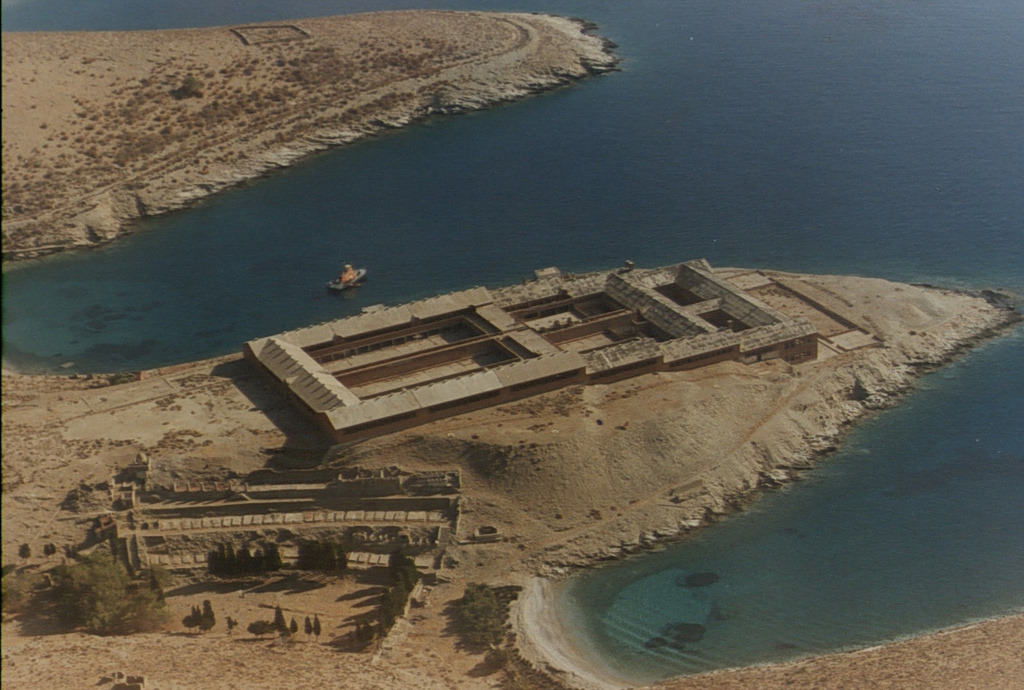
An aerial view of the main prison complex on the now uninhabited isle of Gyaros, part of the Cyclades chain in the central Aegean. Paper Photo Archive.
The rock island of Gyaros will be examined in depth, both as a historic place of exile and confinement and as a site of difficult heritage. The island became one of the most notorious places of political detention during the post-Civil War period and the junta era.
The conference will conclude Sunday with a field trip and guided tour of Gyaros, connecting the scholarly discussion with the physical landscape that remains one of the most powerful reminders of Greece’s history of political exile.