 Μake us preferred on Google
Tortured on the rooftop of the Bouboulinas Street security headquarters, smuggled out of Greece in the hidden compartment of a Volkswagen Beetle and flown out under a borrowed Welsh boy’s name, Petros Vlassis became one of the key witnesses whose testimony helped force the Greek dictatorship out of the Council of Europe. More than half a century later, the last surviving witness of that case looks back – and finds little to celebrate in the present.
________________________________________
“They showed malice and pettiness. They practised demagoguery, not investigation.”
That was how the Greek foreign minister vented his fury on 12 December 1969 at the Council of Europe, which had accused the military junta of torture. Unfortunately for him, the allegations about what went on at Bouboulinas Street did not rest on testimony alone. A young man named Petros Vlassis had already shown the marks of torture on his body to foreign envoys – before he ever gave evidence in Strasbourg.
In the months after the coup of 21 April 1967, Denmark, Norway, Sweden and the Netherlands had trained their sights on the regime through the Council of Europe, which began investigating complaints of human rights violations – first in general terms, and then, increasingly, of torture. The four countries went on to launch proceedings to expel Greece from the organisation, provoking the wrath of the junta’s foreign minister, Panagiotis Pipinelis, a former senior figure in earlier Greek governments.
“Instead of working to strengthen European unity, these countries are waging a religious war in the name of democratic orthodoxy,” Pipinelis declared angrily. On 12 December 1969, Greece walked out of the Council before it could be thrown out.
A decisive role in that outcome was played by Pericles Korovessis, Giannis Leloudas, Kitty Arseni, Georgios Mylonas and Petros Vlassis, who appeared before the Council of Europe’s European Commission of Human Rights and described the torture they had endured.
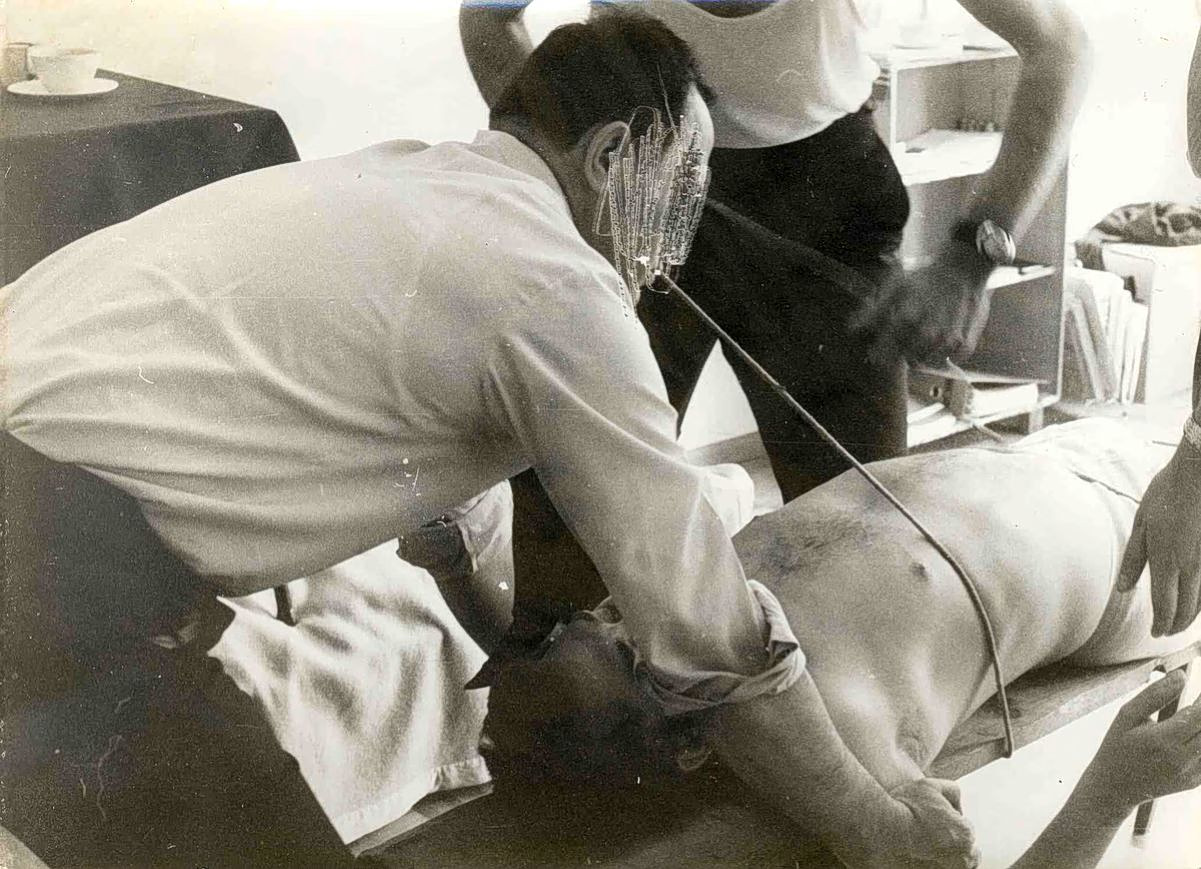
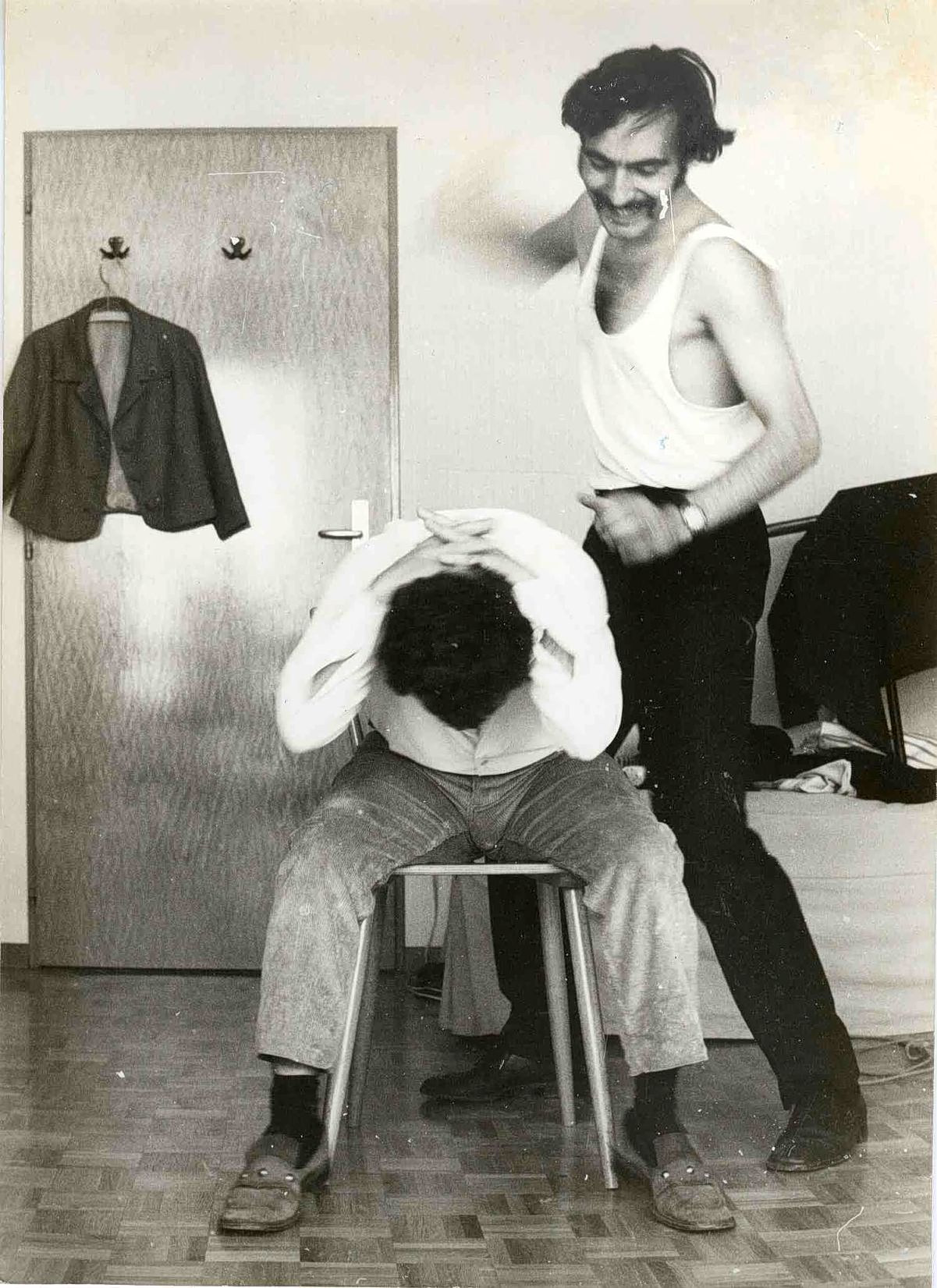
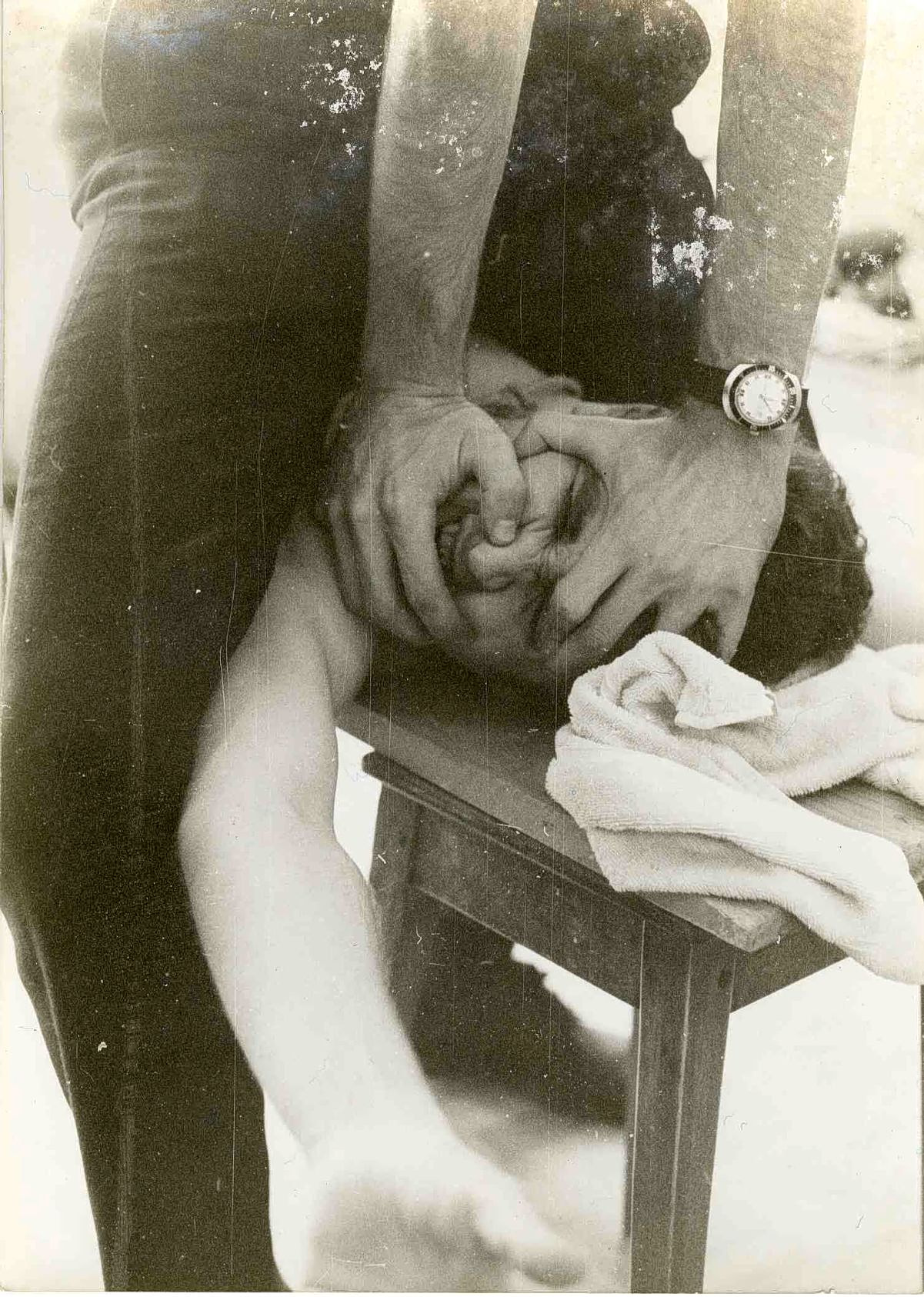
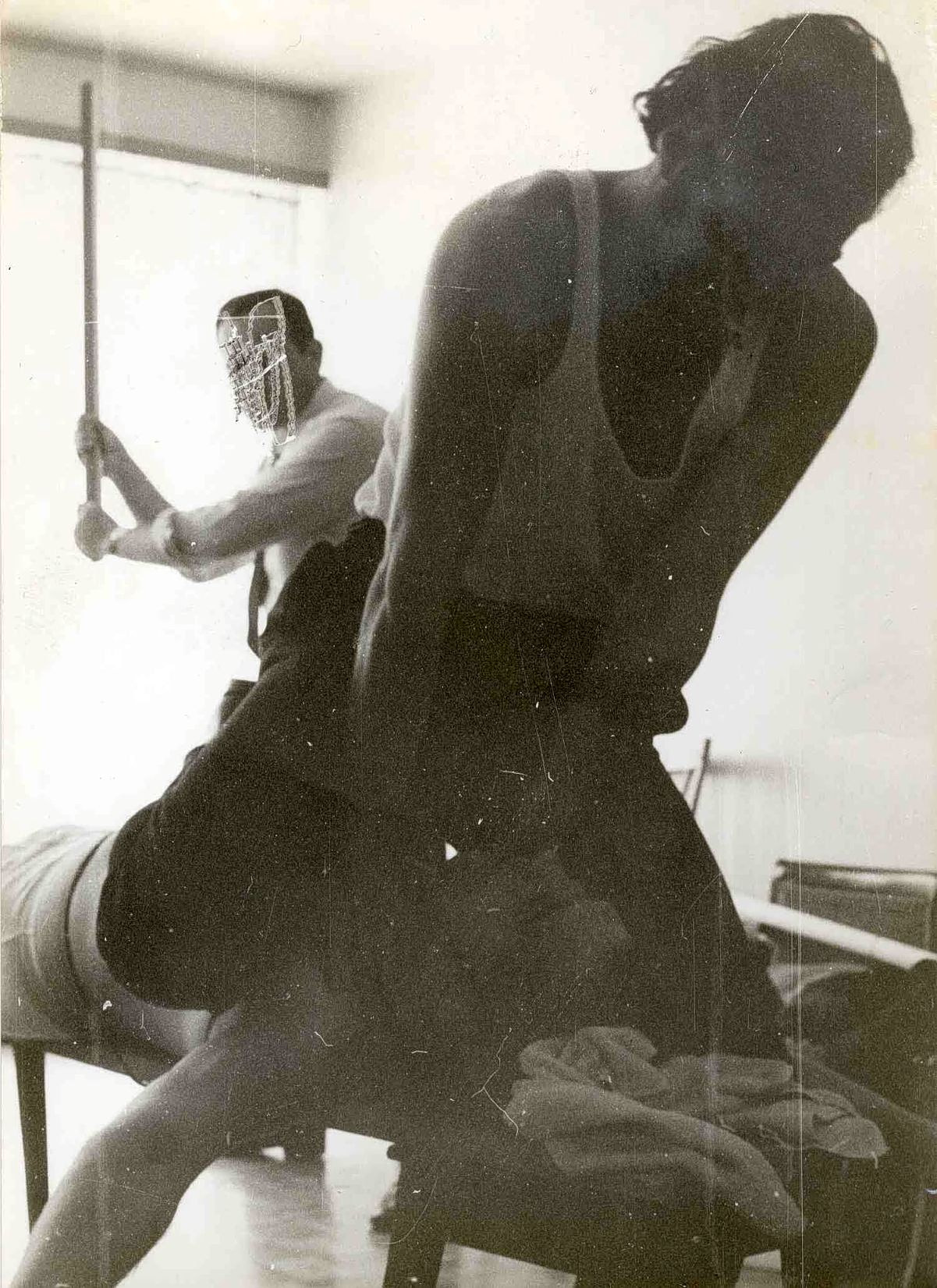
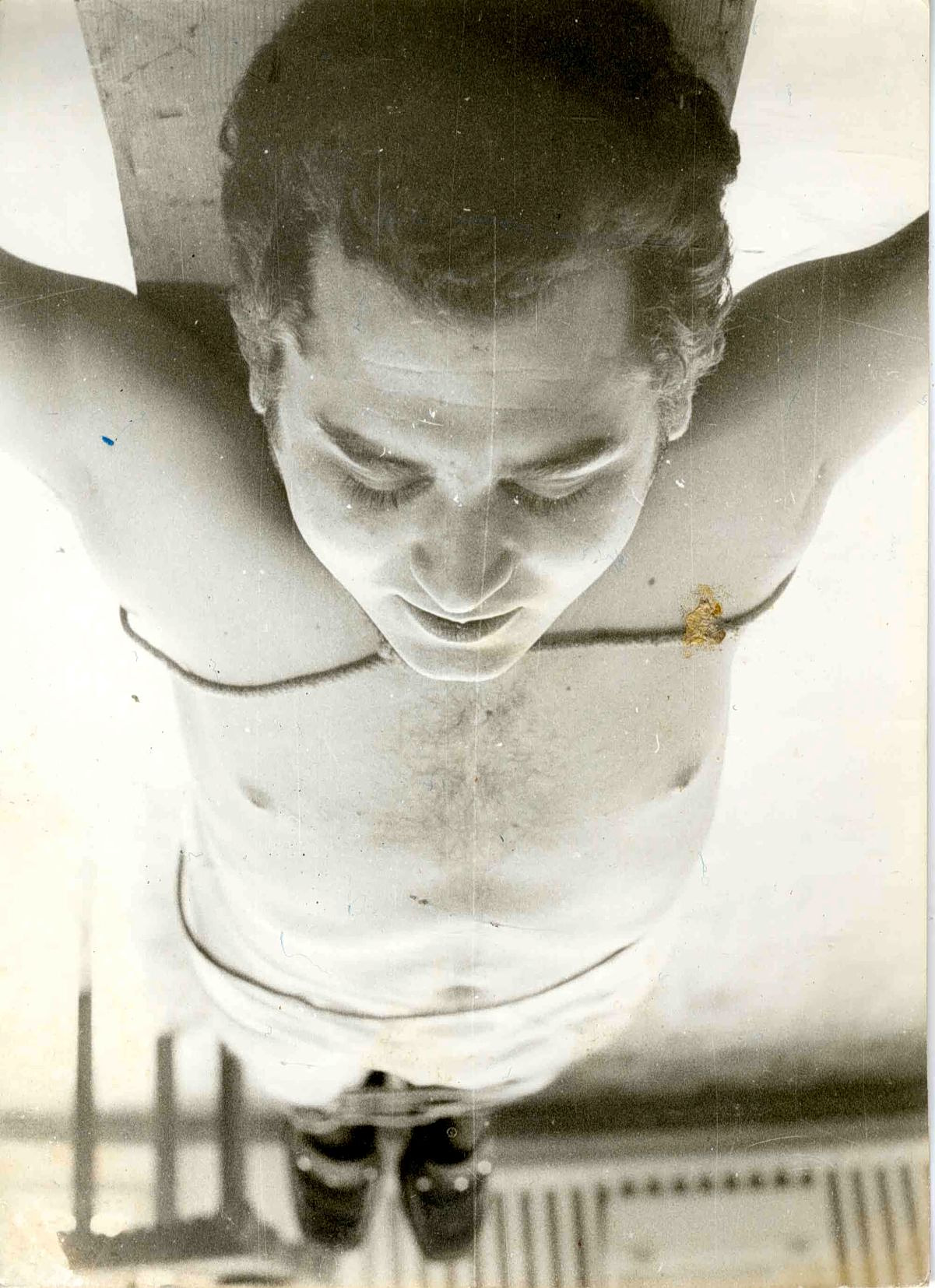
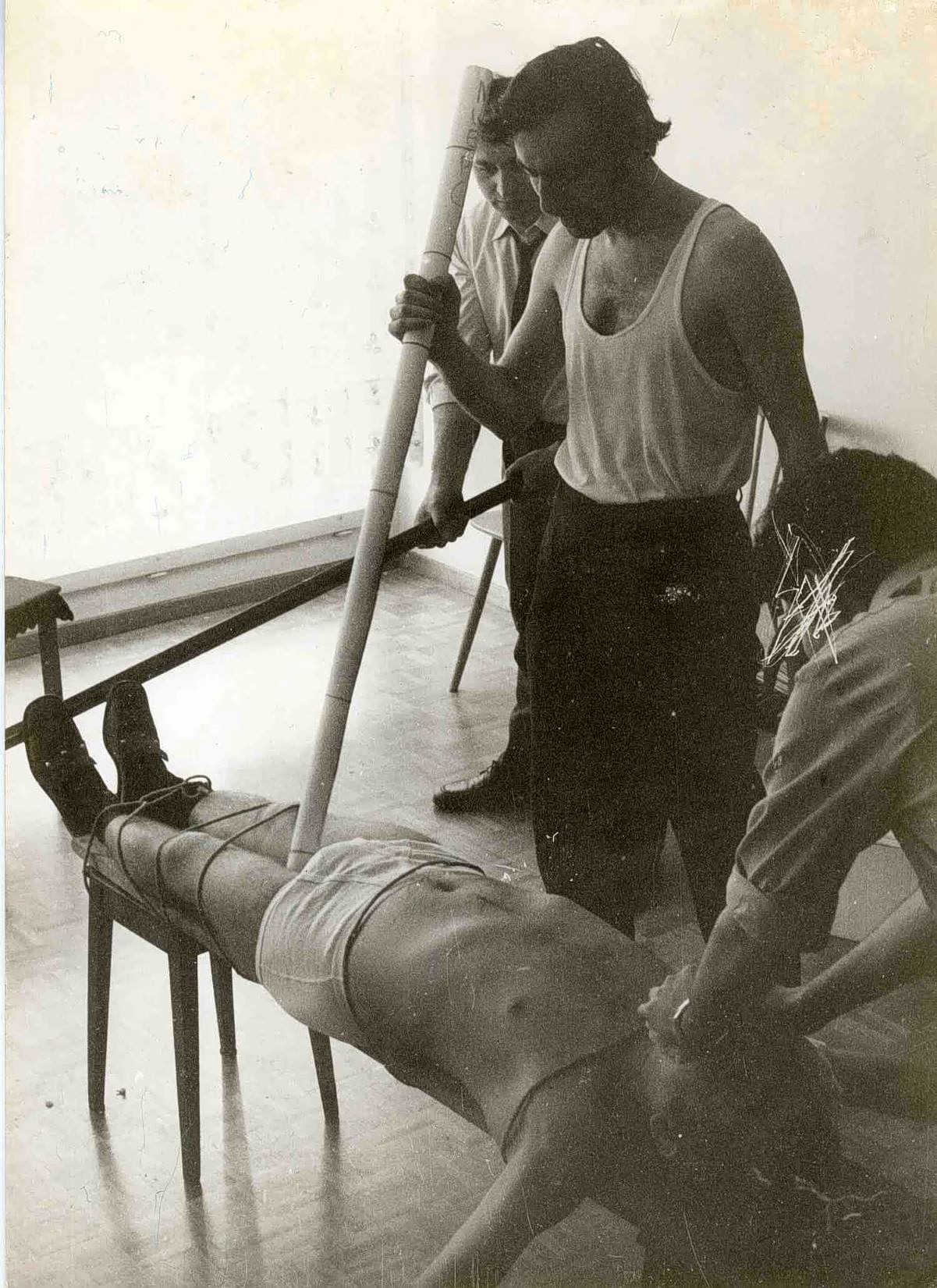
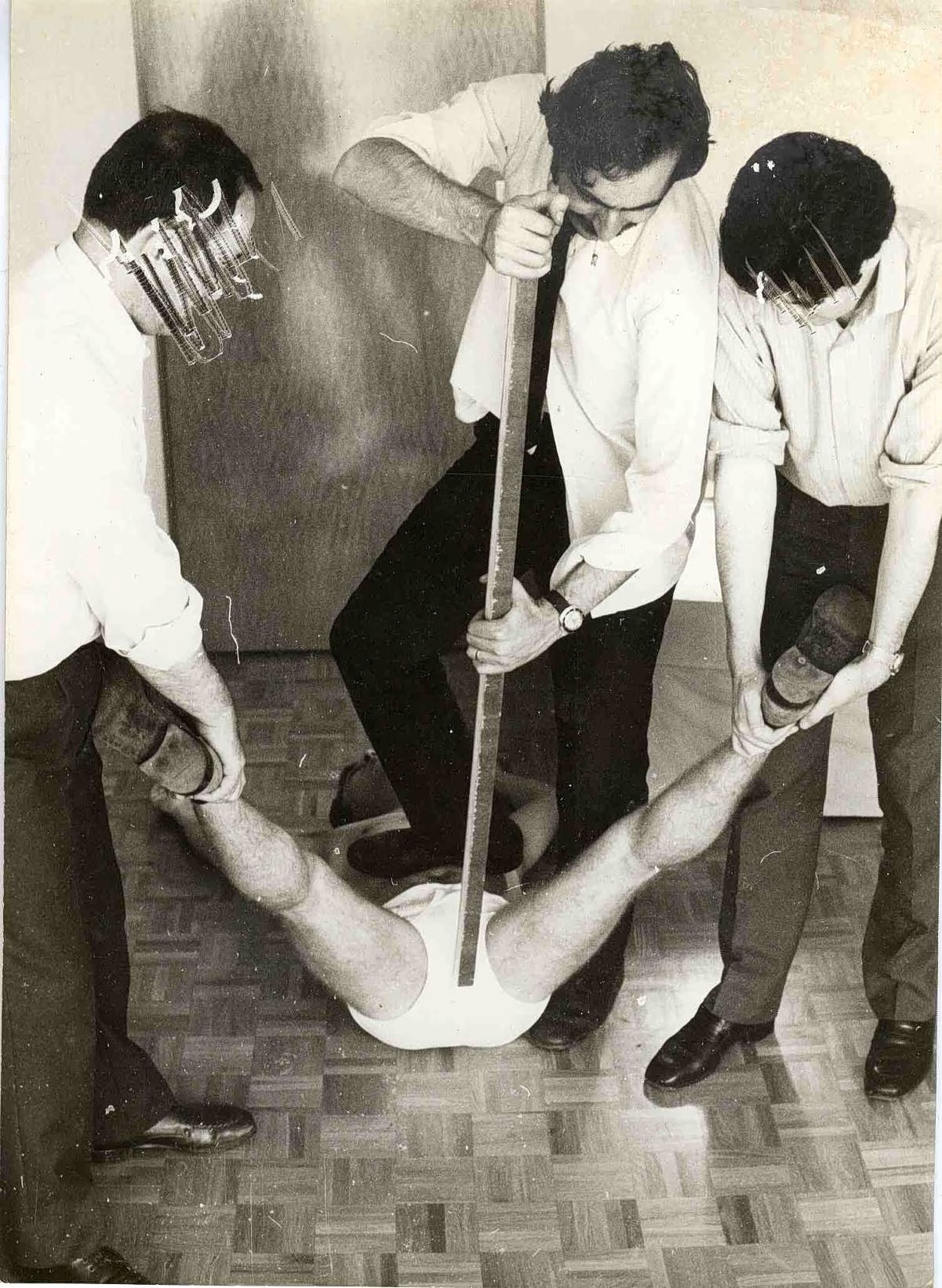
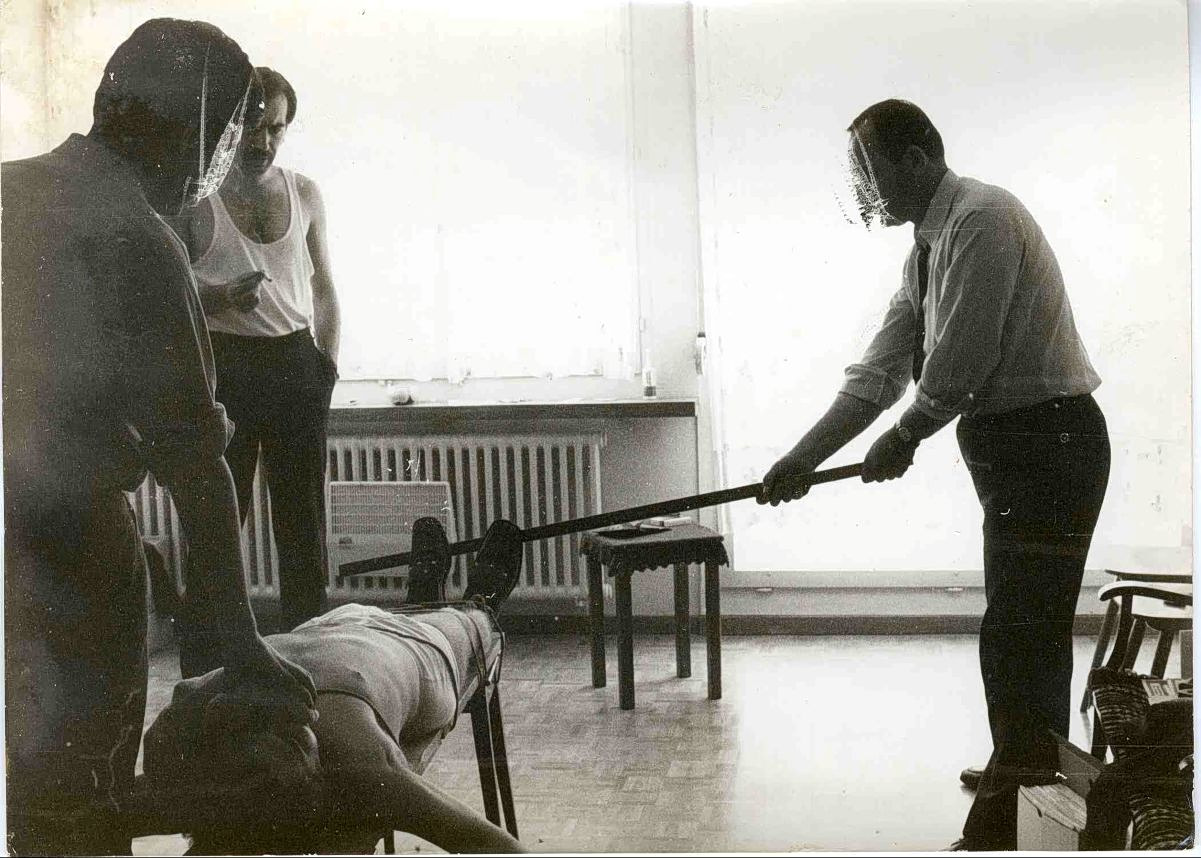
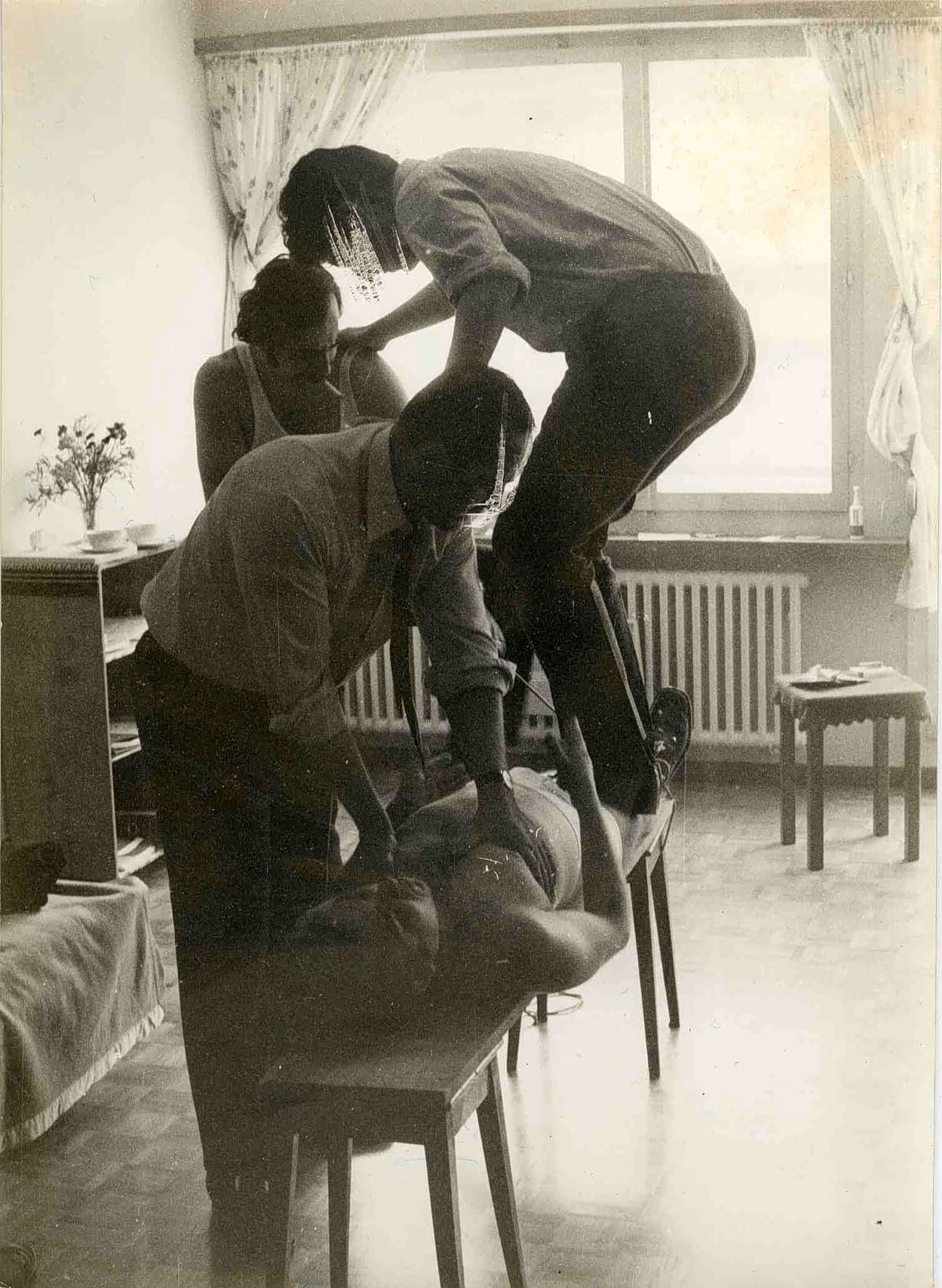
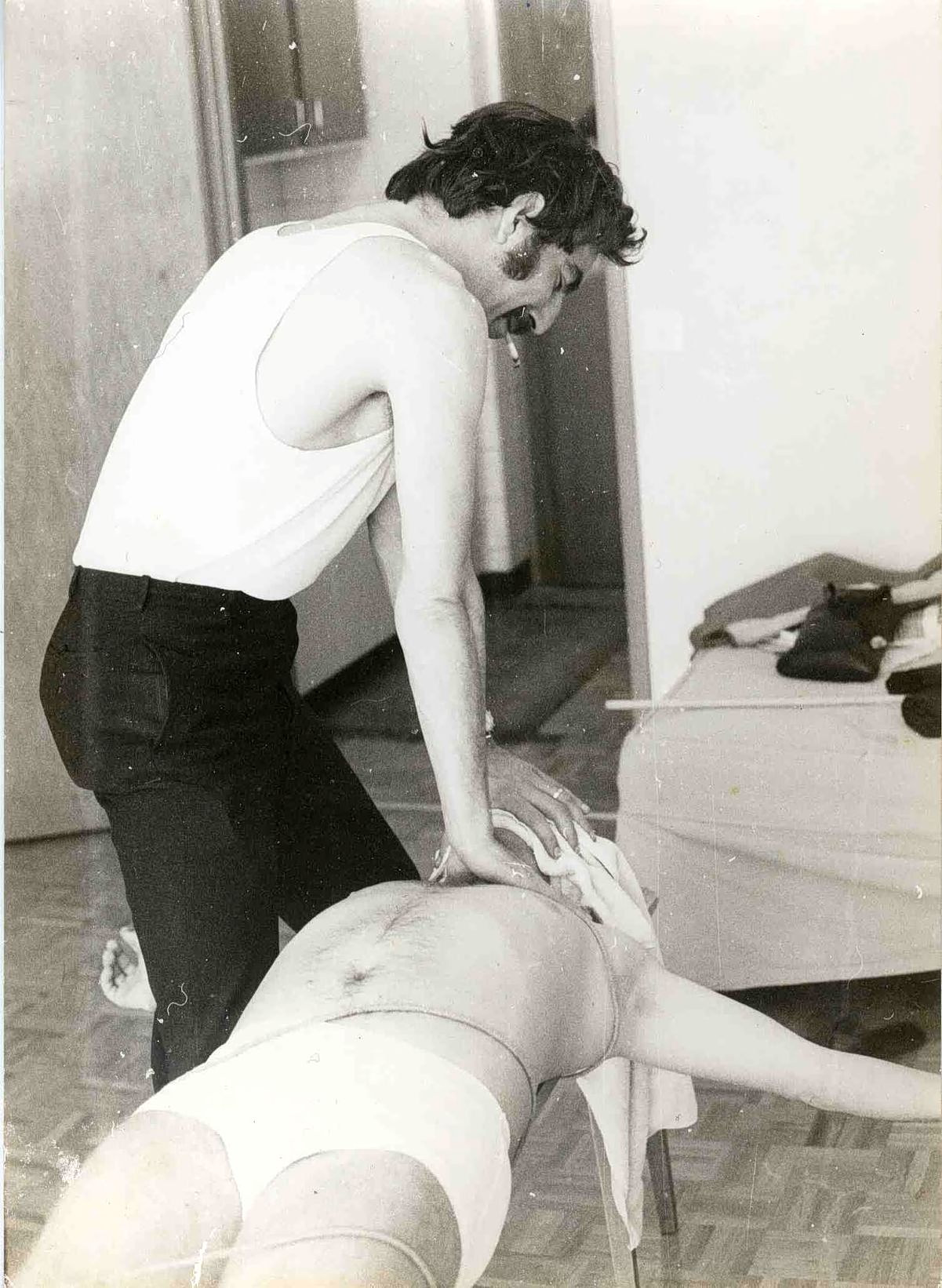
For witnesses still inside Greece, simply getting abroad could be extremely dangerous – not only for themselves but for those close to them. In Vlassis’s case, it took a clandestine escape operation that put both him and his helpers at risk. And to open the eyes of Europe and the wider world, Vlassis and Korovessis went a step further: they staged and circulated photographs re-enacting the torture – the first images of their kind.
Vlassis spoke to in.gr about how those photographs came to be made. The images are published courtesy of the Contemporary Social History Archives (ASKI), which holds his personal archive.
Staging the unspeakable
The idea for the photographs, Vlassis explains, came from three men: himself, Korovessis and Alekos Levidis, head of the Venice branch of the Panhellenic Liberation Movement (PAM). “We decided to do it because Korovessis and I had both been through the torture,” he says.
Source: Petros Vlassis Archive, ASKI/EMIAN
Levidis operated the camera. A fourth man stood in as a torturer alongside Korovessis – it is Korovessis who holds the stick in the pictures. Vlassis played the victim.
“So we made these ourselves,” he says. “And we sent them all over the world – everywhere on earth – so that people would know what falanga means, and that it was happening in Greece.”
The photographs were taken in May 1969.
Two arrests, and a rooftop at Bouboulinas Street
Vlassis was arrested twice: in May 1967 and again in May 1968. His crime, as he describes it, was modest. “I was just a student in the Lambrakis Youth,” he says. At the time, the police – and the Physical Security Corps – were a presence inside the universities themselves, and they knew him from there.
The second time, he was picked up on his way to work. He was earning his living at EMCO Ltd, a tile-importing firm in Kolonaki owned by Lambis Myrivilis.
That arrest was triggered by a single line extracted under torture. A friend of his had been asked whether Vlassis belonged to the Rigas Feraios organisation and received its newspaper, which the group was then publishing clandestinely. “He said, ‘I gave him the paper once,'” Vlassis recalls. “And that was enough. They arrested me a second time.”
This time he was tortured on the rooftop of the Bouboulinas Street headquarters.
When he was released, he was told he could no longer be a student. “They said, ‘We’re expelling you from ASOEE’ – the Athens School of Economics and Business, where I was studying – ‘and you’ll go back to your village and wait until your new conscript class is called up.'”
That came in January 1969. He was drafted along with that year’s school leavers and sent to Corinth. “Once my file arrived there,” he says drily, “the ‘songs’ started.”
Source: Petros Vlassis Archive, ASKI/EMIAN
Five shots, five hits
In the army, Vlassis was never issued a rifle. The only weapon he was ever handed was a BAR automatic rifle, which he simply carried on exercises. “Nothing more.”
Then, one day at the firing range, an officer asked him whether he would like to try hitting the target himself. Vlassis replied that he had no weapon – they never gave him one. “‘Well, let’s take one from your comrade here,’ he said.”
The comrade, as it happened, was a friend from his own village. The M1 Garand he handed over held five rounds. Vlassis fired all five – and all five struck the target.
“Unfortunately or fortunately – I still don’t know which – every one of them hit,” he says. “From that moment on, the torture started again. The beatings.”
To his superiors, the result was proof of something sinister. “Others who had been training couldn’t hit the target, and I, who had never held a gun in my life, hit it straight away,” he says. “They decided I must have been to Bulgaria and received training there.”
Escape from Greece: Amalia Fleming and the secret journey
In April 1969, while still serving in the army, Vlassis managed to slip out of Greece. His escape was organised chiefly by Amalia Fleming, with the help of figures including the Dutch politician and future foreign minister Max van der Stoel, the British MP Paul Rose and the American lawyer James Becket.
The story reads like a film script: a secret rendezvous at a patisserie in Kifissia, a nerve-racking border crossing curled up in a hidden compartment of a Volkswagen Beetle, and, finally, after a winding journey across Europe, his arrival in Strasbourg.
After Corinth, Vlassis had been transferred to Thebes, to a platoon of “undesirables”. There was no torture there. “We just wasted our time,” he says.
One day, as he was walking, an officer he did not know tapped him on the back. “He told me, ‘Go and get yourself some leave’ – it was just before Easter. ‘Ask for Easter leave, because you need to lay the tiles for your lady.'”
Vlassis understood immediately. “I realised the ‘lady’ was Fleming.” He was granted two 48-hour passes.
As soon as he reached Athens, he telephoned her. “I said, ‘It’s the tiler from Thebes.’ And she said, ‘Come right now, you have to fix my roof terrace. Right away.’ I said, ‘Now? I’ve still got my uniform on. Let me change and I’ll be there.'”
When he arrived, Fleming told him they had been searching for him for a long time. The previous summer, in 1968, a forger had come from Switzerland to make false passports – but they had been unable to find him. In the end, it was Myrivilis’s sister, who worked at the Ministry of Defence, who tracked him down in Thebes and got word to him.
Source: Petros Vlassis Archive, ASKI/EMIAN
Why were people abroad looking for him at all? After his release in May 1968, Vlassis explains, he had met the Council of Europe envoys, van der Stoel and Rose, and shown them his wounds. “On the strength of that, they asked me to appear in Strasbourg myself and say the same things under questioning.”
The plan Fleming laid out was simple, at least on paper. “She told me, ‘You’ll leave in the car of an American woman’ – Nancy Stern – ‘who is on her way from Turkey, and you’ll go to Geneva, where the others will meet you and we’ll get the job done.'”
Vlassis balked. “I said, ‘Madam, I don’t know this American woman. I’m not going – unless you come with me.'”
She agreed. “She said, ‘All right, I’m coming.'”
That evening, Fleming took him to an apartment near Laiko Hospital, where an American couple – both university professors – were living. He spent the night there. The next morning she brought him a Mykonos-style sweater, since he had no clothes of his own, and a woolly hat so his cropped army haircut would not show too much.
The American couple drove him to meet Fleming and Nancy Stern at a patisserie in Kifissia. Even that short journey was fraught. It was 20 April 1969, the eve of the coup’s second anniversary, and there were police everywhere. “And the worst of it was that I’d learned all of five words of English the night before, which they’d taught me. I knew nothing. And they didn’t know where Varsos was,” he says, referring to the well-known Kifissia patisserie.
They found it in the end. “They look at us. Then they say hello. We get into a car and off we go.” Vlassis sat in the back; the two women sat in front, Stern at the wheel and Fleming beside her.
Somewhere in Thessaly, Fleming turned to him. “Now,” she said, “you’re getting into a hiding place.”
The car was a Volkswagen Beetle, whose rear seat opened from behind to make room for luggage. The space was so tight that Vlassis threw away the few clothes he had so that he could squeeze in. As they approached the border, the women gave him a stark warning: “Be careful. If they open all the car doors, don’t even breathe. Because if they catch us, it’s all over.”
They made it across. On the Yugoslav side, Vlassis heard Fleming speaking in Greek to a Yugoslav customs officer, telling him to stamp the passport – a foreign one – to record their entry. The officer demanded to see the person it belonged to. “Take out the one who’s in there so I can see him,” he said.
Fleming did not flinch. “I have nothing to take out. Do you have orders to stamp it or not? If you don’t, I’ll turn around and leave.”
And so the stamp went in, recording the entry of one “David Thomas” – a little boy from Wales. “Nothing to do with my face, my age or anything else,” Vlassis says.
Belgrade to Geneva
The next stop was Belgrade, where Vlassis was to board a plane for Switzerland on the forged “David Thomas” passport.
The following day he was taken to the airport, once again briefed on exactly what to do. The plane, he was told, would arrive from Budapest within the hour. He had never set foot on an aircraft in his life.
“At some point I hear a woman calling, ‘Mister David Thomas.’ Well, I realised she meant me. I raised my hand.” She handed him a slip of paper. At the bottom, in small letters, it read: “Everything we agreed, Petros, still stands – just an hour later.” The flight had been delayed.
An hour later, an airport employee – he never quite worked out who she was – led him, together with a small child, back to a car, which drove them out to the plane. He was to change planes in Zurich and fly on to Geneva. And he did. “When I got there, I just followed the crowd, because I didn’t know where to go.”
Outside the terminal, he expected to see two men: Pericles Korovessis and James Becket, the American lawyer who was deeply involved in the anti-dictatorship struggle. There was no one.
“I walked up and down. I couldn’t see anyone waiting for me. Then two women came up to me and one asked, ‘Are you Greek?’ And like an idiot I said, ‘No!'”
They put him in their car anyway and drove him into Geneva, first to Becket’s home. “As soon as I walked in, the phones started ringing from all over the world. Even Melina Mercouri called to ask whether I was safe. It seems these people had known in advance.”
Source: Petros Vlassis Archive, ASKI/EMIAN
Copenhagen: a refugee’s passport
Vlassis would go on to obtain political refugee status in Denmark. The day after his arrival, he was visited by Jens Evensen, an official from the legal department of Norway’s foreign ministry, who gave him 200 francs as a gift and told him he would be going to sort out the paperwork for a Danish political refugee passport, together with Korovessis.
In Copenhagen, a group of police officers was waiting for them – among them a man so huge that Vlassis was frightened just looking at him. “Built like a mule – five hundred kilos,” he jokes.
They were taken to the police station to have their details recorded. Shortly afterwards, the secretary of the Danish Ministry of Justice arrived, collected them and treated them to dinner at his home. “I didn’t know a word of English or any other language, but Korovessis did.”
They spent the night in a hotel, and at 10 o’clock the next morning they returned to the police station to collect their passports. Korovessis then flew to Strasbourg, while Vlassis went to give an interview to Deutsche Welle – which also paid him – before taking the train to Strasbourg.
Strasbourg: the testimony that reached the Council of Europe
Vlassis finally reached Strasbourg to appear before the European Commission of Human Rights and testify to the torture and abuses committed by the dictatorship. According to official Commission documents held in the ASKI archives, in June 1969 he gave evidence alongside six other witnesses: Pericles Korovessis, Katerina Korovessi, Nikos Vardikos, Giannis Leloudas, Dora Leloudas and Georgia Pangopoulou. In July, he was summoned to Geneva to undergo specialist medical examinations.
Their testimony formed part of the international investigation launched after Denmark, Norway, Sweden and the Netherlands brought complaints against the junta – the landmark “Greek Case”, which played a key role in the dictatorship’s international condemnation.
When he arrived in Strasbourg, Vlassis was met by a crowd of journalists, television crews and newspaper reporters. “And they all gave me money,” he says, still sounding surprised. “I didn’t know that people who go on television to talk could get paid for it.”
Others testified too. So why did his evidence carry such weight?
“I was the only one that the European representatives, van der Stoel and Paul Rose, had seen beforehand – right after I came out of the torture at Bouboulinas Street following my second arrest in 1968,” he explains. “They saw the torture with their own eyes – the wounds. My toenails were missing, all those things. The blows to my knees, my shins, my body were still visible. Everything showed, because it was only a few days after the torture.”
Having seen those wounds, the envoys told the relevant authorities that he had to be brought out of Greece by any means necessary.
Korovessis, he notes, was in many ways the strongest witness of them all – and he, too, had been smuggled out by Fleming. But by the time he left Greece, his ordeal was long over, and no official had seen him in the meantime. “His wounds had healed. Mine hadn’t.”
The day after he arrived in Strasbourg, Vlassis went to give evidence. “I had no problem going. But the Greek lawyers representing the dictatorship had already left.”
Why? “Because what I was going to say had happened exactly as I said it. It was what the two Council of Europe envoys, van der Stoel and Paul Rose, had seen with their own eyes. So I said the same things – and they couldn’t react, they couldn’t say, ‘You’re lying,’ or ‘You’re a communist,’ or anything else.”
Source: Petros Vlassis Archive, ASKI/EMIAN
An unexpected ally
One moment from those days has stayed with him. After his testimony, he was approached by a woman who was the Greek state’s official interpreter – in other words, a representative of the junta.
“She congratulated me. ‘Thank you so much for what you said.’ And she was the junta’s representative! ‘Tell me how to find your family,’ she said, ‘and I’ll tell them whatever you want.'”
And she did. Vlassis sent her to his brother-in-law, who ran a café on Vathis Square in Athens. She went, spoke to him, and later sent Vlassis a note confirming the visit – something his family also confirmed to him later. “That really struck me,” he says. “It made me very happy.”
Source: Petros Vlassis Archive, ASKI/EMIAN
Five hundred beds
Is it true, we asked, that during his years in Europe he once tried to count how many different beds he had slept in – and gave up after 500?
“Yes, I tried to work out how many beds I’d slept in. When I got to five hundred, I stopped. Let’s just say I’ve slept in every police lockup in Europe.”
How did a recognised political refugee, a man who had publicly denounced a dictatorship, end up sleeping on park benches?
“Because I told the people who sent me money to give it to the families of political prisoners instead. So I never had any money. All I wanted was to get to know the world, to learn, to travel. I’ve been all over Europe, East and West.”
The money went, for example, to Korovessis’s mother. “Exactly. In my book I’ve included letters those families sent me. Money never interested me in my life. What interested me was human calm, quiet, love. Nothing more.”
And the lockups? “Because I slept on benches. And the police would raid them to ‘clean up’ – so that people wouldn’t sleep outside, especially at the stations.”
Source: Petros Vlassis Archive, ASKI/EMIAN
After the junta: the life he chose
The fall of the dictatorship did not lead Vlassis into politics, though the offers came. Today he lives in his home village, works the land and describes a daily life far removed from the one he might have had. He speaks of deep disillusionment with the state of democracy and of society itself, and with the impunity enjoyed by the torturers – but also of the things he has always sought in life.
Did he follow what happened to his torturers after the junta fell?
“Of course. We even filed lawsuits against them. Not one of them was punished. In fact, they went on to work for shipowners and others of that kind – like the chief torturer, Karapanagiotis. So instead of being punished, they actually moved up.”
He is, he confirms, the last surviving witness from that group. “The only one, yes – because I live in the countryside. All the others, one way or another, are gone. I’m alive because of the clean air and the clean food. Because I eat food I produce myself.”
He turns the question back on his interviewer. “You eat delivery. What kind of food is that they bring you? Is it from a factory? What meat is that you’re eating? Are you sure it came from an animal?”
“Today I was picking olives, morning and afternoon. And I don’t sell the oil – I give it away to whoever comes to visit me. I want to live calmly and freely. I don’t want you to give me anything. I just want you to stop taking from me.”
Has the Greek state given him anything since the junta – or taken?
“The Greek state took my pension, first of all. I had 39 years of social security contributions, and they took away four of them because, after the dictatorship fell, they couldn’t find my contribution booklets in the IKA warehouses. So now I get a pension for 35 years.” At least, he adds, those 35 years are real. “Can you tell me how many years of contributions Kostis Hatzidakis has, for example? Can you tell me what work they’ve done? How much they’ve worked, and where? Do they have a single stamp? I say this because he’s in government. I’d say the same about the others.”
Source: Petros Vlassis Archive, ASKI/EMIAN
“There is no democracy today”
The serenity he always wanted from life – does it exist in Greece today? He sounds, we suggest, profoundly disappointed with the way society has turned out.
“You see it correctly. That’s exactly how it is. I don’t regret anything in my life, because whatever I did, I did for something better.”
Does he see the logic of that era’s violence and mindset resurfacing today, in a different guise?
“Yes, that’s exactly what I see. Because, in my view, no country today is on the road to democracy. Democracy is the rule of the demos – the rule of the people. You can’t be a ruler in the name of a few votes and take decisions without asking anyone, purely in your own interest or the interest of whoever you serve. There is no democracy today. They’ve finished us.”
Some would object that under the junta he was arrested and tortured, while today he can say all this freely, without fear.
“That is the greatest fraud of all,” he shoots back. “And it’s the greatest catastrophe for society today. Because society – the young people especially – is no longer able to imagine a different path from the one that [the politicians] have carved into their minds. People are hugely influenced by television, which belongs to the few – to the capitalists, the enemies of the people. Do you have the courage to say, ‘I’m telling this the way it happened, not the way you want me to tell it’? That’s how they’ve brought the people to this point.”
“For me, it is the most shameful form of dictatorship – and that’s why I’ve withdrawn from it all. Today’s ‘dictatorship’ is worse than Papadopoulos’s, because that one was out in the open. You could see it. You knew how to react. Today they tell you we have democracy, that you vote. Vote for what? And who decides? And why does nobody ask you when they take decisions and pass laws against you – or for you, it doesn’t matter? Who are you people?”
Source: Petros Vlassis Archive, ASKI/EMIAN
“A life of calm, beauty and human love”
Did his resistance to the dictatorship cost him his personal life? Was he violently torn from the ordinary course of things?
He sees it differently. “The only cost it had for me was a positive one: I started to think, and to see the world, differently from what I’d known in Greece. That’s what it gave me.”
In the first elections after the fall of the junta, he says, every party except the Communist Party (KKE) asked him to stand as a candidate. “Every single one. And I said no to all of them. I didn’t want to exploit something like that at all costs. I could easily have been known to everyone by now. I could have been a minister, or anything else. So what? Big deal.”
“Because my life followed a different logic,” he says. “The logic of serenity, of calm, of beauty. Of human love – not of rivalry.”