 Μake us preferred on Google
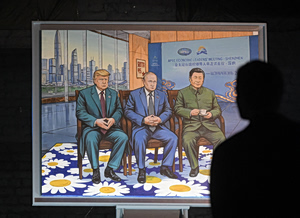
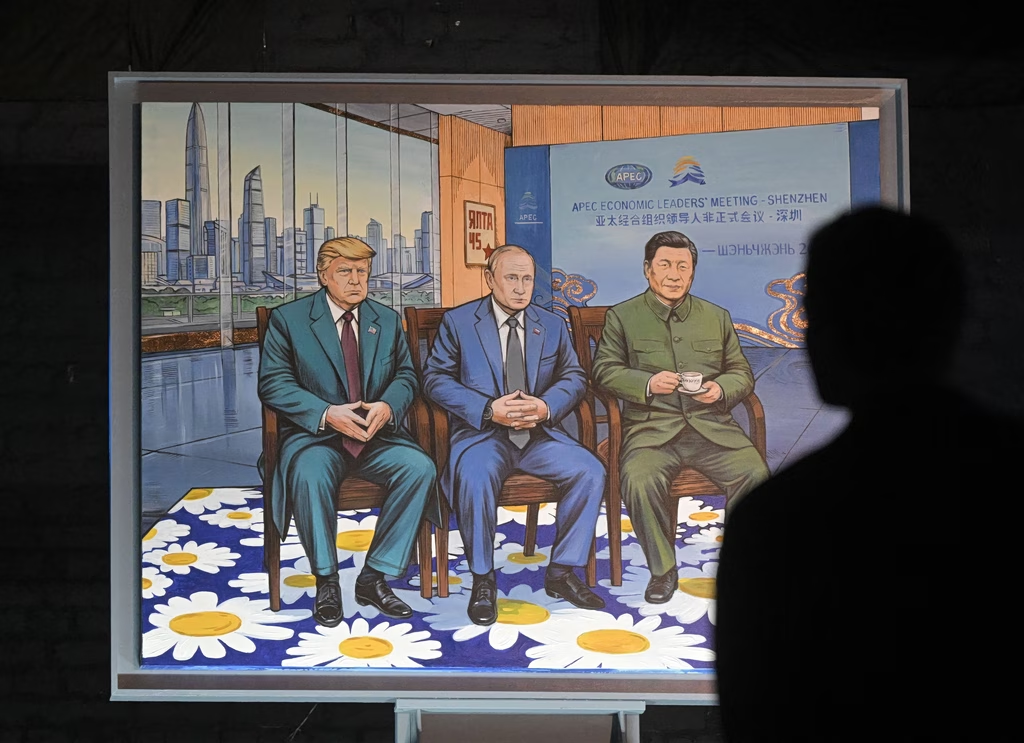
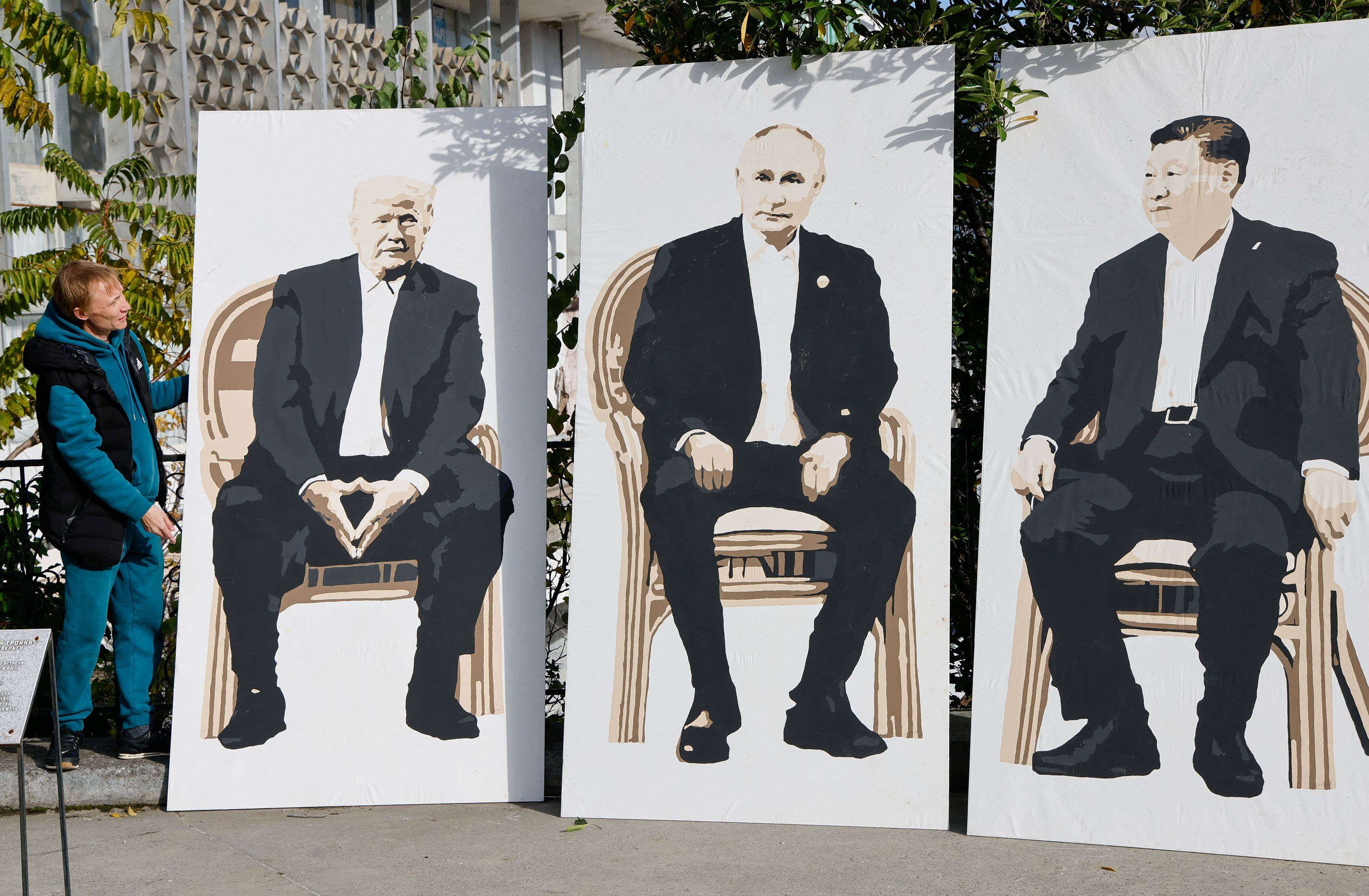
Russian officials are already comparing this week’s three-way summit with the U.S. and China to the historic 1945 Yalta Conference where the victors of World War II gathered to decide the fate of Europe.
But the meeting of President Trump, Vladimir Putin and Xi Jinping , planned for Thursday in the Chinese city of Shenzhen, is more likely to reveal the limits of the great powers to impose a new international order as the Pax Americana comes to an end.
Russia wants an expanded sphere of influence in Europe as part of any settlement of its war with Ukraine. Washington has promoted the “Donroe Doctrine” of the U.S. dominating the Americas. China seeks to absorb Taiwan and eventually push the U.S. out of Asia.
Unlike the statesmen in Yalta, the leaders of the U.S., China and Russia, however, won’t be gathering as the winners in a global conflict that they had fought shoulder to shoulder.
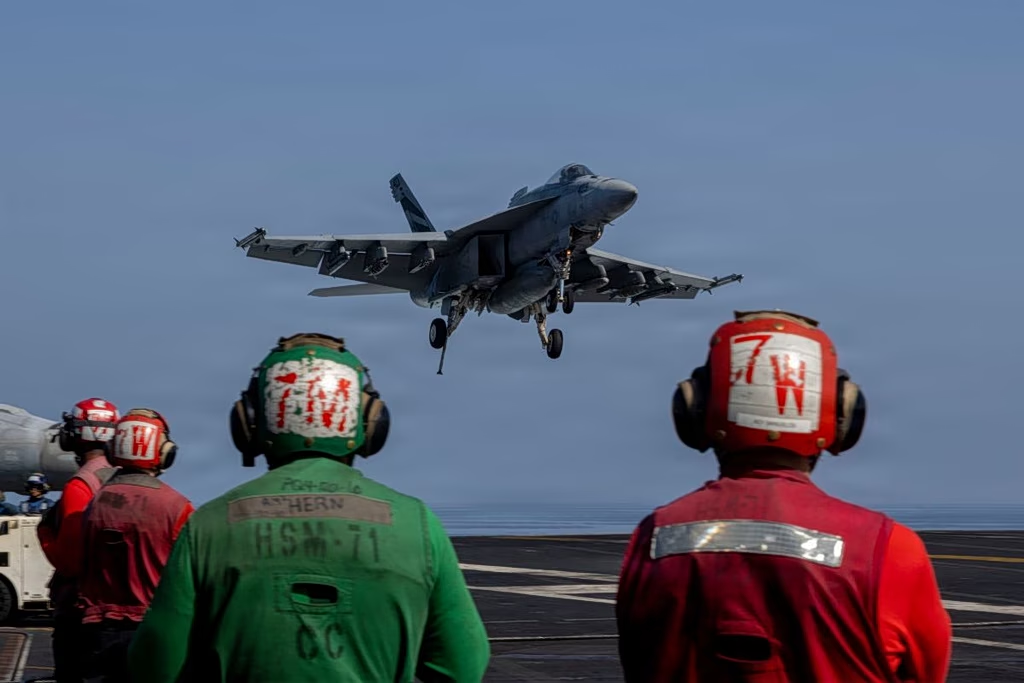
Two leaders are bogged down in wars that, in various ways, have weakened their global standing and show no sign of abating. In America’s case, the unpopular conflict with Iran also helped trigger a wave of Democratic victories in the midterms likely to curtail Trump’s domestic power.
The host, China, has been gaining geopolitical capital, positioning itself as a voice of reason in contrast to a bellicose Russia and an at-time unpredictable America. It has also benefited from the U.S. war in Iran, which has depleted munitions stocks and diverted assets that used to protect Washington’s Asian allies.
“China really enjoys the fact that the United States is now willing to sit down with its geopolitical foes to jointly discuss issues related to global governance,” said Tong Zhao , a senior fellow at Carnegie China. “Neither Russia nor the United States are doing very well. Russia is stuck in the Ukraine war. The United States is stuck in the Iran war. This makes Beijing feel it could appear, relatively, as a more successful, more stable and more responsible great power.”
But China, too, is facing headwinds at home as its economy softens. And, if anything, Russian and U.S. military setbacks, in part caused by technological changes that empower smaller states, have also made Beijing much more cautious about military adventures in the immediate future.
“It’s really a summit of the three weaknesses. Russia is economically broken, and militarily experiencing a disaster. Trump is now a lame duck with a difficult situation at home. And China is facing grave domestic economic difficulties,” said Italian Sen. Carlo Calenda . “All three are in a much more precarious position than it seems.”
Despite all the propaganda, Russian officials understand that the true importance of the Shenzhen summit lies more in its symbolism than the substance.
“The imagery will show that there are now three global powers, powers with global influence in the world. The United States and China are, of course, full-spectrum global powers, important in all spheres. But Russia is also a great global power when it comes to military and geopolitical foundations,” said Dmitri Trenin , president of the Russian International Affairs Council, a Moscow think tank established by the Kremlin. “For us, this is very important because for the past five years, and maybe even longer, the policy of the West was to either cancel or thoroughly isolate Russia. This didn’t happen, and we consider it our victory.”
While China has provided significant economic and political backing to Russia, it has stopped short of supplying weapons to Moscow and maintains an embassy in central Kyiv. Western officials believe Beijing, while eager to prevent Russia’s defeat, is equally uninterested in a Russian victory that would allow Moscow to cut its growing dependence on China and deal on a more equal footing with Washington.
“People are hyperventilating about this being Yalta 2.0. This meeting will not result in the division of any territory in the world. China’s preference for meetings such as this is for them to be minimalist, completely scripted and producing zero outcomes,” said former Australian Prime Minister Kevin Rudd , who now heads the Asia Society in New York. “China’s baseline interest in all this is to be seen as a convening power, however symbolic it may be. China wants to become an acceptable global power in the future, and too close an affiliation with Vladimir Putin doesn’t help that on a global multilateral stage.”
For Trump, the pageantry of this trilateral summit—and the decision to elevate Putin—reflect a longstanding belief of how the world order should function, said Phil Gordon , a scholar at the Brookings Institution who served as national security adviser to Vice President Kamala Harris .
Yet, he added, smaller countries have agency too: “As we see with Ukraine, human beings who are part of nations don’t just defer to big strong leaders.”
Trump has repeatedly lashed out at European leaders for undercutting his outreach to Russia, as trans-Atlantic relations plummeted over tariffs he imposed, his demands to seize Greenland and his complaints that European nations didn’t join the war on Iran. He also demanded that Ukraine get a new president after President Volodymyr Zelensky refused his requests to stop striking Russian refineries.
The Democrats, who flipped control of the House and the Senate in the midterms, have fiercely criticized Trump’s rapprochement with Putin and his attempts to put pressure on Ukraine. They have already promised to use their powers once the new Congress takes office in January to back Kyiv and oppose Russia.
Now that Trump’s hold over the party has been weakened, Republicans may join Democrats in that effort, as well as promote a harder line against China, especially in the wake of the Nvidia scandal. One of these Republican hawks, Sen. Tom Cotton (R., Ark.), said on X recently that the talks with Russia led by Jared Kushner and Steve Witkoff have become a farce. “Putin will only agree to stop the war when he knows he can’t win. We need to help Ukraine prove that point,” he said.
Putin’s war on Ukraine has already lasted significantly longer than Moscow’s war against Nazi Germany. But instead of raising the Russian flag over the enemy capital, his troops are still engaged in bloody battles over the same villages in the southern and eastern Ukraine that they tried to capture a year ago.
A foreign minister of a European Union nation said that the right comparison for what Putin—and perhaps Trump—seek to achieve in Shenzhen isn’t so much Yalta in 1945 as Munich in 1938, a deal between London, Paris and Berlin that sacrificed Czechoslovakia to appease Hitler. The difference, the minister added, is that Ukraine is no Czechoslovakia and, as the events of the past five years have shown, won’t just accept its fate and surrender.
Ukrainian Foreign Minister Andriy Sybiha agreed. “Putin is floating ideas for redrawing Europe’s security order. In his dreams, he sees himself in Yalta in 1945. The problem is, to propose ideas on that scale, you first need to win a world war,” he said. “Russia has lost over 1.6 million troops killed and wounded, yet has not achieved a single goal of its invasion.”
Write to Yaroslav Trofimov at yaroslav.trofimov@wsj.com